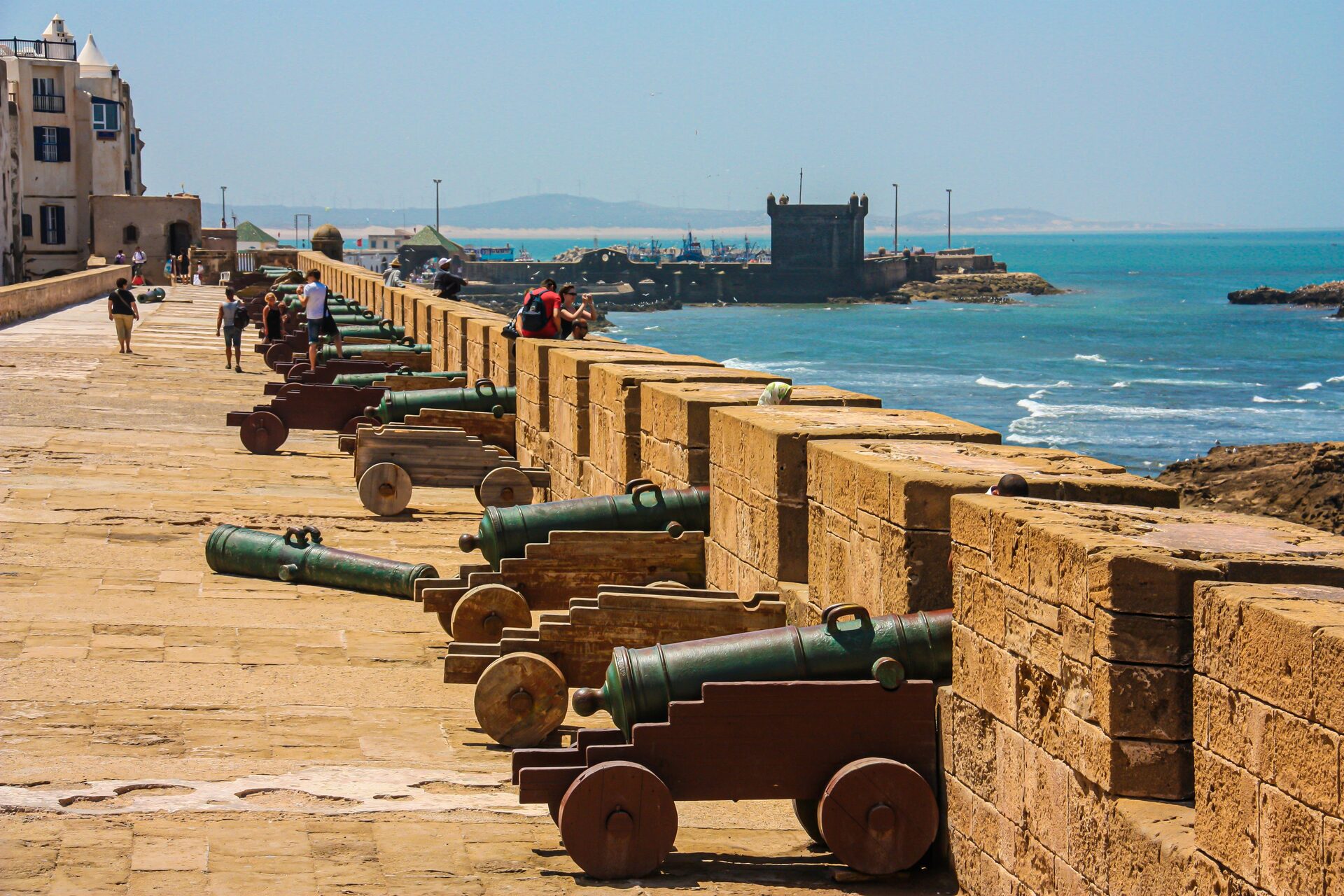
I left Morocco at 35 and moved to the United States, where I spent the next 32 years without returning — not once. In 2026, at 67, I came back. I have since opened a bank account, navigated the residency process, found an apartment, set up internet, dealt with Moroccan administration, and sat in medina cafés watching the world pass by in a way that I had completely forgotten. I write this guide not as a travel blogger passing through, but as someone who rediscovered his own country after three decades away — and who wants to give you the most honest, practical picture he can.
This is not a guide that sells Morocco as paradise. It is not a list of pros without the complications. It is what I wish I had been able to read before I made my decision: an honest, complete account of what retiring in Morocco is really like, what it costs, what is easy, and what takes patience. If after reading this you decide Morocco is right for you, I believe you will find it one of the best decisions of your life. If you decide it is not for you, I will have done you an equal favour.
I was born in Morocco but spent nearly three decades building my career in the United States, working in restaurant management and hospitality before retiring and returning home in 2026. Like many people considering retirement abroad, I wasn't looking for a vacation destination — I was looking for a place where I could build a comfortable, sustainable, and meaningful new chapter of my life.
Since returning to Morocco, I have rented an apartment in Casablanca, opened local bank accounts, installed fiber internet, navigated administrative procedures, compared healthcare options, furnished a new home, and learned firsthand what daily retirement life in Morocco is really like. Some aspects of the transition have been easier than expected, while others have required patience, planning, and careful research.
The goal of MoroccoPassport is to share both carefully researched information and practical experience. Every guide is based on reliable sources, but whenever possible I also include lessons learned from my own relocation. I believe readers deserve more than promotional descriptions — they deserve honest, balanced advice that highlights both the advantages and the realities of living in Morocco.
Whether you are planning to retire, relocate, invest, or simply explore the possibility of making Morocco your new home, I hope these guides help you make informed decisions with confidence.
Rachid Echahly · Editor, MoroccoPassport.com · Casablanca, 2026Morocco Retirement — At a Glance
Why People Love It
- Low cost of living — genuinely comfortable on a European pension
- Warm, stable climate year-round (especially Atlantic coast)
- Excellent food — fresh, local, affordable
- Close to Europe — 2–3 hour flight, easy returns
- Safe, politically stable country
- Rich culture, history and landscape
- Established expat communities in main cities
- Good private healthcare in Casablanca, Rabat, Marrakech
- Straightforward residency process
- Genuine, welcoming people
What to Be Aware Of
- No dedicated retirement visa — standard process can be bureaucratic
- Limited public healthcare — private insurance is not optional
- Language barrier if you don't speak French or Arabic
- Smaller towns have limited medical facilities
- Summers can be very hot inland (Marrakech, Fes)
- Cultural adjustments take time (Ramadan, Friday rhythms)
- Banking can be slow to set up
- Property buying is complex — renting first is essential
- Internet and infrastructure can be inconsistent outside cities
What This Guide Covers
- Why Morocco? The Case for Africa's Best-Kept Secret
- Is Morocco Right for You?
- What It Actually Costs to Retire Here
- The Best Cities for Retirees
- Healthcare — The Honest Picture
- Residency — Making Your Stay Legal
- Pensions and Taxes
- Banking and Money Transfers
- Renting vs. Buying Property
- Language, Culture and Integration
- Day-to-Day Life in Morocco
- Building Your Social Life
- Insurance — The Non-Negotiables
- What I Wish I Had Known
1. Why Morocco? The Case for Africa's Best-Kept Secret
Morocco sits at a remarkable intersection: geographically African, culturally a fusion of Arab, Berber and European influences, politically moderate and stable, and economically affordable without feeling underdeveloped. It is, in many ways, the last destination in the Mediterranean region that has not yet been fully discovered by the retirement migration wave — though that is changing.
Proximity Without Compromise
The most obvious advantage over Asia-Pacific retirement destinations like Thailand, Vietnam or Bali is pure geography. Morocco is 2–3 hours from any major European city. You can fly home for a family birthday, see your grandchildren, attend a medical appointment, and be back in your Moroccan apartment within 48 hours. For many retirees, this proximity is not just convenient — it is the difference between making the move or not.
Compare this to Portugal, Spain or the south of France — all popular retirement destinations. Morocco offers comparable climate, better food value for money, a richer cultural life, and costs that are 40–60% lower across almost every category. The trade-off is that it is a different culture, a different language, and a different kind of daily life. For people with genuine curiosity about the world, this is not a disadvantage at all.
A Country in Transition — In the Best Direction
Morocco in 2026 is a country moving forward with remarkable confidence. The high-speed TGV rail line between Casablanca and Tangier, modern tram networks in Casablanca and Rabat, the Grand Stade Hassan II under construction as one of the world's largest stadiums, the 2030 World Cup on the horizon — these are not vanity projects. They reflect a government investing in infrastructure at a pace that has real consequences for the quality of daily life as a resident.
Internet speeds that would be considered excellent in France. Supermarkets well-stocked with European brands. A private healthcare system in the major cities that is genuinely capable. The Morocco a retiree arrives in today is not the Morocco of twenty years ago.
Why Retirees Choose Morocco Over Spain, Portugal or Greece
All three Mediterranean European countries are popular and have much to recommend them. But in 2026, property prices in Lisbon and the Algarve have made the celebrated Portuguese D7 visa significantly less affordable than it was. Greece's bureaucracy is legendary. Spain's coastal areas are increasingly crowded. Morocco offers what these countries offered a generation ago: space, authenticity, lower costs, and the feeling that you are living in a place rather than in a theme park built for tourists.
"Morocco gives you the Mediterranean without the price tag of the Mediterranean — and a culture that is far richer than anything you will find on the Costa del Sol."
The Food Factor
This deserves more than a passing mention. One thing that immediately struck me after returning was how affordable it is to enjoy fresh produce and traditional meals compared with my years in the United States. Back in America, a good meal out was a budget decision. Here, I eat better — fresher fish, better vegetables, more flavour — and I spend a fraction of what I used to. The souk markets overflow with fruit, vegetables and spices at prices that still surprise me every week. Fresh sardines caught that morning. Lamb tagines slow-cooked with preserved lemons and olives. The mint tea culture that turns every social interaction into a small ceremony. For a retiree, these are not trivial pleasures — they are the substance of daily life, and they cost almost nothing.
2. Is Morocco Right for Your Retirement?
Morocco is not one retirement destination — it is several, depending on who you are and what you want your life to look like. The most useful thing this section can do is help you decide, not just inform you.
If You Love Being in the Middle of Things
You want restaurants, galleries, events, people, energy. You do not want to feel like you have retreated from life — you want to live it differently. Morocco has this: Casablanca is a genuine metropolis with cultural life, international restaurants, and a cosmopolitan energy that surprises most newcomers. Marrakech offers the largest expat social scene in the country. Rabat, the capital, is quieter but culturally sophisticated and well-organised. For this type of retiree, the right city matters as much as the right country — and Morocco's urban centres deliver.
If You Are Looking for Peace, Space and a Slower Pace
You have spent decades in noise and motion. You want mornings without urgency, afternoons with space to think, a community that knows your name. Essaouira is the answer many Atlantic-coast retirees find: a small, walled port city with a creative community, stable year-round temperatures, and a pace of life that genuinely cannot be hurried. Agadir offers the beach lifestyle with modern comfort. Smaller towns inland — Azrou, Ifrane, Moulay Idriss — exist for those willing to live with very limited expat infrastructure in exchange for extraordinary authenticity.
If You Are Retiring as a Couple
Retirement abroad as a couple changes the calculus in important ways. The social pressure is lower — you arrive with your primary relationship already in place, which makes the early months of adjustment easier. But it also means you need to be intentional about building independent social lives, not just shared ones. Couples who each develop their own friendships, interests and rhythms in Morocco tend to be significantly happier than those who rely entirely on each other for company. Morocco rewards this: the social infrastructure of hammams, markets, cafés, hiking groups and cultural events gives each person their own reasons to leave the apartment.
If You Are Retiring Alone
Solo retirement abroad requires more courage and more intention — and Morocco rewards both. The Moroccan culture of hospitality and neighbourliness means that a single person who engages with their surroundings is never truly isolated for long. The expat communities in Marrakech, Tangier and Casablanca are active and welcoming to single arrivals. The Facebook groups are the fastest entry point. Within three months, most solo retirees who have engaged actively report a social life richer than the one they left behind. The key is to be proactive from week one, not to wait until you feel comfortable. Comfort follows connection — not the other way around.
If Healthcare Is a Priority
Be honest with yourself here. If you have a complex or progressive medical condition — cardiac, oncological, neurological — your city choice must put healthcare infrastructure first. That means Casablanca (by far the best private healthcare in Morocco) or Rabat. It means accepting a higher cost of living in exchange for proximity to proper medical care. It means having comprehensive private health insurance with evacuation cover before you arrive. Morocco's healthcare in the major cities is genuinely good for a wide range of conditions — but it has limits, and being an hour from Casablanca's private hospitals is very different from being three hours away in Essaouira. Do not let the romance of a beautiful smaller city override this calculation.
If Mobility Is a Concern
Morocco's historic medinas are beautiful and almost completely inaccessible to anyone with limited mobility. Cobblestones, narrow alleys, no vehicle access, stairs everywhere. If walking distances or uneven surfaces are already a challenge, the medina lifestyle — however appealing it looks in photographs — is not practical. The good news: Morocco's modern city districts are entirely navigable. Casablanca's Gauthier and Maarif neighbourhoods, Rabat's Agdal, Marrakech's Guéliz and Hivernage, Agadir's entire modern layout — all of these work well for retirees with mobility considerations. Plan for the city you will live in at 75, not just the one that appeals to you at 67.
If Climate Is the Primary Factor
Morocco's climate is far more varied than most people realise. The Atlantic coast — Agadir, Essaouira, Casablanca, Rabat — has a mild, stable year-round climate with temperatures rarely below 12°C or above 30°C. The Mediterranean coast around Tangier is similar. The inland cities — Marrakech, Fes, Meknes — have beautifully mild winters and genuinely extreme summers (40–44°C in July and August). If you cannot tolerate or cannot safely be in extreme heat, the inland cities require a summer escape plan — which is manageable, but is a real consideration. If year-round warmth without extremes is your priority, the south Atlantic coast (Agadir) is the most consistently comfortable climate in Morocco.
Common Mistakes Retirees Make — Don't Be This Person
- Choosing a city based on a holiday visit in spring. Morocco in April feels like paradise. Morocco in a Marrakech August is something else entirely. Visit in different seasons before committing — or choose the Atlantic coast where temperatures are stable year-round.
- Arriving without certified copies of everything. The Préfecture will ask for originals and multiple photocopies of your passport, pension proof, rental contract and more. Bring 5 copies of each before you arrive. Get key documents apostilled in your home country before you leave.
- Relying only on cash from foreign ATMs. Foreign card fees accumulate quickly. Set up Wise before you arrive and use it from day one for transfers and ATM withdrawals.
- Underestimating bureaucratic timelines. The bank account takes 2–4 weeks. The Carte de Séjour can take 2–4 months. Nothing moves at the speed you expect. Build significant buffers into all your timelines.
- Buying property in the first year. Without exception, every long-term expat resident says the same thing: rent for at least 12 months before buying anything. The neighbourhood that looks perfect in December may be unbearably noisy in summer.
- Assuming everyone speaks English. Educated Moroccans speak French. Service workers speak Darija. English is growing but it is not a reliable default outside tourist zones and international hotels. Invest in French before you arrive.
- Ignoring the emotional adjustment. Loneliness in the first months is common and normal. It does not mean the move was wrong. It means you are building a new life, which takes time. Plan for it, and invest in social activities actively rather than waiting to feel settled first.
- Not telling your home country pension provider your new address. Pension payments, tax notices, and residency-related correspondence still go to your home address. Sort this before you leave and set up reliable mail forwarding.
3. What It Actually Costs to Retire Here
Morocco's cost of living is genuinely lower than Western Europe — but the gap is not uniform across all categories. Rent and food are dramatically cheaper. Imported goods, European-brand products and anything requiring skilled labour are less dramatically so.
The figures below are based on 2026 prices and reflect what a retiree actually spends, not optimistic theoretical minimums.
| Monthly Expense | Budget (€/month) | Comfortable (€/month) | Generous (€/month) |
|---|---|---|---|
| Rent (1–2 bed apartment, furnished) | €280–400 | €500–750 | €900–1,500 |
| Groceries (market + supermarket) | €130–180 | €200–280 | €320–450 |
| Eating out (mix of local + international) | €70–110 | €140–220 | €300–550 |
| Utilities (electric, water, internet) | €55–85 | €85–130 | €130–180 |
| Private health insurance | €60–100 | €100–180 | €200–350 |
| Transport (taxi, occasional train) | €35–60 | €70–120 | €200–400 |
| Entertainment, trips, activities | €50–100 | €150–250 | €300–600 |
| Household help (optional but common) | — | €80–130 | €130–200 |
| Monthly Total | €680–1,035 | €1,225–1,880 | €2,480–4,230 |
What This Means in Practice
A UK state pension (currently around £11,500/year, or approximately €1,100/month) is enough to live a genuinely comfortable, pleasant life in Morocco's mid-tier cities such as Fes, Meknes or Essaouira. A combined household income of €2,000–2,500/month gives you a very good life anywhere in the country, including Marrakech.
A US Social Security payment at the average retirement benefit (around $1,800/month in 2026) converts to approximately €1,650/month — enough for a comfortable Moroccan retirement with money to spare for travel.
Where Your Money Goes Furthest
Food at markets is extraordinarily cheap. A kilogram of tomatoes costs €0.30–0.50. Fresh-caught fish at Atlantic coast markets is a fraction of European prices. Dining at a good local restaurant, a two-course meal with soft drinks rarely exceeds €8. Domestic help — a housekeeper 2–3 days per week — costs €80–130/month and is completely normal in Moroccan society (and is a genuine quality-of-life improvement for many retirees). Taxis are inexpensive: across any city, rarely more than €2–3.
Cost Differences Between Cities
Marrakech and Casablanca are 20–30% more expensive than Fes, Meknes or Agadir for equivalent accommodation. Essaouira offers a charming, affordable coastal lifestyle but with fewer luxury options. Tangier has risen in price as it has grown — it is now comparable to Marrakech. Rabat, as the capital, has higher accommodation costs than smaller cities but offers excellent value compared to any European capital.
Real Prices from Daily Life — Casablanca, 2026
Percentages and budget ranges are useful, but real numbers from real daily life are better. These are actual prices paid in Casablanca — the kind of information you only get from someone who is actually living it.
| Item | Price (MAD) | Approx. EUR |
|---|---|---|
| GP consultation (private clinic) | 300 MAD | ~€27 |
| Dentist (check-up + cleaning) | 500 MAD | ~€46 |
| Taxi (cross-city petit taxi) | 18–25 MAD | ~€1.65–2.30 |
| Coffee (café au lait, sit-down) | 15–20 MAD | ~€1.40–1.85 |
| Orange Fiber broadband (100 Mbps) | 249 MAD/month | ~€23/month |
| Restaurant meal (local, sit-down) | 60–120 MAD | ~€5.50–11 |
| Kilo of tomatoes (souk) | 3–6 MAD | ~€0.28–0.55 |
| Kilo of fresh sardines (Atlantic coast) | 10–15 MAD | ~€0.90–1.40 |
| 1-litre argan oil (local market) | 80–120 MAD | ~€7.30–11 |
| Carrefour grocery run (week, 1 person) | 400–600 MAD | ~€37–55 |
| Housekeeper (1 full day) | 100–150 MAD | ~€9–14 |
| Tramway single ticket (Casablanca) | 6 MAD | ~€0.55 |
| Hammam (neighbourhood, local price) | 15–25 MAD | ~€1.40–2.30 |
| Pharmacy — basic medication (paracetamol) | 10–20 MAD | ~€0.90–1.85 |
4. The Best Cities for Retirees
Morocco is not one city or one climate. Choosing where to live is one of the most important decisions you will make — and the right answer depends entirely on what you want your life to look like.
Marrakech
Best for: culture, community & expat lifeMorocco's most popular retirement city for Europeans. The largest established expat community in the country — French, British, Scandinavian, American. Excellent restaurants, galleries, hammams, and a cultural calendar that never stops. The Palmeraie neighbourhood offers villas with pools; Guéliz is the modern city district with European-style cafés and supermarkets; the medina is atmospheric but logistically challenging for older residents.
Winters are beautifully mild (14–22°C). Summers are hot (40°C+) — most retirees leave in July–August for the coast or Europe, which is entirely manageable as a lifestyle rhythm.
Budget: €1,100–1,600/mo comfortable · Healthcare: Good private clinics
Essaouira
Best for: Atlantic coast pace & artistic communityA small, walled Atlantic port city with one of the most stable year-round climates in Morocco (16–26°C throughout the year — the constant Atlantic wind prevents the heat extremes of inland cities). A favourite with artists, writers, musicians and photographers. The expat community is smaller but tight-knit and genuinely welcoming. Excellent seafood. A medina that is navigable without the intensity of Marrakech or Fes.
The limitation: healthcare is limited locally. Anything beyond a routine consultation means travelling to Marrakech (2.5 hours). Factor this into your decision if health is a significant concern.
Budget: €900–1,300/mo comfortable · Healthcare: Limited — Marrakech for serious issues
Tangier
Best for: Europe access & cosmopolitan lifeForty kilometres from Spain (35 minutes by ferry). Mediterranean climate. A city with a long international literary and artistic history — Bowles, Burroughs, Matisse all lived here. Tangier today is rapidly modernising, with a new marina, the Grand Théâtre de Tanger, and an expanding middle class. Excellent for retirees who want to remain closely connected to Europe — weekend trips to Tarifa or Seville are entirely feasible.
Healthcare infrastructure is improving significantly. Costs are higher than Fes or Essaouira but the European access and Mediterranean energy justify it for many retirees.
Budget: €1,100–1,600/mo comfortable · Healthcare: Good and improving
Agadir
Best for: beach lifestyle & practical comfortMorocco's beach resort city, rebuilt after a 1960 earthquake with a modern, open layout. One of the warmest year-round climates in Morocco — even in January, temperatures rarely fall below 18°C. Direct flights from most European cities make visits from family easy. International supermarkets, European restaurants, a long promenade beach. The city lacks the historic medina character of Fes or Marrakech, but it is extraordinarily liveable and practical.
Popular with Scandinavian and German retirees in particular. A very comfortable choice for those who prioritise ease and warmth over cultural immersion.
Budget: €1,000–1,500/mo comfortable · Healthcare: Adequate
Rabat
Best for: capital infrastructure & calm urban lifeMorocco's capital city is consistently under-appreciated by foreign retirees, who tend to look at Marrakech first. Rabat is quieter, cleaner, better-organised, and the Moroccan professionals who live there tend to speak excellent French and to be cosmopolitan. The Agdal and Hassan neighbourhoods are genuinely pleasant to live in. Good private healthcare. A tram system. The Corniche along the Atlantic. Day trips to Casablanca (45 minutes by train) for anything requiring the country's best medical infrastructure.
Budget: €1,200–1,700/mo comfortable · Healthcare: Very good
Fes
Best for: authentic Morocco & the lowest costsThe most traditionally Moroccan of the major cities. The Fes el-Bali medina — a 9th-century UNESCO World Heritage city — is one of the great urban experiences on earth. Among the lowest rents in Morocco. A university city with an educated local population. The expat community is smaller but there is one, and the medina riad lifestyle offers something genuinely different from anything available in Europe.
Summers are very hot (38–43°C regularly in July–August) — most expat retirees leave during these months. Healthcare is adequate in private clinics; Casablanca is 3 hours by train for specialist care.
Budget: €850–1,200/mo comfortable · Healthcare: Adequate, Casablanca for specialists
City Comparison at a Glance
Scroll right on mobile if needed.
| City | Healthcare | Cost | Weather | Walkability | Expat Community |
|---|---|---|---|---|---|
| Casablanca | ★★★★★ | ★★★ | ★★★★ | ★★★★ | ★★★★ |
| Rabat | ★★★★★ | ★★★★ | ★★★★ | ★★★★★ | ★★★ |
| Marrakech | ★★★★ | ★★★ | ★★★ | ★★★★ | ★★★★★ |
| Tangier | ★★★★ | ★★★ | ★★★★★ | ★★★★ | ★★★★ |
| Agadir | ★★★★ | ★★★★ | ★★★★★ | ★★★★ | ★★★★ |
| Essaouira | ★★★ | ★★★★ | ★★★★★ | ★★★★ | ★★★★ |
| Fes | ★★★ | ★★★★★ | ★★★ | ★★★★ | ★★★ |
Ratings reflect suitability specifically for retirees — not general tourist appeal. Weather score penalises extreme summer heat; healthcare score reflects private clinic quality and proximity to specialists.
5. Healthcare — The Honest Picture
Healthcare is the question every prospective retiree in Morocco worries about most — and rightly so. I will give you the honest picture rather than the glossy version.
The Two-Tier Reality
Morocco has two parallel healthcare systems: a public system (RAMED/AMO) that is technically accessible to legal residents but is underfunded, overcrowded and not well-suited to foreign retirees who may not speak Arabic fluently; and a private system that, in the major cities, is of genuinely good quality and affordable by European standards.
As a foreign retiree in Morocco, you will use the private system. This is not a luxury — it is the practical reality, and the costs are manageable. A GP consultation at a good private clinic runs €20–40. A specialist appointment is €40–80. A routine blood panel costs €15–30. A dental check-up with cleaning is €25–40. These are not cheap by Moroccan income standards, but they are dramatically below European equivalents and well within reach with modest private insurance.
Best Healthcare Cities
- Casablanca — by far the strongest medical infrastructure in Morocco. Clinique du Parc, Clinique Ghandi, Clinique Zerktouni, CHU Ibn Rochd for public tertiary care. Multiple specialist hospitals for cardiology, oncology and orthopaedics. If you have a complex or ongoing medical condition, proximity to Casablanca's private hospitals is worth factoring into your city choice.
- Rabat — strong network of private clinics; Rabat Cancer Institute for oncology; proximity to Casablanca by train for anything requiring specialist intervention.
- Marrakech — adequate private clinics including Clinique Internationale and Clinique Atlas, which are popular with the expat community. Good for routine care; Casablanca (3.5 hours) for complex cases.
- Tangier — improving rapidly as the city grows; adequate for most needs, and proximity to Spain (35 minutes by ferry) gives Tangier retirees a European healthcare option that no other Moroccan city has.
Medical Evacuation
For complex cardiac surgery, advanced cancer treatment, major neurological emergencies, or any condition requiring truly specialist intervention, most experienced expat retirees return to their home country or travel to a major European centre. Morocco's proximity makes this genuinely feasible — unlike retiring in Thailand or South America where evacuation becomes a logistical and financial ordeal. Travel insurance with medical evacuation coverage (minimum €250,000) is not optional; it is essential.
The Prescription Question
Many common medications are available in Moroccan pharmacies without a prescription — which can be convenient. European and American branded pharmaceuticals are generally available in major cities. Some specialist medications may need to be brought from home in supply or ordered through a pharmacy with a prescription. Identify any regular medications you take and verify their availability before committing to a city.
Travel Insurance for Morocco Retirees
World Nomads offers travel-insurance products for international travellers. Eligibility, age limits, maximum trip duration, available benefits and exclusions depend on the traveller's country of residence and selected policy. Travel insurance is not a substitute for comprehensive health insurance for someone residing permanently in Morocco. Review the current policy wording before purchasing.
Get a Travel Insurance Quote →Disclosure: MoroccoPassport.com earns a commission if you purchase through our link, at no additional cost to you.
6. Residency — Making Your Stay Legal
Morocco does not have a dedicated retirement visa in the way that Portugal's D7 or Panama's Pensionado scheme works. What it has is a practical, workable general residency process that the vast majority of retirees navigate successfully.
The First 90 Days — Your Arrival Window
Citizens of EU countries, the UK, the USA, Canada and most Western nations can enter Morocco visa-free and remain for up to 90 days. This is your exploration window. Use it to test cities, find a neighbourhood you love, rent a furnished apartment, open a bank account, and assess whether the life you imagined actually matches reality on the ground. Many retirees find that this 90-day trial period gives them the confidence (or the reality check) they needed before committing.
The Carte de Séjour — Your Path to Legal Residency
If you want to stay beyond 90 days — or simply want the security of legal residency — you apply for a Carte de Séjour (resident's permit) at your local Préfecture de Police. This is not a retiree-specific category; it is the standard long-term residency permit for all foreign nationals.
Documents typically required at the Préfecture:
- Valid passport with at least 6 months remaining validity
- Proof of accommodation (signed rental contract or property deed)
- Proof of income (pension statement from your country of origin, or bank statements showing regular transfers)
- Recent statements from a Moroccan bank account showing income transfers
- 4 passport photos (Moroccan format — the pharmacies near Préfectures usually do these)
- Completed application form (provided at the Préfecture)
- Certificate of accommodation from your landlord in some cases
Retirement Relocation Document Checklist — Prepare Before You Leave
- Valid passport (6+ months remaining)
- Passport — 5 certified photocopies
- Birth certificate (apostilled)
- Pension award letter or statement
- Last 3 months' bank statements
- Letter from home bank confirming account
- Police clearance certificate (apostilled)
- 6 passport-format photos
- Marriage certificate if applicable (apostilled)
- Health insurance policy document
- Signed rental contract (once you have one)
- Utility bill or address confirmation
- List of current medications + prescriptions
- Medical records summary from home GP
- Emergency contact details in home country
- Home country tax reference number
Renewal and Long-Term Status
The Carte de Séjour is initially issued for one year and is renewable annually. After five years of continuous legal residency, you may be eligible to apply for a multi-year permit and eventually for Moroccan naturalisation — though citizenship is not the goal of most retirees and requires additional conditions beyond residency duration.
Opening a Moroccan Bank Account
A local bank account is essentially mandatory for both the residency application and for day-to-day life. The four major banks serving foreign residents are Attijariwafa Bank, CIH Bank, BMCE/Bank of Africa, and Banque Populaire. CIH has a reputation among expats for being the most straightforward to work with. Bring your passport, your rental contract as proof of address, and ideally a letter from your home country bank confirming your account relationship.
7. Pensions and Taxes — What Happens to Your Income
Tax treatment is one of the most important — and most misunderstood — aspects of retiring abroad. The situation in Morocco is generally favourable, but it requires attention to your specific nationality and pension type.
Tax Residency in Morocco
If you spend more than 183 days per year in Morocco, Moroccan law considers you tax resident in Morocco. This gives Morocco the right to tax your worldwide income — including your pension. In practice, this is where bilateral tax treaties become critical.
Bilateral Tax Treaties — Your Protection
Morocco has signed double taxation agreements with most countries from which retirees typically originate, including France, the UK, Spain, Germany, Italy, Belgium, the Netherlands, the USA and Canada. These treaties are designed to prevent the same income being taxed twice. The specific rules vary by treaty and by income type, but the general picture:
- Americans: The US–Morocco tax treaty means that US Social Security benefits are taxable only in the USA. US private pension income may be subject to Moroccan tax if you are resident here, but Foreign Tax Credit provisions generally prevent double taxation. Consult a cross-border US tax specialist — the US has unique citizenship-based taxation that creates complications regardless of where you live.
- Britons: The UK–Morocco double taxation agreement means UK state pension is generally taxable only in the UK. UK occupational and private pension income received in Morocco may be subject to Moroccan tax, but the treaty prevents double taxation.
- EU nationals (France, Spain, Germany, etc.): Each country has its own bilateral treaty with Morocco. French retirees, for example, find that their French state pension is typically taxable only in France under the France–Morocco treaty. Private and occupational pensions require individual assessment.
- Canadians: Canada's tax treaty with Morocco addresses pension income specifically — Canadian Old Age Security and Canada Pension Plan payments are generally taxable in Canada, not Morocco.
Moroccan Income Tax Rates on Foreign Pension Income
Morocco taxes pension income at progressive rates from 10% to 38%. However, pensioners resident in Morocco benefit from a 40% exemption on foreign-source pension income before the rate is applied, and the first tranche of income (around 30,000 MAD annually) is tax-free. For most retirees living on a modest European or North American pension, the effective Moroccan income tax rate is very low — often between 0–8%.
8. Banking and Money Transfers
Getting your money into Morocco efficiently and cheaply is a practical necessity that catches many new retirees off guard. Setting up your financial infrastructure correctly from the start saves significant money and frustration.
Opening a Moroccan Bank Account
As noted in the residency section, a Moroccan bank account is necessary for residency paperwork and for daily life. The process typically takes 2–4 weeks and requires your passport, proof of address (rental contract) and initial deposit. CIH Bank is widely recommended among the expat community for its relatively efficient service and French-language staff. Attijariwafa has the largest network of branches and ATMs. Banque Populaire is sometimes the easiest for initial account opening without extensive local documentation.
Transferring Your Pension to Morocco
The most important money advice for retirees in Morocco: do not use standard bank-to-bank international transfers to move your pension funds. The exchange rate offered by banks is typically 2–4% worse than the mid-market rate, which over a year costs hundreds of euros on a modest pension income.
Wise (formerly TransferWise) is the solution used by the majority of experienced expats in Morocco. Wise transfers money at or very close to the mid-market exchange rate with transparent fixed fees. For regular monthly pension transfers, this consistently saves money versus bank transfer. The process: transfer your pension from your home bank to Wise in your home currency, convert to Moroccan Dirhams within Wise, and send to your Moroccan bank account. The whole process typically takes 1–2 business days.
The Moroccan Dirham — What You Need to Know
The Moroccan Dirham (MAD) is a controlled currency — it cannot be freely taken out of Morocco in large amounts. This is relevant if you are considering repatriating money or selling a Moroccan property in the future. Any significant capital movement in or out of Morocco requires documentation showing the legal origin of funds. This is not an obstacle for pension-funded retirees but is important to understand if you plan to purchase property.
ATMs and Day-to-Day Banking
ATMs are widely available in all major cities. Your European or American debit card will work, but bank fees can accumulate. Using a card like Wise's debit card or Revolut at ATMs avoids most of these fees. For regular daily spending, many long-term residents prefer to transfer a monthly sum and use local bank debit cards for purchases, keeping foreign card use for emergencies.
9. Renting vs. Buying Property in Morocco
One of the most common questions from prospective retirees is whether to rent or buy. The answer, at least for the first year or two, is almost always: rent.
Why Renting First Is Essential
Morocco is a country where a neighbourhood can change character dramatically within a few streets. The apartment that looks perfect in photographs may face a noisy café at 2am. The medina riad that seems atmospheric may be physically challenging to navigate if your mobility declines. The beach apartment may be perfect in spring and damp and cold in winter. You cannot know any of this without living it — which is why every experienced Morocco hand will tell you the same thing: rent for at least 6–12 months before making any property purchase decision.
The Rental Market
Morocco's rental market for foreign residents operates in two parallel realities: the furnished apartment market aimed at short and medium-term foreign residents, and the unfurnished market aimed at locals. For your first year, furnished apartments are the right choice — they allow flexibility and require no upfront investment in furniture. Prices for a furnished 1–2 bedroom apartment range from €280–400/month in smaller cities to €500–900/month in Marrakech and Casablanca.
Finding apartments: the Facebook groups for expats in each city are the most effective resource. Real estate agents exist but are less organised than in European markets. Word of mouth within the expat community is often the most reliable route to good apartments at fair prices.
Buying Property as a Foreign National
Foreigners can buy property in Morocco without significant restrictions, and the property market — particularly riads in medinas — has attracted European buyers for decades. The process involves a Compromis de Vente (preliminary contract), a notaire (notary) who represents both parties, a title search (Registre Foncier), and the final Acte de Vente (deed of sale). The notaire fee is typically 1% of the sale price. Total purchase costs (agent fees, registration, notaire) run 5–8% on top of the purchase price.
Riad vs. Modern Apartment — A Real Choice
Many newcomers are drawn to the idea of owning a riad in a historic medina — and the romance is genuine. But medina living has practical realities: no vehicle access, carrying groceries through narrow alleys, older plumbing and electrical systems, no elevator if you are on upper floors, and the noise and energy of surrounding streets that can be wonderful at 25 and exhausting at 70. Modern apartments in city centre residential neighbourhoods often prove more practical for retirees, with the medina a 10-minute walk away for the cultural experience without the daily logistical challenges.
10. Language, Culture and Integration
Language is the most practical aspect of cultural integration — and Morocco's linguistic reality is more complex, and more manageable, than most newcomers expect.
The Language Landscape
Morocco officially uses two languages: Modern Standard Arabic (for formal documents, government and media) and Darija, the Moroccan Arabic dialect used in everyday speech. French is the language of business, healthcare, educated Moroccan society, upscale restaurants, and most interactions you will have as a foreign retiree. Tamazight (Berber) is officially recognised and spoken in the Atlas regions. Spanish is spoken in Tangier and the northern regions due to historical proximity. English is growing, particularly among the young professional class and in tourist areas.
French — The Practical Priority
If you speak French, daily life in Morocco is navigable from day one. The healthcare system, the banking sector, the bureaucracy and the professional class all communicate primarily in French. Non-French speakers can live comfortably in Morocco — particularly in English-friendly areas of Marrakech and Tangier — but will find a narrower social world and more frequent moments of helplessness in institutional contexts (a doctor's appointment, a Préfecture visit, dealing with a utility company).
If your French is basic or non-existent, six months of serious study before arriving will dramatically improve your experience. You do not need fluency — but conversational competence makes an enormous difference.
Learning Darija — An Investment That Pays
Darija, Moroccan Arabic, is not Modern Standard Arabic — it is a dialect with Amazigh, French and Spanish influences that other Arabic speakers sometimes struggle to understand. It sounds impenetrable at first and reveals itself gradually. Even learning a few dozen phrases — greetings, market numbers, expressions of respect — will transform how local Moroccans relate to you. The moment a foreigner speaks a word of Darija, a visible warmth appears. It signals that you are here to participate in Morocco, not just to observe it.
Cultural Rhythms to Understand
Morocco is a predominantly Muslim country and this shapes the rhythms of daily life in ways that take adjustment but can be deeply enriching. Ramadan (a month that falls on a different date each year under the lunar calendar) involves daytime fasting — restaurants may be closed during the day, working hours change, and the atmosphere of cities transforms. Many retirees find Ramadan one of the most memorable and human times to be in Morocco — the iftar breaking of the fast each evening is a genuinely beautiful social occasion.
Friday prayers cause a quietening of commercial activity around midday. Public displays of affection are culturally inappropriate. Alcohol is available in restaurants, hotels and specialist shops in major cities, but is not omnipresent, and is not the culture's social glue in the way it might be at home. These are real cultural differences — and for most retirees who approach them with openness rather than resistance, they become part of what makes Moroccan life distinctive and rewarding.
11. Day-to-Day Life in Morocco
The texture of daily life in Morocco is what converts visitors into residents. Here is what you actually experience, day after day.
Food Shopping — One of Life's Great Pleasures
Moroccan food culture centres on fresh, local produce. The souk — the open market — is the heart of food shopping in most cities, and a visit two or three times a week becomes a genuine pleasure rather than a chore. Seasonal fruit and vegetables, locally produced argan oil and olives, fresh herbs, whole spices sold by the handful — at prices that seem absurdly low by European standards. Major cities also have Carrefour and Marjane supermarkets that stock European products, imported wine, and international brands for when you want the familiar.
Internet and Connectivity
Morocco has excellent fibre broadband infrastructure in cities — speeds of 100–500 Mbps are common in modern apartments. The main providers are Maroc Telecom, Orange Maroc and Inwi. Monthly broadband costs run €20–35. 4G mobile coverage is good across most of the country, with 5G rolling out in major cities. The internet infrastructure is sufficient for streaming, video calls and working remotely — it does not feel like a compromise.
Transport
Within cities, petit taxis (small shared taxis that charge metered fares) are the primary form of transport for residents who don't own cars. A journey across any Moroccan city rarely exceeds €2–3. Intra-city trips using ride-hailing apps (Careem operates in Morocco) add convenience and eliminate fare negotiation. Morocco's intercity rail network (ONCF) connects Casablanca, Rabat, Fes, Tangier and Marrakech with fast, comfortable trains. The Casablanca–Tangier TGV (Africa's first high-speed rail) takes under 2 hours.
Many retirees eventually acquire a car — a used European car is the typical choice — for independence, day trips and access to areas beyond city centres. Driving in Morocco requires adjustment: traffic in medina areas is chaotic and road markings are treated as suggestions in places. But outside major cities, Morocco's road network (particularly the motorway system) is good.
Household Help
In Morocco, domestic help is common across all social classes — it is not a luxury. A housekeeper who comes 2–3 times per week for cleaning and sometimes cooking costs €80–130/month. For retirees, particularly those whose mobility or energy limits heavy housework, this is one of the most quality-of-life-enhancing expenses available, and at a price that is genuinely accessible on almost any pension.
The Café Culture
Moroccan café culture is worth its own mention. The neighbourhood café — marble tables, mint tea poured from height, a slow pace that nobody feels the need to apologise for — is one of Morocco's most distinctive daily pleasures. Retirees who engage with this culture rather than retreating to their apartments find it becomes a social and sensory anchor to daily life that has no real equivalent in Western European cities.
What Surprised Me About Coming Back
Firsthand observations — Casablanca, 2026The fiber internet is far better than I expected
Before returning, I assumed internet connectivity in Morocco would be one of the practical downsides I'd have to accept. I was wrong. Orange fiber at 249 MAD per month gave me speeds I would have been happy with in any American city. Video calls, streaming, remote work — none of it is a compromise here.
Private healthcare is far more accessible than newcomers assume
You don't need a referral, a waiting list, or an appointment weeks in advance. You walk into a private clinic, you see a doctor the same day, the consultation costs around 300 MAD. The system is not perfect — but the accessibility is genuinely better than what I experienced navigating American healthcare. For routine matters, it is simpler, faster and cheaper.
Bureaucracy takes real patience — but it is manageable
I knew Moroccan administration would be slow. What I didn't fully anticipate was how much variation there is between offices, between officials, between days. The same document that was accepted last Tuesday may need a different format this Tuesday. The key is patience, multiple copies of everything, and not making the person behind the desk feel that their process is beneath you. Attitude matters enormously here.
Daily life is slower — and that turns out to be the point
After decades of the American pace, I expected to miss the efficiency. I don't. The slower rhythm of Moroccan daily life — the café that doesn't rush you out, the neighbourhood that has time for a conversation, the afternoon that doesn't have to be productive — is not a deficiency. It is the life I came back for. It takes adjustment. Then it becomes the thing you most want to protect.
Casablanca is much greener than most visitors imagine
The image many people have of Casablanca — a dense, grey, industrial port city — is decades out of date. The Corniche, the Parc de la Ligue Arabe, the Anfa neighbourhood, the tree-lined boulevards of Gauthier — the city has real green space, real art deco architecture, real coastal light. It is not Marrakech or Essaouira, but it is far more liveable and far more beautiful than most first-time visitors expect.
12. Building Your Social Life in Morocco
Loneliness is the most under-discussed risk in retirement migration. Morocco has active expat communities — but you have to engage with them proactively. They do not find you.
The Expat Community Landscape
The largest and most established expat communities are in Marrakech and Casablanca, followed by Tangier and Rabat. These communities are predominantly French-speaking — French nationals, Belgians, Swiss, and North African dual nationals from France make up the majority of long-term foreign residents in most cities. English-speaking communities exist (particularly in Marrakech and Tangier) but are smaller.
Facebook groups remain the primary way expat communities organise. Key groups include Morocco Expats, Marrakech Expats, Tangier International Community, and Fes Expats — search for these and join before you arrive. These groups are genuinely helpful: apartment recommendations, doctor referrals, bureaucracy navigation, social events.
Making Local Connections
The most rewarding social lives in Morocco belong to retirees who have learned some French or Darija and who have made genuine friendships with local Moroccan people — not just within the expat bubble. These friendships develop slowly (Moroccan social culture moves at its own pace, and initial friendliness is not always the same as deep friendship) but they are deeply rewarding and give you access to a version of Morocco that purely tourist-mode or purely expat-mode living cannot provide.
Activities and Interests
Morocco offers a remarkable range of activities for retired people who want to stay active and engaged. Hiking in the Atlas Mountains — one of the world's great trekking regions, accessible from Marrakech in under 2 hours. Hammams as a weekly social and physical ritual. Pottery, weaving and cooking classes available in most cities. Alliance Française cultural centres in most major cities, which are social hubs as much as language schools. golf in Morocco for retirees and long-stay residents — Morocco has courses spanning Marrakech, Agadir, Casablanca and Rabat, with options for regular residents as well as visitors. Cooking — the local produce and the richness of Moroccan cuisine makes home cooking a creative pleasure. Day trips — with a car or organised excursion, the country's landscape variety (Atlantic beaches, Saharan dunes, cedar forests, mountain valleys) is extraordinary and endlessly explorable.
The Emotional Side of Retiring Abroad — The Questions Nobody Answers Honestly
Every retirement guide talks about costs and visas and healthcare. Almost none of them talk about what it feels like to make this move. Yet the emotional questions are the ones that keep people awake at night — and they deserve real answers, not reassurances.
Will I Make Friends?
Yes — but not automatically, and not immediately. Friendship in a new country, at any age, requires active effort and a willingness to be the person who reaches out first. The expat communities in Marrakech, Tangier, Casablanca and Rabat are genuine and welcoming, but they do not seek you out. You have to show up.
What most retirees discover is that Morocco actually makes friendship easier than they expected, for one reason: Moroccan culture is extraordinarily sociable. The café, the souk, the neighbourhood — these are inherently communal spaces. A foreigner who shows up with curiosity and openness is rarely left alone for long. Many retirees report that within 6–12 months, their social life in Morocco is richer than the one they left behind. It takes investment. Then it becomes one of the things they most value about being here.
Will I Feel Isolated?
Isolation in Morocco is a choice — usually an unconscious one. It happens to retirees who stay in their apartments, who don't join anything, who wait for life to come to them. Morocco does not punish introversion, but it does reward engagement.
The practical answer: join the relevant Facebook expat group before you arrive. Make contact with at least two or three people before you land. Have a reason to leave your apartment on day one — a café you've identified, a market you want to visit, a walking route you've planned. The first two weeks set patterns. Set good ones.
Can I Adapt After Decades Abroad?
I can answer this one personally. I left Morocco at 35 and came back at 67. Thirty-two years. I was not certain I could adapt — not to the bureaucracy, not to the pace, not to the Arabic that had changed, not to a country that had grown without me. What I found was that Morocco was simultaneously foreign and completely mine. The adjustment was real. Some days it was hard. What I did not expect was how quickly the hard days became fewer, and how completely the life I was building began to feel like home again.
The research on late-life relocation is consistent with this: people in their 60s and 70s who move abroad with intention and openness adapt with remarkable success. Age is not the obstacle. Rigidity is. The people who struggle are not the oldest ones — they are the ones who arrived expecting Morocco to be convenient.
Will I Miss My Children and Grandchildren?
Yes. This is the honest answer, and no amount of beautiful weather or affordable living cancels it out. A grandchild's school play you couldn't attend. A health scare in the family that had you on a flight within hours. A Christmas that felt smaller because it was far from the people who make it matter.
These are the real costs of retiring abroad, and they are worth naming clearly rather than glossing over. What I can tell you is that Morocco's proximity to Europe changes the emotional mathematics significantly. A flight from Casablanca to London, Paris, or Madrid is 2–3 hours and costs €80–200 return if booked in advance. You can attend the birthday. You can be there for the emergency. You can be back in your Moroccan apartment two days later. This is not the same as living down the road from your grandchildren — but it is very different from retiring to Thailand.
What Happens If I Become Ill?
This question deserves a clear, honest answer rather than reassurance. For routine illness and most medical needs, Morocco's private clinics in the major cities are accessible, competent, and affordable. A GP visit costs around 300 MAD. Most common medications are available at pharmacies. You will not suffer for lack of basic care.
For serious conditions — major cardiac events, cancer treatment, complex surgery — the realistic picture is that most experienced expat retirees either return to their home country or travel to Europe. Morocco's proximity makes this genuinely feasible in a way that retiring in Asia or Latin America does not. The practical requirements are: comprehensive private health insurance with medical evacuation cover (non-negotiable), a clear understanding of which conditions your policy covers, and a trusted contact in your home country who can coordinate if needed. Prepare this infrastructure before you need it. The retirees who navigate serious illness well in Morocco are the ones who prepared for it honestly rather than hoping it wouldn't happen.
13. Insurance — The Non-Negotiables
Insurance is not glamorous, but getting it wrong can be catastrophic. Three types matter for retirees in Morocco.
Health Insurance
Standard European travel insurance covers short trips, not residency. Once you are living in Morocco, you need a policy designed for long-term stays abroad. Key features to look for:
- Private clinic coverage — ensures you can use the private system rather than public hospitals
- Emergency medical evacuation — minimum €250,000 coverage, ideally unlimited
- Repatriation to home country — for serious conditions requiring specialist treatment at home
- Pre-existing conditions — check carefully what is covered, what requires a waiting period, and what is excluded
- Coverage for trips to Europe — most retirees visit home 2–4 times per year; your Morocco policy should cover these trips or you need supplemental coverage
- Dental and optical — often available as add-ons; Morocco's private dental costs are low but optical can be expensive for specialist work
Home/Contents Insurance
Contents insurance for your Moroccan apartment is available through local insurers (Wafa Assurance, Atlanta Assurance) and through expat insurance providers. This is generally cheap and worth having for peace of mind. If you own a vehicle, third-party motor insurance is legally required; comprehensive cover is available and recommended.
European Health Insurance Card (EHIC/GHIC)
For British retirees, the UK Global Health Insurance Card (GHIC) covers emergency healthcare during visits to EU countries — which matters for trips home through Europe. EU citizens retain EHIC coverage. These are not Morocco-specific but are worth keeping current for travel purposes.
World Nomads — Travel Insurance
World Nomads offers travel-insurance products. Eligibility, age limits, maximum trip duration, available benefits and exclusions depend on the traveller's country of residence and selected policy. Travel insurance is not a substitute for comprehensive health insurance for someone residing permanently in Morocco. Review the current policy wording before purchasing.
Get a Travel Insurance Quote →Disclosure: MoroccoPassport.com earns a commission if you purchase through our link, at no additional cost to you. We recommend World Nomads because their coverage genuinely suits long-stay travellers — not for the commission.
14. What I Wish I Had Known — A Note from the Editor
I am Moroccan. I left Morocco at 35 to build a life in the United States. For 32 years, I did not come back — not once. Not for a holiday, not for a visit, not even for a week. America became my life, my career, my daily reality. Morocco became the country I was from.
When I returned at 67, I was not an expat discovering a foreign country. I was a Moroccan rediscovering his own country after three decades of absence. And I will tell you something that surprised me: it was harder in some ways than arriving somewhere entirely new, and more moving than I had words for.
The Morocco I came back to was not the Morocco I had left. The cities had grown. The roads were different. The language had evolved. The café where I remembered sitting as a young man no longer existed. And yet the essential things — the warmth of the people, the smell of the spice markets, the sound of the call to prayer at dawn, the generosity of strangers — those had not changed at all. If anything, after 32 years of a very different kind of life, I could feel them more clearly than I ever had as a young man who took them for granted.
I share this not because my story is typical — it is not. Most of you reading this are not Moroccan. You are arriving without the weight of memory and without the complexity of return. In some ways, you have an advantage over me: you will see Morocco fresh, without comparison to a version that no longer exists. What I want to give you from my experience is something different: the understanding that Morocco will surprise you, no matter how well you think you know it from research, from travel, from reading.
Morocco takes time to reveal itself. The first weeks can be disorienting — everything unfamiliar, the rhythms unread, the people warm but not yet known. Do not judge your decision by the first month. The city that seemed overwhelming in week two becomes the city you cannot imagine leaving by month six. Give it time.
The bureaucracy is not personal. The paperwork, the waiting, the office that is closed when the sign says it is open — none of this is aimed at you. It is simply the rhythm of Moroccan administration. The people behind the counters are, individually, almost always polite and often genuinely helpful. Patience and a good-natured approach will get you further than frustration.
Learn some Darija. Even 30 words. The response you receive from Moroccan people when you attempt their language — the surprise, the delight, the warmth — is worth more than any guidebook insight. It signals that you are here as a participant in Moroccan life, not a consumer of it.
Invest in your social life from day one. Do not wait for community to find you. Join the groups, go to the events, say yes when people invite you for tea. The richest retirements I have observed in Morocco belong to people who built active social lives in both the expat and the local communities. Isolation is a choice here — and you should make the opposite one.
The food will change you. Not metaphorically. I mean this practically: the quality and freshness of what you eat daily in Morocco — the produce from the souk, the olive oil, the spices, the fish from the sea that morning — has a measurable effect on how you feel. Many retirees report better health, more energy and more physical wellbeing in Morocco than they had in their home countries. The food is not incidental to this; it is central.
Morocco is not a compromise. This is perhaps the most important thing. Many people frame retirement abroad as a trade — giving up comfort or familiarity in exchange for cost savings. Morocco is not that. For people who approach it with curiosity, it is an elevation — a richer, warmer, more beautiful daily life than the one they left. I say this not as a sales pitch, but as an honest report from someone living it.
— Rachid Echahly, Editor, MoroccoPassport.com
Final Thoughts from the Editor
If you are considering retiring in Morocco, my advice is simple: spend time here before making a permanent decision. Visit more than one city, talk to local residents and expatriates, and experience everyday life — not just the tourist attractions. The Morocco you discover at a slower pace, staying in a neighbourhood apartment rather than a hotel, shopping at the local souk rather than a restaurant, is a very different country from the one most visitors see.
Morocco offers tremendous opportunities for many retirees — a genuinely good life at a genuinely affordable cost, with a richness of culture, food and human warmth that is increasingly rare. But like any country, it has its own pace, customs, and challenges. The retirees who thrive here are not those who found it easiest, but those who came prepared, stayed curious, and gave it time.
Making an informed decision today will help ensure a happier retirement tomorrow. I hope this guide has brought you closer to that decision — whichever way it leads you.
Rachid Echahly · Editor, MoroccoPassport.com · Casablanca, 2026Continue Your Research
- Cost of Living in Morocco 2026 — Real Numbers for Every Budget
- Best Cities in Morocco for Expats and Retirees
- Healthcare in Morocco for Expats — Clinics, Costs and What to Expect
- Morocco Residency Visa — Step-by-Step Application Guide
- Banking in Morocco for Foreign Residents
- Moving to Morocco — The Practical Checklist
- ← MoroccoPassport.com Home