Quick Facts — Rabat
In This Guide
Morocco has five Imperial Cities, but only one is the capital — and Rabat is consistently the most underrated of them all. While travellers crowd the souks of Marrakech and the medinas of Fes, Rabat goes quietly about its business as the seat of government, the residence of the king, and a city of remarkable elegance. Its UNESCO-listed medina is walkable, its monuments are genuinely extraordinary, and the pace is refreshingly calm by Moroccan standards.
Situated at the mouth of the Bouregreg river where it meets the Atlantic, Rabat has a natural drama to it — ocean light, fortress walls, and the twin minarets of Hassan Tower reflected in still water at dawn. It is a city that rewards the traveller who is willing to slow down and look properly.
Why Rabat Deserves Your Time
A Living UNESCO World Heritage Site
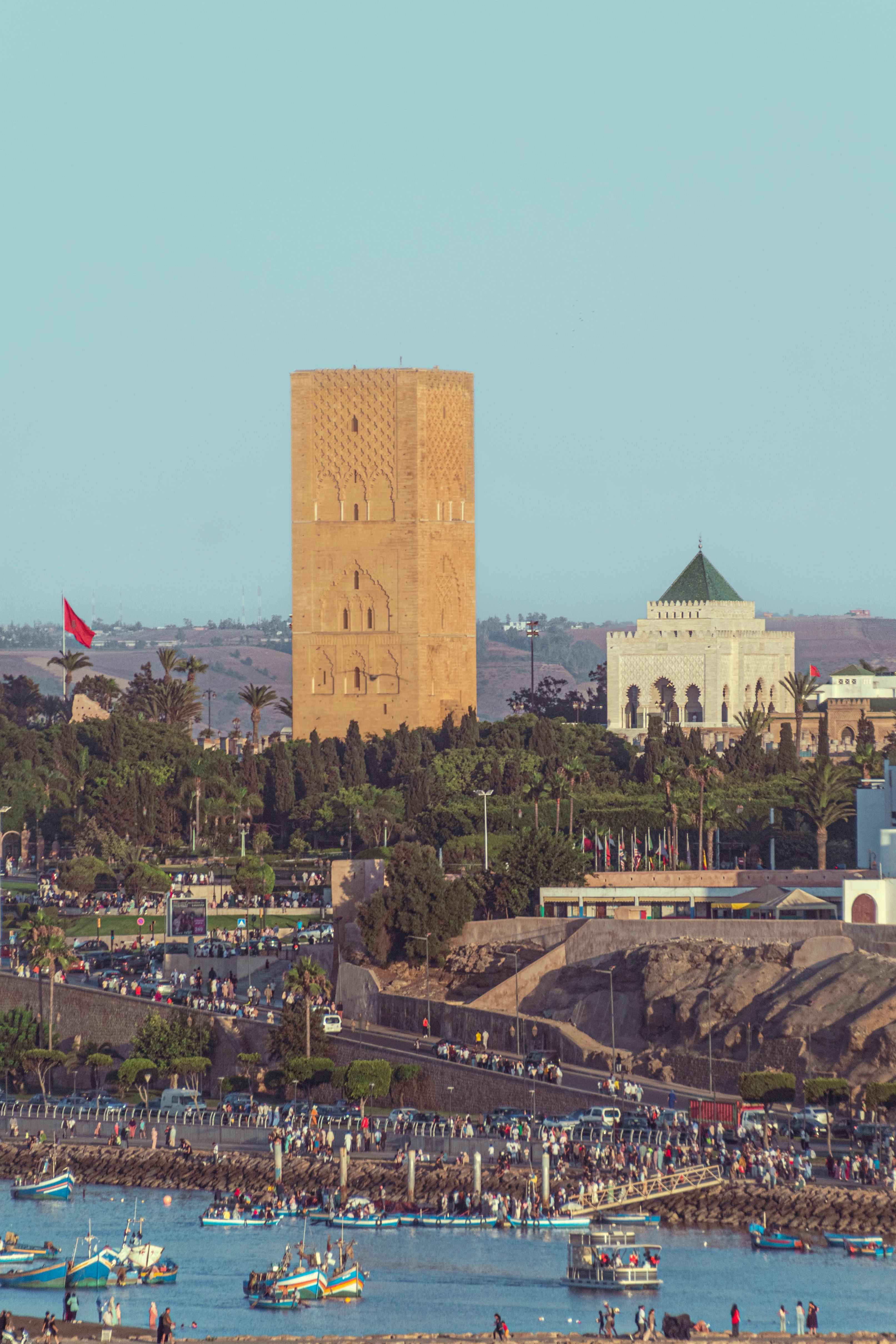
Rabat's medina — along with its walls, kasbah and Hassan Tower — was inscribed on the UNESCO World Heritage List in 2012 as a "modern capital and historic city." It is a rare honour that reflects the city's seamless blend of ancient and contemporary Morocco.
Kasbah des Oudaïas
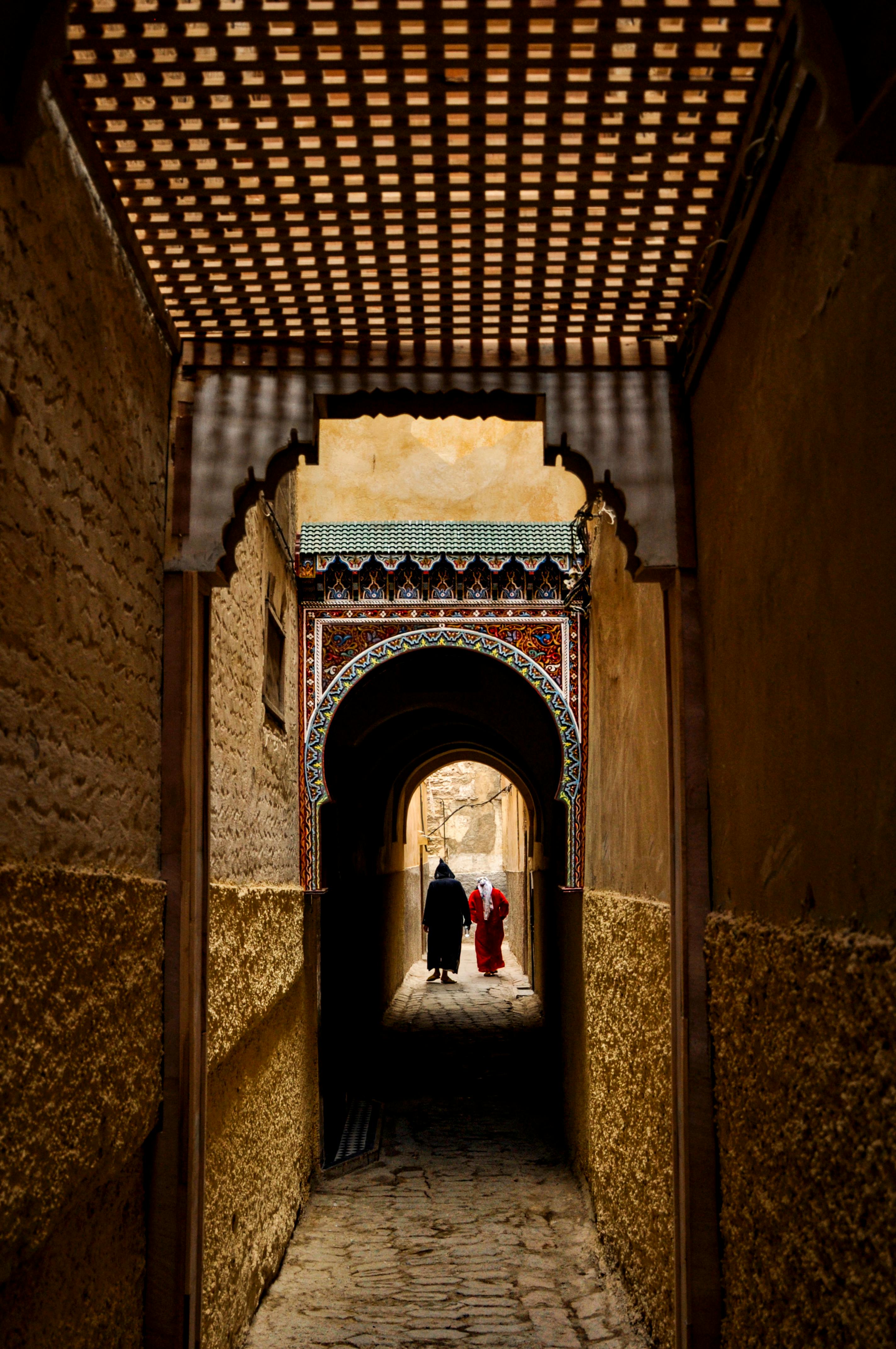
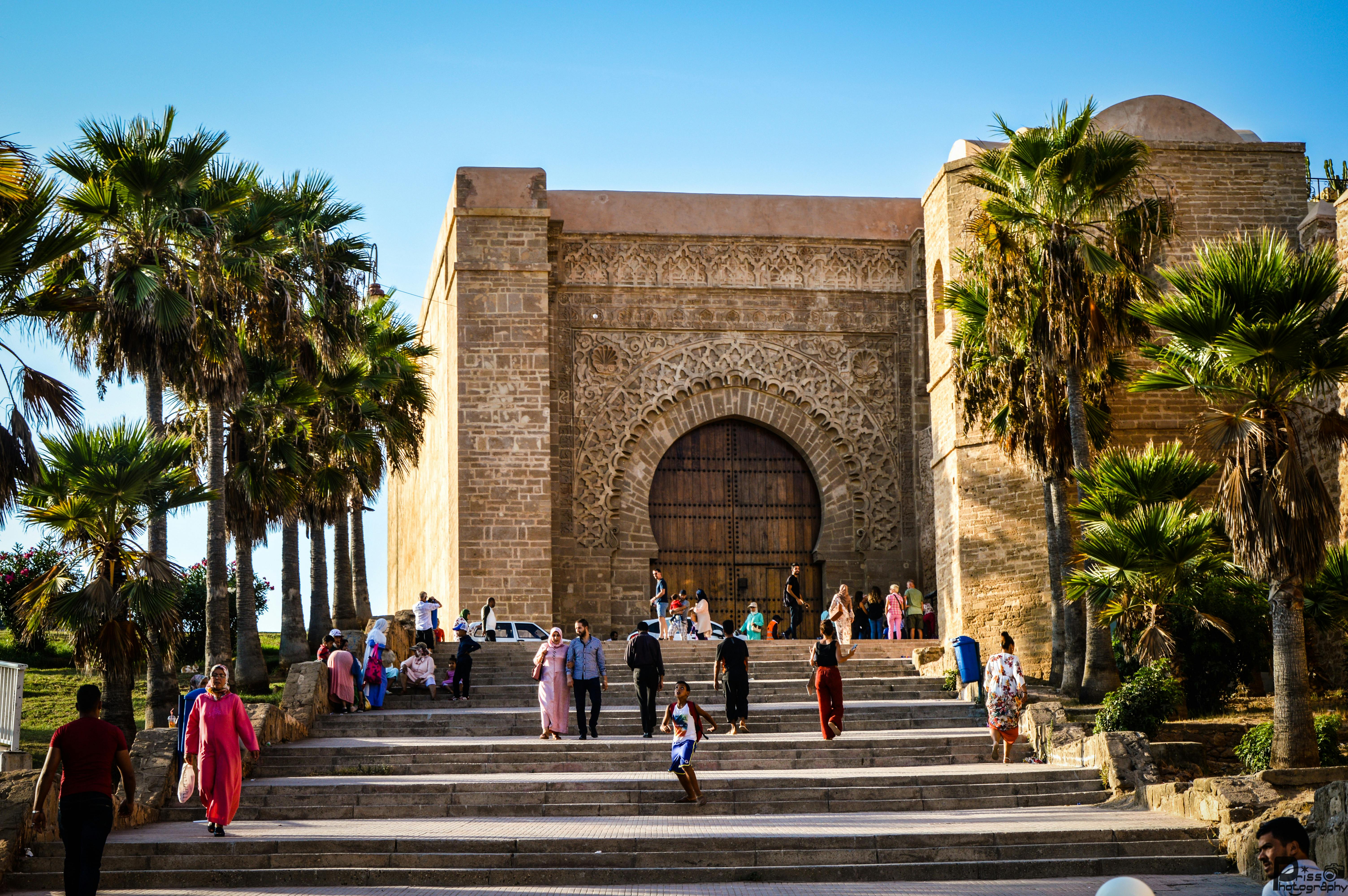
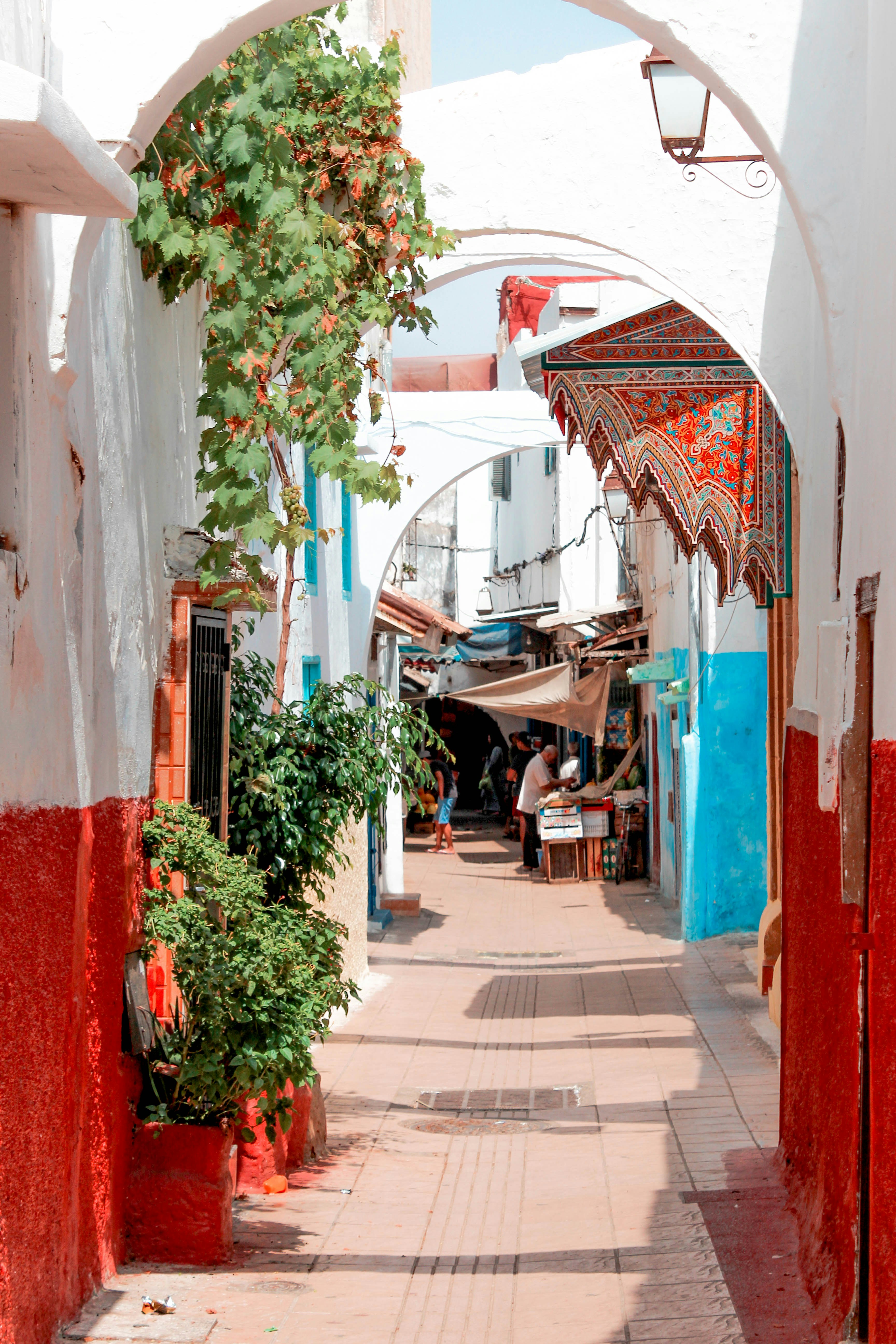
Perched on a rocky headland above the Atlantic, this 12th-century fortress contains one of Morocco's most beautiful Andalusian gardens. The blue-and-white painted streets inside the kasbah are quieter and more photogenic than those of Chefchaouen — and entirely unhyped.
Hassan Tower & Royal Mausoleum
The unfinished minaret of an ambitious 12th-century mosque stands guard over the Mohammed V Mausoleum — one of the finest examples of modern Moroccan craftsmanship in existence. Together they form the most powerful historical ensemble in the country.
When to Visit Rabat
Rabat's Atlantic position gives it a more moderate climate than inland cities — cooler summers than Marrakech, milder winters than Fes. It is one of Morocco's most comfortable year-round destinations.
| Season | Weather | Crowds | Verdict |
|---|---|---|---|
| Spring (Mar–May) | 18–24°C · flowers in bloom · some rain | Moderate | Best |
| Summer (Jun–Aug) | 22–28°C · Atlantic breeze · rarely hot | Moderate–High | Good |
| Autumn (Sep–Nov) | 20–26°C · warm · low rain | Low–Moderate | Best |
| Winter (Dec–Feb) | 12–18°C · mild · occasional rain | Low | Good |
✈️ Fly into Rabat-Salé Airport (RBA)
Rabat-Salé Airport is compact and just 10 km from the city centre — far easier to navigate than Casablanca's Mohammed V Airport, while remaining well connected to European hubs.
Search Flights to Rabat → Powered by Skyscanner · We may earn a commission at no cost to youRabat's Neighbourhoods
The Medina
Rabat's ancient walled city is compact, friendly and far less commercialised than Marrakech's. Its souks sell everything from spices to babouche slippers, and the pace is genuinely unhurried. Avenue Mohammed V cuts through its heart.
Kasbah des Oudaïas
Built in the 12th century on a rocky promontory, the kasbah is a neighbourhood of narrow lanes, blue-and-white houses and stunning Atlantic views. The Andalusian garden at its centre is one of Morocco's most tranquil spaces.
Agdal & Hassan
Rabat's embassy district and government quarter, with broad tree-lined boulevards, upmarket restaurants and café terraces. The Mohammed V Mausoleum and Hassan Tower are at the heart of this area.
Hay Riad & Ville Nouvelle
The Ville Nouvelle (New City) built by the French Protectorate is a pleasant grid of Art Deco and Mauresque architecture. Hay Riad, to the south, is Rabat's modern residential and commercial quarter.
Top Sights in Rabat
Chellah Necropolis
One of Morocco's most atmospheric sites, Chellah is a fortified complex containing the ruins of the Roman city of Sala Colonia and a 14th-century Merinid necropolis — all within a single walled garden. White storks nest on the ancient minarets from spring onwards, and the combination of Roman columns, Merinid tombs and overgrown gardens creates an almost surreal beauty. Entry is around 70 MAD. Allow 90 minutes.
Kasbah des Oudaïas
The Almohad gate (Bab Oudaia) at the kasbah entrance is one of the finest examples of 12th-century Moroccan monumental architecture. Inside, the lanes open onto a small museum of Moroccan arts housed in a 17th-century palace, and an exquisite Andalusian garden of orange trees, roses and fountains. The terrace above the Atlantic offers views across the Bouregreg river to Salé. Entry to the garden costs around 10 MAD. The kasbah also played a central role in the corsair history of Salé and the Bou Regreg — a story that reaches across both banks of the river.
Rabat Archaeological Museum
Morocco's most important archaeological collection is housed here — Roman bronzes from Volubilis, prehistoric artefacts and Phoenician finds from Chellah. Often overlooked by tourists, it is an essential 90-minute stop for anyone visiting Chellah or interested in Roman Morocco. Entrance is approximately 20 MAD.
Bouregreg Marina & Riverside Walk
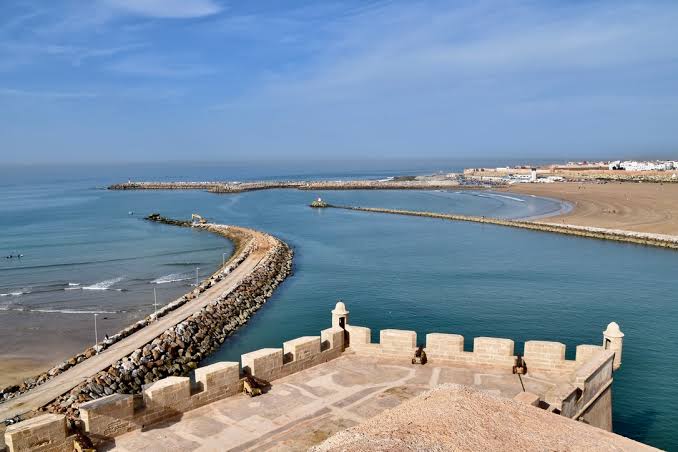
The Bouregreg river separating Rabat from the sister city of Salé has been transformed into a marina complex with restaurants, a tramway bridge and pleasant walking paths. The view back across the water towards the Kasbah des Oudaïas at sunset is one of Rabat's finest photographs. A small ferry still crosses to Salé as it has done for centuries — the fare is a few dirhams.
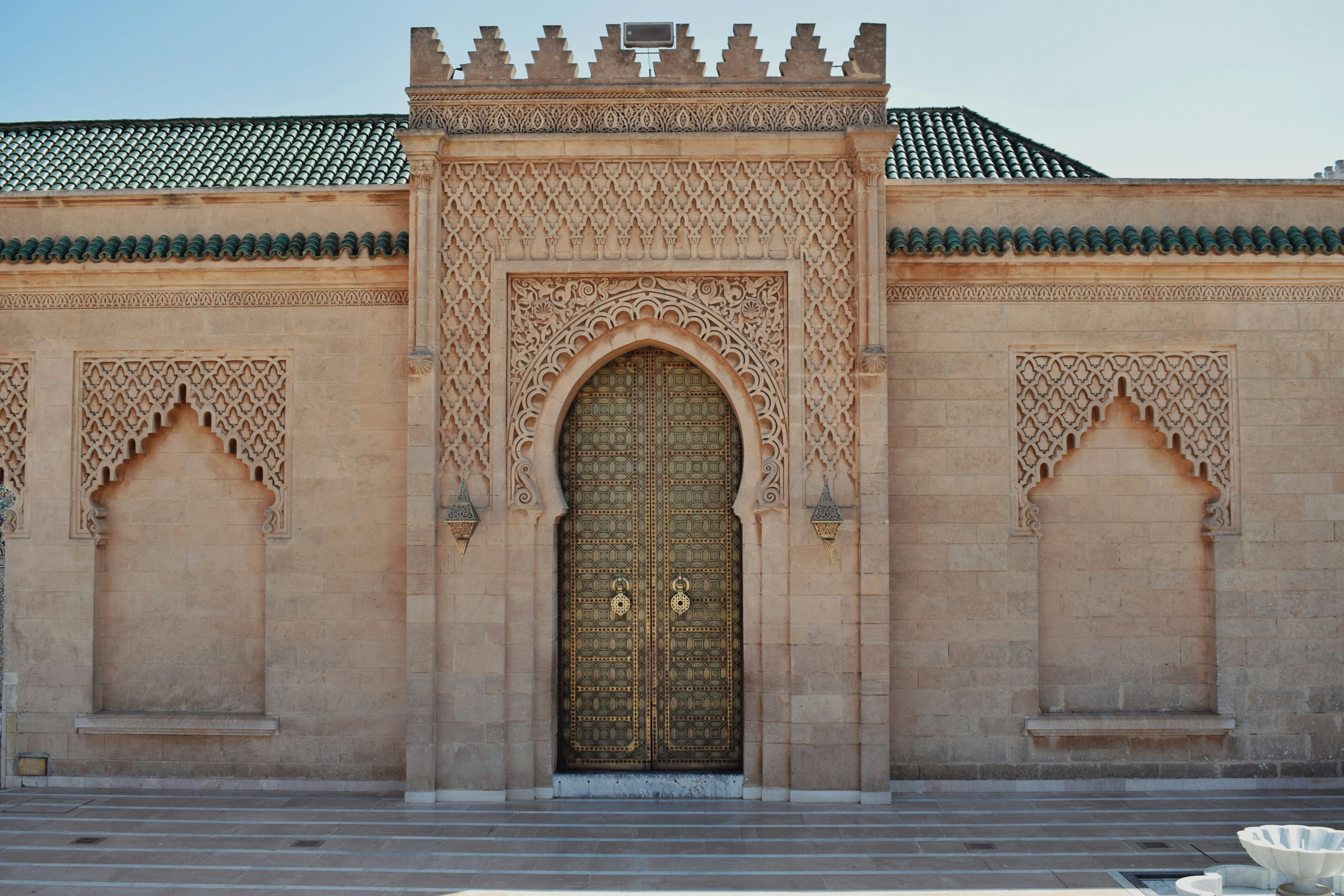
The Hassan Tower and Mohammed V Mausoleum — the centrepiece of Rabat's royal heritage
Hassan Tower & Mohammed V Mausoleum
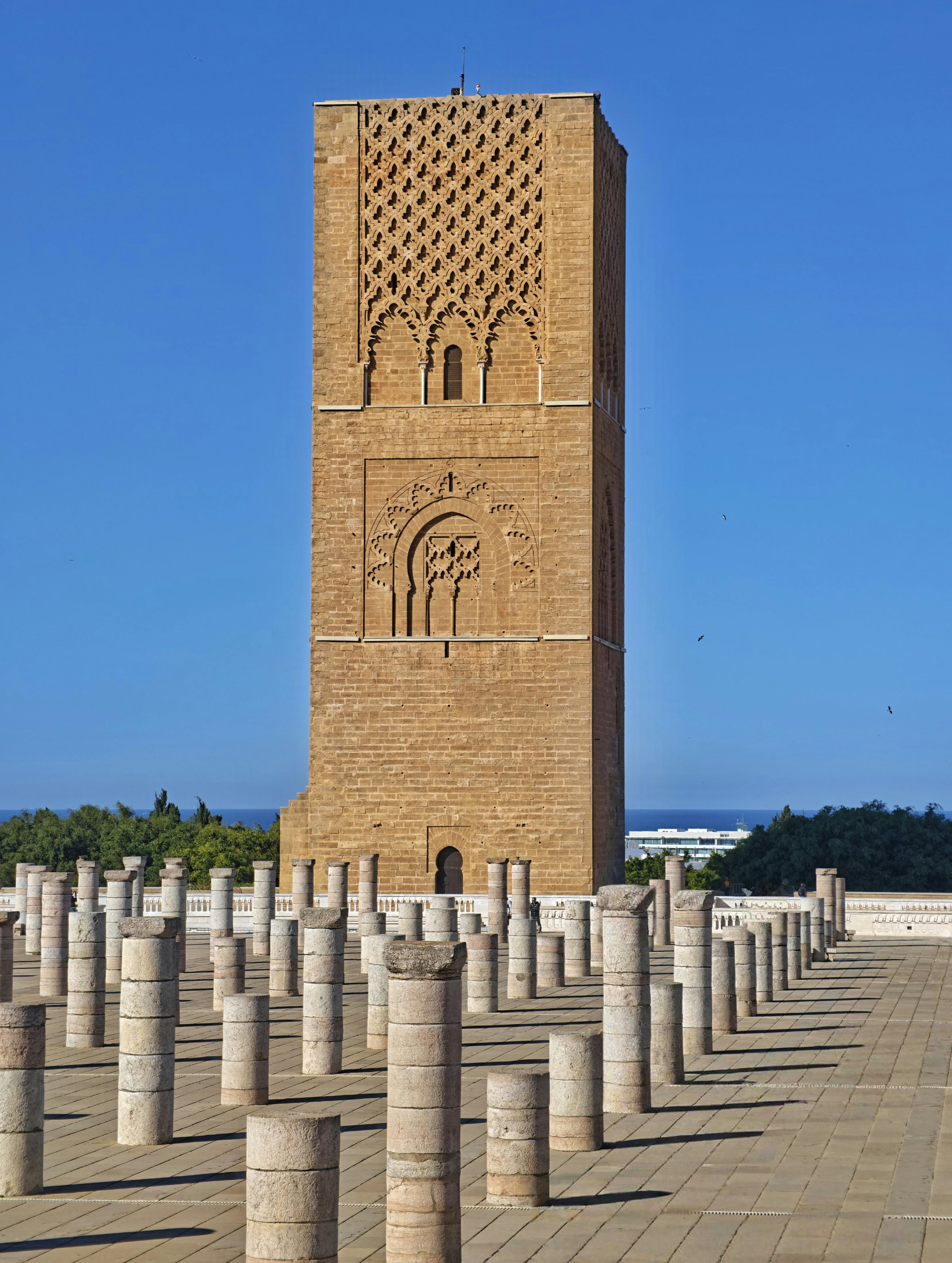
This UNESCO-listed complex is the defining landmark of Rabat and one of the most significant historical sites in the entire Islamic world. The Hassan Tower was begun in 1195 by Sultan Yacoub al-Mansour as part of what would have been the largest mosque in the world. The sultan died in 1199, construction stopped, and the minaret was left unfinished at 44 metres — roughly half its intended height. The 200 columns that once supported the mosque roof still stand in rows across the vast esplanade, creating a hauntingly beautiful forest of stone.
The mausoleum is open to non-Muslim visitors. The interior is spectacular — carved white onyx, zellij tilework and a central tomb of white Carrara marble. Dress modestly (shoulders and knees covered). No entrance fee. Royal Guards in ceremonial dress stand at the entrance — photography of the guards is permitted but remain respectful. Open daily.
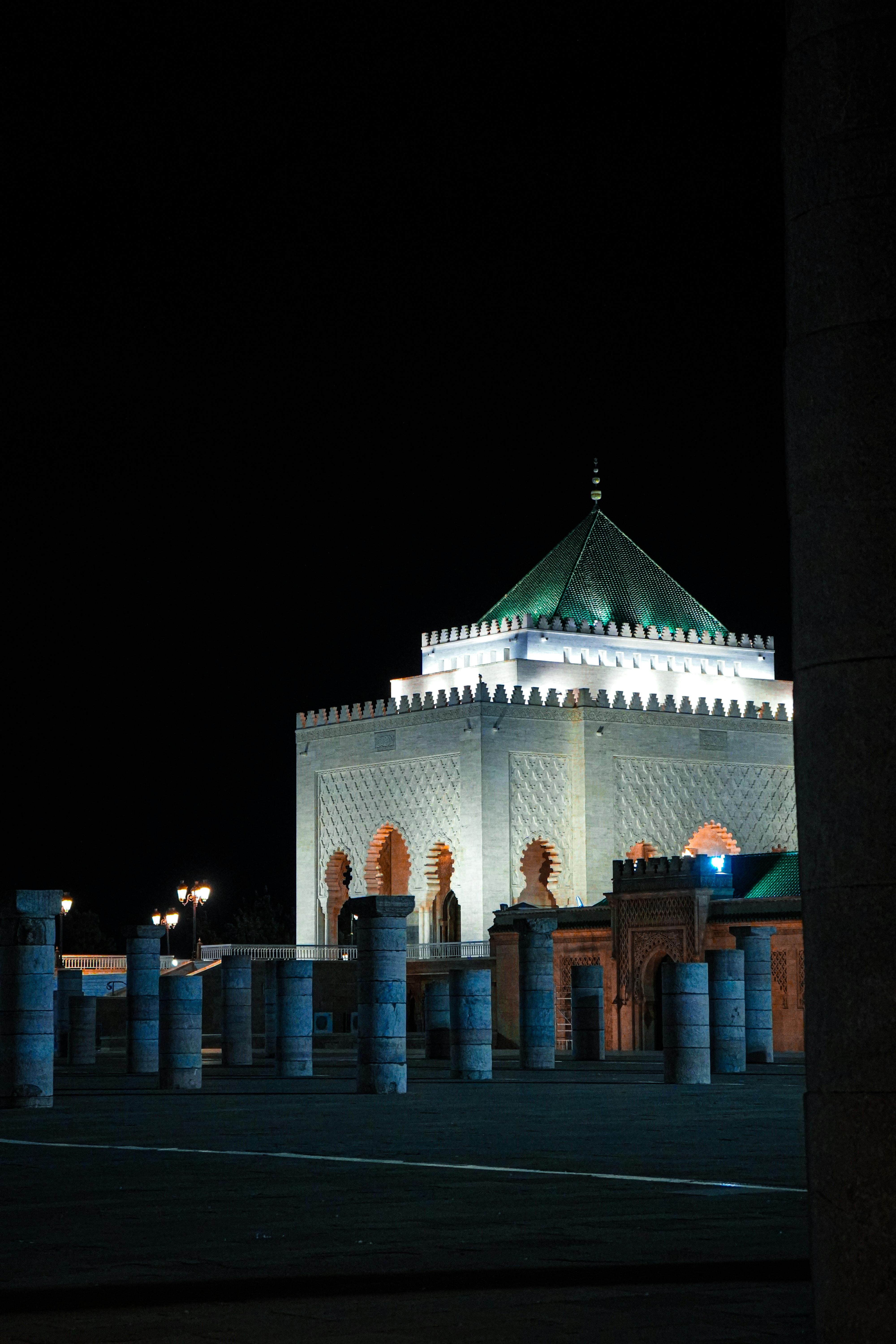
Directly adjacent to the tower, the white-marble Mohammed V Mausoleum was completed in 1971 and contains the tombs of King Mohammed V and his sons, including King Hassan II. It was designed by Vietnamese architect Vo Toan and built by Moroccan craftsmen — the interior took years of painstaking work in traditional techniques. The result is extraordinary: carved plaster, painted cedarwood ceilings and an enormous crystal chandelier.
Allow at least an hour for this complex. The site is busiest at midday — arrive early morning for the best photographs of the tower with clear light and minimal crowds.
Music & Festivals — Mawazine
Rabat hosts one of the largest music festivals in the world. Mawazine — Rhythms of the World takes place every May or June and draws over two million visitors across its ten-day run — figures that place it alongside Glastonbury and Coachella in terms of scale, though almost nothing in atmosphere. The festival stages span the city: from the grand OLM Souissi outdoor venue to the banks of the Bouregreg river and public spaces across the capital. Admission to most outdoor stages is free.
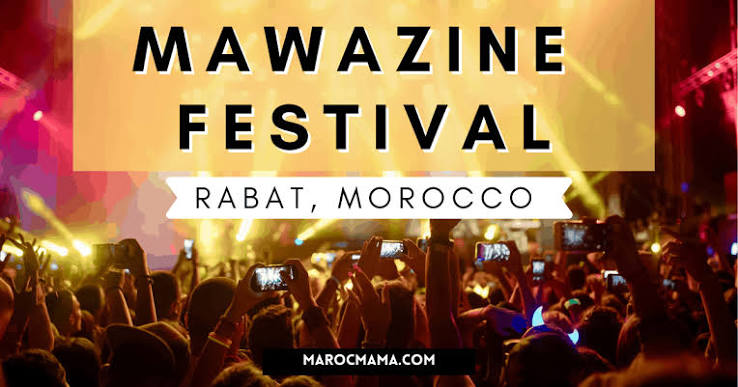
Mawazine is held under the patronage of HM King Mohammed VI and features a remarkable range of international headliners alongside Moroccan and Arab artists. Past performers have included Beyoncé, Mariah Carey, Rihanna, Elton John, Stevie Wonder and dozens of others of similar stature. The festival is a demonstration of Morocco's cultural openness and its ambition as a destination — few countries outside the wealthiest in the world can attract talent of this calibre. The dedicated Arabic and Gnaoua stages give the festival genuine local depth beyond the international spectacle.
Food & Drink in Rabat
Rabat's dining scene is more refined and less touristic than Marrakech. As a diplomatic capital with a large expatriate community, the city has developed a genuine restaurant culture — French-trained chefs, good wine lists (Morocco produces excellent wines) and a growing number of contemporary Moroccan restaurants that treat traditional cuisine with the respect it deserves.
Where to Eat
Dinarjat — The most atmospheric traditional restaurant in the medina, housed in a 17th-century palace. Expect a full Moroccan feast: bastilla, lamb tagine, couscous on Fridays. Book ahead for evenings. Le Dhow is a floating restaurant moored on the Bouregreg — the setting is unique and the food (Moroccan-international) is reliable. For simpler medina eating, the food stalls on Rue Souika serve harira soup, msemen flatbread and brochettes for a few dirhams.
Café Culture
Rabat is a café city. The terraces along Avenue Mohammed V in the Ville Nouvelle fill from mid-morning with government workers and students. Café Maure, perched inside the Kasbah des Oudaïas above the river, serves mint tea and Moroccan pastries with what may be the finest view in the city — arrive early to secure a table.
🏨 Find Your Hotel in Rabat
Rabat has excellent accommodation options — from boutique riads in the medina to international hotels in Agdal and Hay Riad. The city is far less expensive than Marrakech for equivalent quality.
Browse Rabat Hotels → Powered by Booking.com · We may earn a commission at no cost to youWhere to Stay in Rabat
Budget (Under €60/night) — Medina Riads
Staying in a riad within Rabat's medina is an authentic experience now hard to find at reasonable prices in Fes or Marrakech. The medina is small enough to walk everywhere. Seek out guesthouses near the Kasbah des Oudaïas for the best views and quietest streets.
- Riad Dar Soufa — Welcoming family-run riad in the medina. Simple rooms, generous breakfast, and a host who genuinely helps you navigate the city.
- Dar El Kebira — Atmospheric guesthouse steps from the Kasbah entrance. Rooftop terrace with Bouregreg river views.
Mid-Range (€60–150/night) — Hassan & Agdal
The Hassan neighbourhood near the mausoleum and Agdal district offer international hotels and boutique properties. The right choice for business travellers or those wanting easy access to Rabat's best restaurants.
- Hôtel Balima — A Rabat institution facing the parliament on Avenue Mohammed V. Art deco bones, reasonable rates and a terrace café that is a genuine local institution.
- Riad Kalaa — Boutique riad near the medina walls. Elegantly decorated rooms and a rooftop terrace with city views.
Luxury (€150+/night) — Waterfront & Five-Star
- Sofitel Rabat Jardin des Roses — Set in extensive rose gardens in the Agdal diplomatic quarter. Pool, spa, multiple restaurants and impeccable five-star service.
- Fairmont Rabat — The capital's newest landmark hotel, adjacent to the Royal Golf Dar Es Salam. Outstanding facilities and a strong sustainability programme — ideal for the 2030 World Cup period.
🏨 Find Your Rabat Hotel
From medina riads to international five-stars — compare all Rabat accommodation with free cancellation on most properties.
Search Rabat Hotels on Booking.com → Affiliate link — we may earn a small commission at no cost to you.Here's the good news: Rabat-Salé Airport is just 10km from the city centre — one of the shortest airport-to-centre distances in Morocco. The bad news is you still managed to be late. Here's your shortlist.
- Sofitel Rabat Jardin des Roses (Agdal) — Rabat's finest hotel sits in rose gardens in the diplomatic quarter — about 15 minutes from the airport, and the kind of place that makes missing your flight almost worth it.
- Hotel Ibis Rabat Agdal — Practical, affordable and well-positioned between the airport and the city. Reliable wifi and a 24-hour reception for those late-night arrivals.
- Golden Tulip Farah Rabat — Mid-range comfort in the city centre, a short taxi from both the airport and the medina. A solid transit base.
Getting There & Around
By Train from Casablanca
The ONCF train from Casablanca Mohammed V Airport to Rabat Agdal runs approximately every 30 minutes and takes around 1 hour. From Casablanca Voyageurs station it is slightly faster at around 45 minutes. Fares are approximately 45–55 MAD. This is by far the easiest and most reliable way to arrive from Casablanca.
By Air
Rabat-Salé Airport (RBA) is compact, efficient and just 10 km from the city centre. A taxi should cost 80–120 MAD to the medina. Bus line 17 and the Rabat-Salé tram provide cheaper public transit options. Direct flights operate from Paris, Brussels, Amsterdam, Madrid, Barcelona, and several low-cost hubs.
By Car
Rabat sits on the A1 motorway, 90 km north of Casablanca and 340 km south of Tangier. Driving into the medina is not recommended — park at one of the supervised car parks on the edge of the old city and walk. Renting a car in Rabat is useful for day trips to Meknes, Volubilis and Chefchaouen.
🚗 Rent a Car from Rabat
A rental car opens up day trips to Volubilis (Roman ruins), Meknes and the Middle Atlas mountains — none easily reached by public transport.
Compare Car Rental Prices → Powered by Rentalcars.com · We may earn a commission at no cost to youGetting Around Rabat
Rabat has an excellent tram network (Tramway de Rabat-Salé) with two lines connecting the main districts and crossing the Bouregreg into Salé. Single tickets cost around 6 MAD. The medina and kasbah are walkable from central stops. Petits taxis (small blue taxis) are cheap and metered — useful for reaching Chellah or the archaeological museum from the medina.
Practical Tips for Rabat
- Day Trip from Casablanca — Rabat is an easy and rewarding day trip from Casablanca (1 hour by train), but it genuinely deserves two nights.
- Dress modestly — Rabat is the royal and administrative capital; dress conservatively around the mausoleum and government buildings. Shoulders and knees covered is appreciated.
- Avoid guides at Hassan Tower — The site is straightforward to explore without a guide. Unofficial guides at the entrance can be persistent — a polite but firm "la shukran" (no thank you) is sufficient.
- Visit Chellah at golden hour — The late afternoon light through the ruins is spectacular. The site closes around 5:30 pm in winter and later in summer.
- Cross to Salé — The ferry across the Bouregreg to the ancient medina of Salé takes three minutes and costs next to nothing. Salé is overlooked by almost every visitor and still feels utterly authentic.
- ATMs are plentiful — Use bank ATMs (Banque Populaire, Attijariwafa, CIH) rather than hotel exchange desks for better rates. Avenue Mohammed V has multiple options.
🛡 Don't Leave Without Travel Insurance
Medical facilities in Rabat are better than in most Moroccan cities, but comprehensive travel insurance covering cancellations, medical and emergency evacuation remains essential.
Get a Quote from World Nomads → Powered by World Nomads · We may earn a commission at no cost to you🗺 Book a Guided Tour of Rabat
A half-day guided tour covering Hassan Tower, the mausoleum, kasbah and medina is an efficient way to cover Rabat's highlights with expert commentary.
Browse Rabat Tours on Viator → Powered by Viator · We may earn a commission at no cost to you