Quick Facts — Tangier
Why Visit Tangier?
Tangier sits at the northwestern tip of Africa, where the Atlantic and Mediterranean meet at the Strait of Gibraltar. On a clear day, Spain is visible from the hilltop Kasbah — just 14km away. That proximity to Europe has defined the city's character for centuries, making it a natural meeting point for trade, diplomacy, ideas and cultures from across two continents. Tangier has never been a typical Moroccan city. It has been, at various points in its history, a Phoenician port, a Roman settlement, a Portuguese stronghold, a British possession, and a 20th-century international zone governed jointly by multiple European powers. Each layer left its mark.
For much of the 20th century, that international status attracted a remarkable concentration of creative talent. Paul Bowles, William S. Burroughs, Henri Matisse, Tennessee Williams and the Rolling Stones all spent significant time here, drawn by the city's tolerance, its light, and an atmosphere that encouraged experimentation. The literary and artistic legacy of that era remains one of Tangier's most distinctive features — visible in its bookshops, cafés, galleries and the quiet persistence of creative community life.
Today's Tangier is changing rapidly. The high-speed Al Boraq train to Casablanca, the expanded port, the redeveloped waterfront and new investment in the city's infrastructure have repositioned it as Morocco's most dynamic northern city. The historic medina and Kasbah have not changed. The view across the Strait has not changed. And the sense that Tangier occupies a genuinely unique position — geographically, historically and culturally — has not changed either.
✈️ Fly to Tangier
Tangier Ibn Battuta Airport (TNG) has direct connections from several European cities including Paris, Brussels, Amsterdam and Madrid. Compare fares on Skyscanner.
Compare Flights to Tangier → We may earn a small commission at no extra cost to you.When to Visit Tangier
Tangier's northern Atlantic-Mediterranean climate is among the most pleasant in Morocco — warm summers tempered by sea breezes, mild winters, and spring and autumn that feel like a permanent state of perfection.
| Season | Months | Weather | Rating |
|---|---|---|---|
| Spring | Mar – May | 16–22°C, fresh, occasional light rain. City at its most photogenic. | Best |
| Autumn | Sep – Nov | 18–26°C, warm and dry. Fewer tourists than summer. | Best |
| Summer | Jun – Aug | 24–32°C, warm with Atlantic breeze. Busy with Spanish day-trippers. | Good |
| Winter | Dec – Feb | 10–16°C, rainy periods. Quiet, atmospheric and authentic. | Good |
Neighbourhoods to Know
The Medina
Old CityThe walled old city — smaller and less intense than Fes or Marrakech. The Petit Socco (small square) was the nerve centre of the international city and retains its café culture. Wander freely.
The Kasbah
Hilltop CitadelAbove the medina, the Kasbah offers sweeping views of the Strait. It contains the old Sultan's Palace (now the Kasbah Museum), whitewashed lanes and some of Tangier's best riads.
Ville Nouvelle
French QuarterThe modern city built around the Grand Socco (large square). The wide boulevards, the Cafe de Paris and the art deco cinema give this area a faded European elegance.
Malabata & Beach
Seaside StripThe long bay stretching east from the port. Beach clubs, fish restaurants and the striking new Tangier City Center mall. Good for an evening walk along the Corniche.
The redevelopment of Tangier's waterfront has strengthened the city's connection with the sea while creating attractive promenades, cafés and public spaces for residents and visitors alike. Today, the modern marina complements the historic port, illustrating how Tangier continues to evolve while preserving its maritime identity.
Top Sights & Attractions
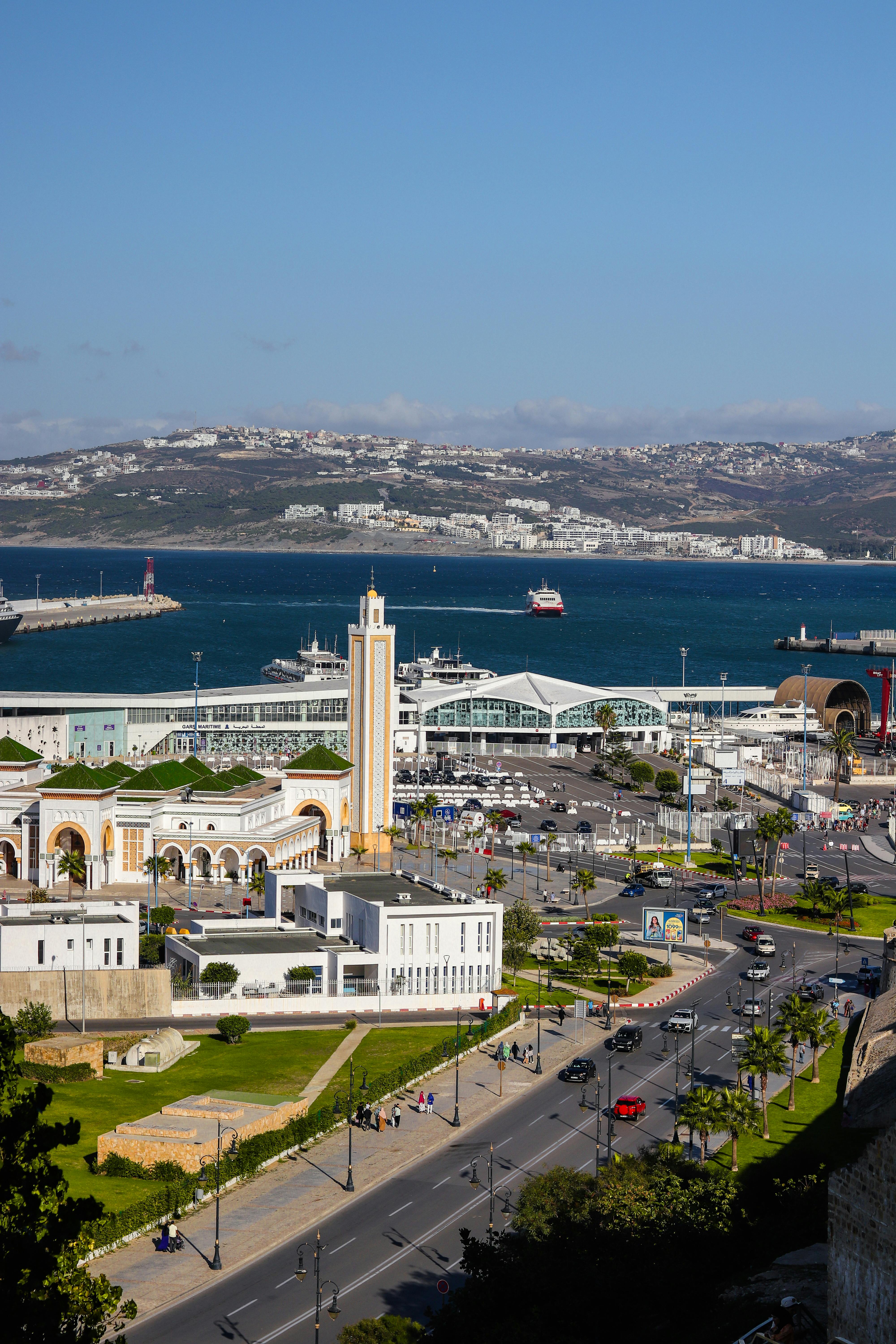
The Port & the Strait
The view from the Kasbah hill over the port — with Spain visible across 14km of water — is Tangier's defining image. The new port has a handsome mosque and railway station worth exploring on arrival.
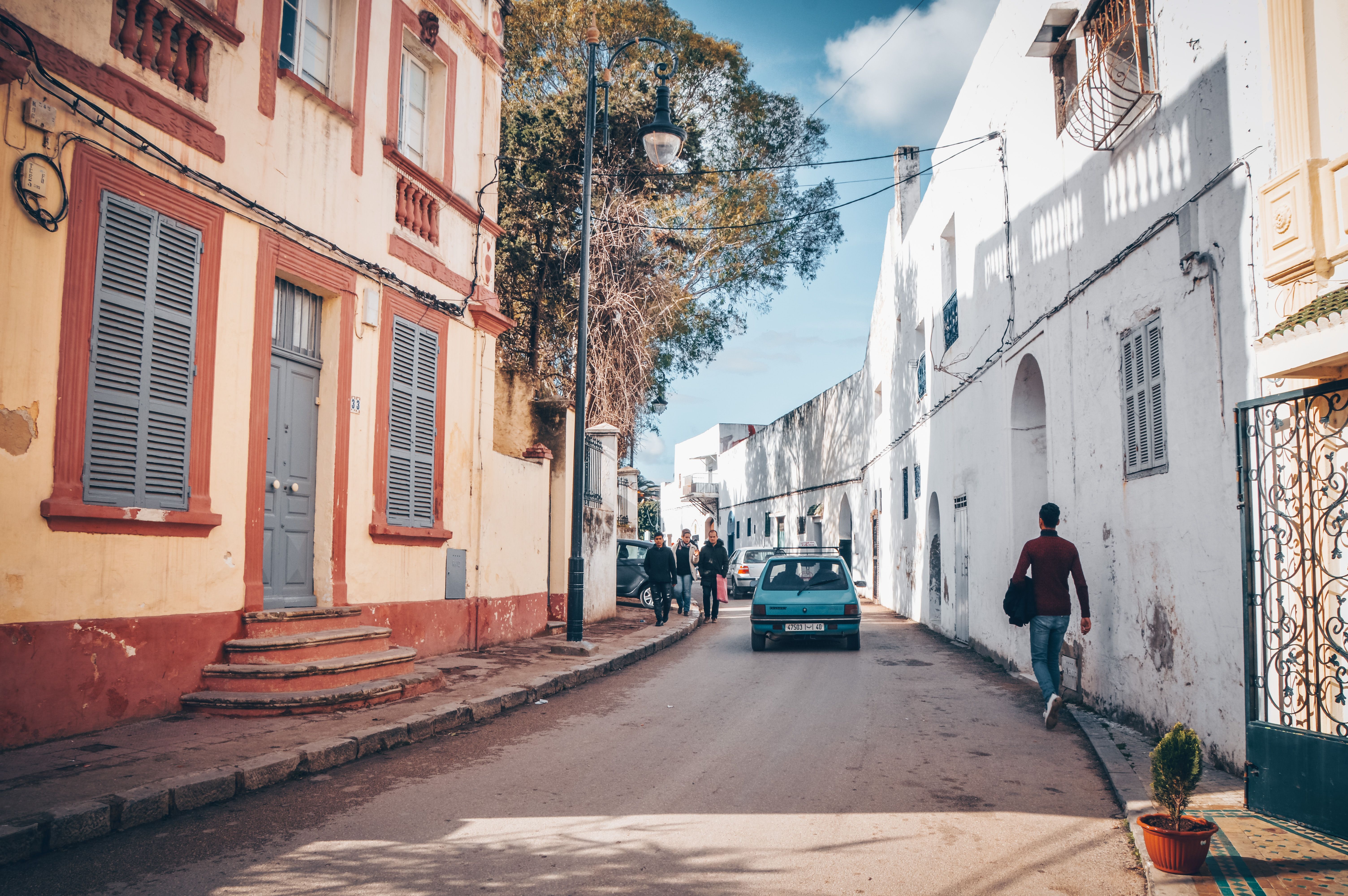
The Medina & Petit Socco
Tangier's old city is compact enough to explore in a morning. Start at the Grand Socco, descend into the medina through the Rue es-Siaghine, and end coffee at the legendary Café Central in the Petit Socco.
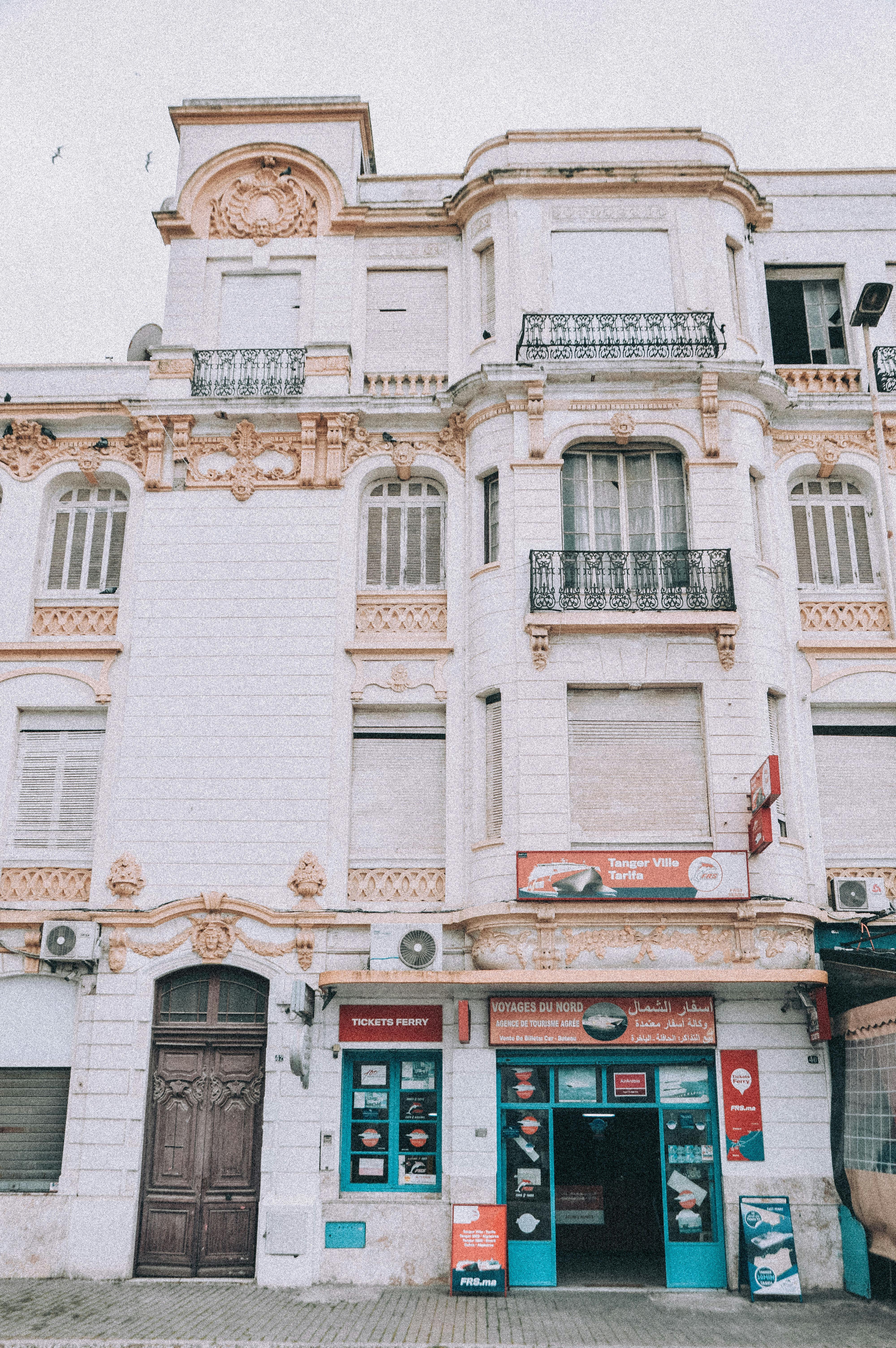
Ville Nouvelle Architecture
The French-era downtown holds beautiful Mauresque and art deco buildings — ornate stucco facades, wrought-iron balconies and grand avenues that recall Tangier's days as an international city.
More Sights Worth Your Time
- Kasbah Museum (Dar el-Makhzen) — The old Sultan's Palace turned archaeological museum, with a beautiful Andalusian garden. One of the most pleasant museums in Morocco. Entry: 20 MAD.
- American Legation Museum — The only National Historic Landmark outside US territory. Morocco was the first country to recognise American independence in 1777. The building has extraordinary archives and rotating art exhibitions. Free entry.
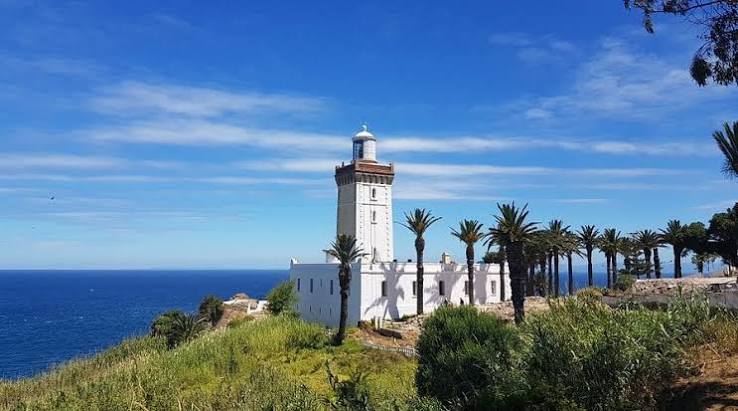
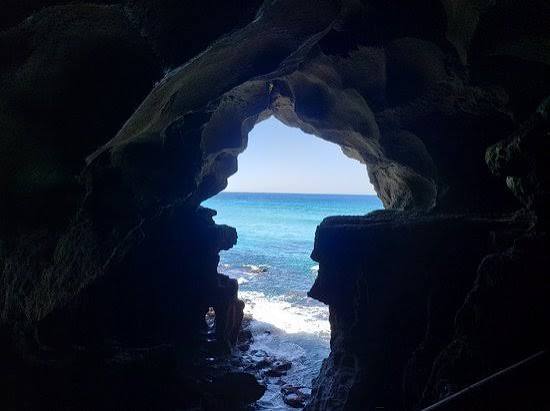
- Cap Spartel & Hercules Caves — 14km west of Tangier, the lighthouse at Cap Spartel marks where the Atlantic meets the Mediterranean. The nearby Caves of Hercules are mythologically significant and visually dramatic. Take a grand taxi.
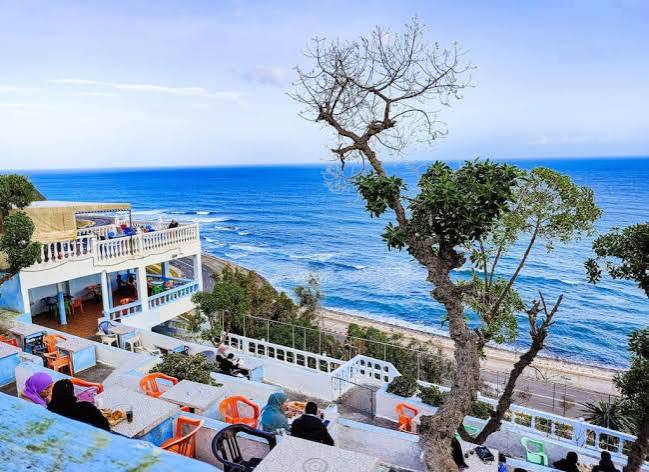
- Café Hafa — A clifftop tea garden opened in 1921, terraced down the hillside facing the Strait. Paul Bowles came here daily. The mint tea and the view are unchanged. Do not miss it.
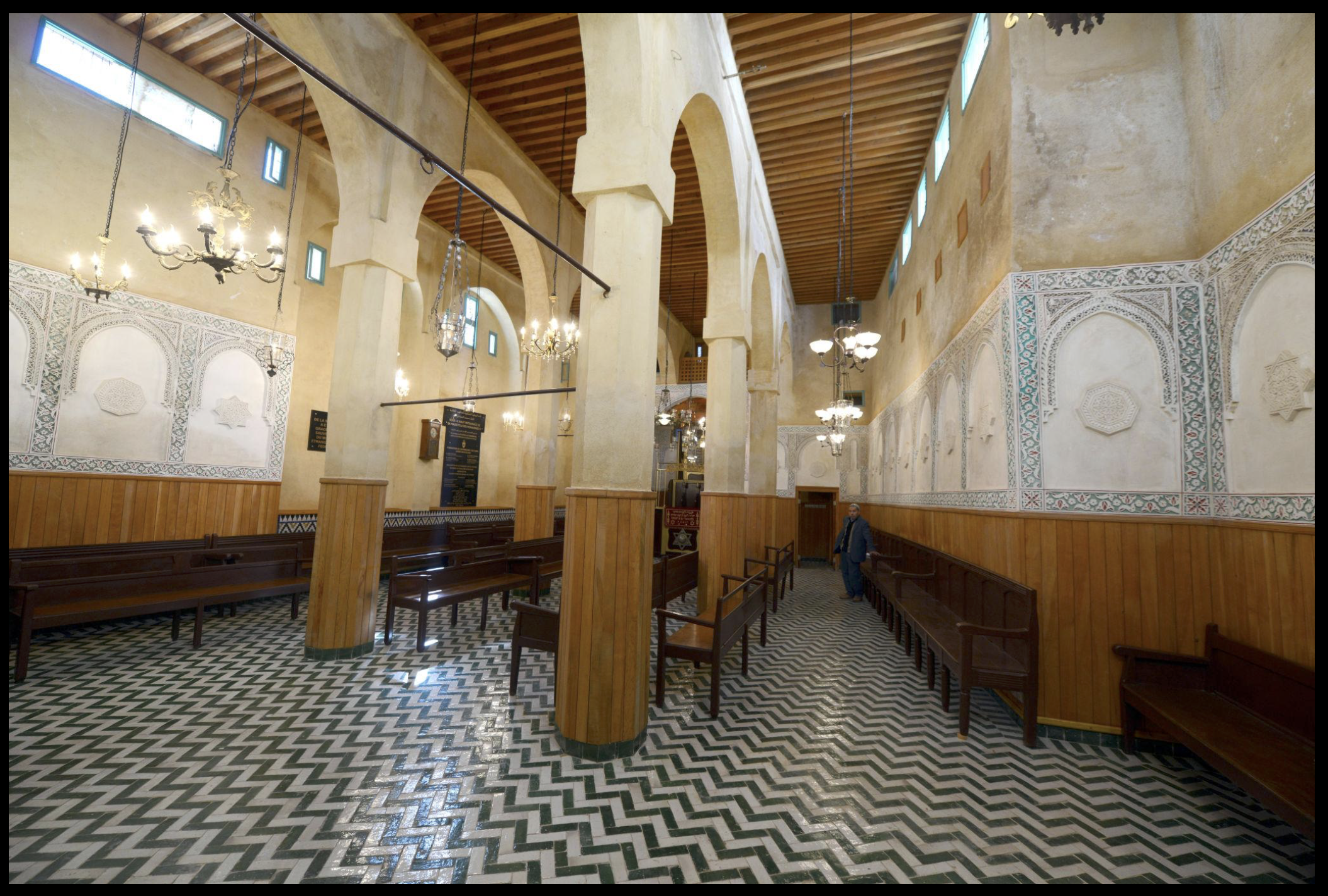
- Musée de la Fondation Lorin — A charming small museum in the old Jewish quarter displaying photographs, posters and maps from Tangier's international era. Free entry; donations welcome.
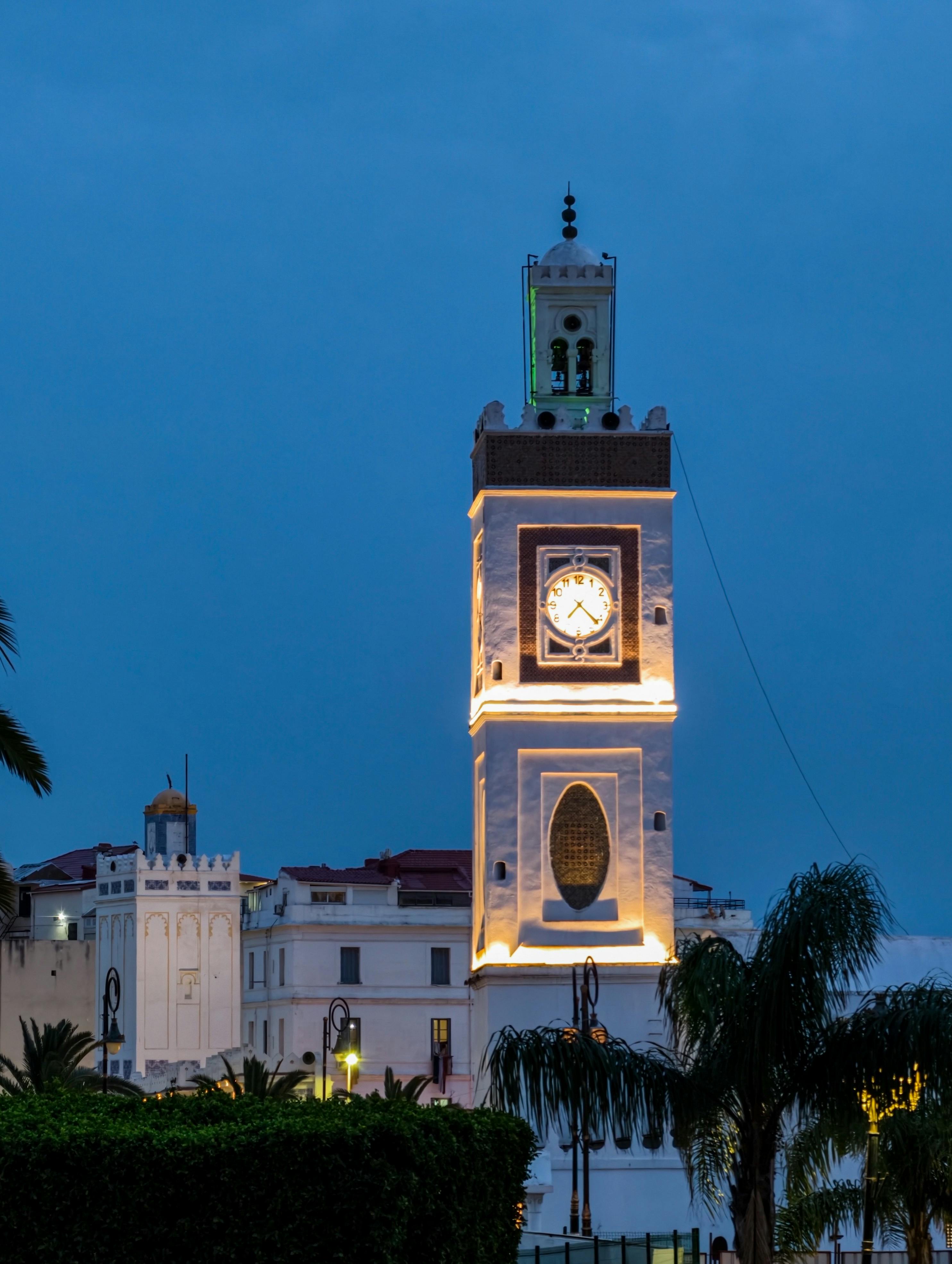
Tangier at blue hour — the city's European architectural legacy glows against the Atlantic dusk.
🗺️ Book a Tangier Tour
Tangier can be overwhelming on a first visit, especially arriving by ferry. A guided half-day tour of the medina and Kasbah makes the city immediately legible. Find top-rated tours on Viator.
Browse Tangier Tours on Viator → We may earn a small commission at no extra cost to you.Literary Tangier — The Writers Who Made It Famous
No city in the Muslim world has attracted as many Western writers and artists as Tangier. The city's status as an international zone (1923–1956), where normal rules of nationality and law were suspended, created an environment of radical freedom that proved irresistible to creative exiles.
- Paul Bowles — The American composer and author arrived in 1947 and never left. His novel The Sheltering Sky (1949) brought Tangier to world attention. His apartment near the American Legation is now a museum. He is buried in Tangier.
- William S. Burroughs — Wrote much of Naked Lunch in Tangier between 1954 and 1958, in a room in the Medina. Jack Kerouac and Allen Ginsberg visited to help him edit the manuscript.
- Henri Matisse — Visited Tangier twice (1912–1913), producing some of his most celebrated work. The light and colour of the city transformed his painting.
- Tennessee Williams & Truman Capote — Among the literary figures who passed through during Tangier's golden age.
The Librairie des Colonnes, on Boulevard Pasteur, is the bookshop that was at the centre of this literary world. Founded in 1949, it still operates today — a pilgrimage site for bibliophiles, stocking Moroccan literature in Arabic, French and English.
Music & Festivals — Tanjazz
Each year, Tangier celebrates its long-standing international character through Tanjazz, one of Morocco's best-known jazz festivals. Since its creation, the festival has welcomed Moroccan and international musicians performing traditional jazz alongside contemporary styles influenced by African, Mediterranean and world music.
Tanjazz reflects the city's long association with creativity and cultural exchange. Tangier has attracted writers, painters, musicians and filmmakers for generations, and the festival continues that tradition by bringing audiences together in one of Morocco's most cosmopolitan settings — the Cervantes Theatre, medina courtyards and public spaces across the city. September, when Tanjazz is held, is also one of Tangier's most pleasant months: warm, clear and noticeably quieter than the summer peak.
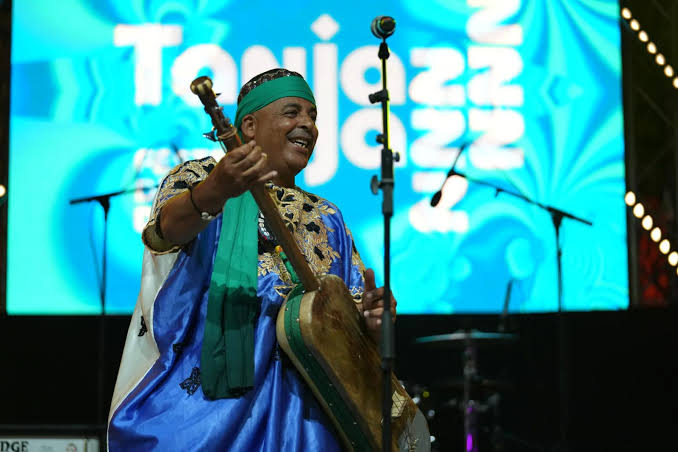
For visitors, attending Tanjazz offers an opportunity to experience the city beyond its historic monuments. Concerts, cafés and public spaces come alive with music, reinforcing Tangier's reputation as a destination where culture continues to evolve while remaining connected to its past.
Tanjazz 2026 falls on 18–20 September. For a complete seasonal overview — weather, packing, itineraries and planning advice for September in Morocco — see the Morocco in September 2026 travel guide.
Food & Drink in Tangier
Tangier's cooking reflects its crossroads position — Moroccan in character but with Spanish, Andalusian and Mediterranean influences. The seafood, given the city's position on two seas, is exceptional.
- Pastilla de la mer — Tangier's signature dish: thin pastry filled with seafood (prawns, squid, fish) with a chermoula sauce. A coastal variation on the Fassi pigeon bastilla.
- Grilled sardines — The freshest sardines in Morocco, grilled with cumin, paprika and preserved lemon. Order at any port-side restaurant for 40–60 MAD a plate.
- Mint tea with msemen — Tangier's cafés serve the classic mint tea ritual with msemen (flaky layered flatbread) or beghrir (honeycomb crêpes drizzled with honey and butter).
Where to Eat
- El Morocco Club (Kasbah) — An elegant riad-restaurant in a restored palace, with a rooftop terrace overlooking the Strait. Fine Moroccan-European cooking and superb service.
- Restaurant Populaire Saveur de Poisson (Escalier Waller) — No menu, no choices — just whatever was caught that morning, served in endless courses. One of Morocco's most famous dining experiences. Reserve ahead.
- Cafe de Paris (Place de France) — The most famous café in Tangier's history. Come for coffee and croissants, not the food — but the people-watching and the art deco interior are worth the visit alone.
- Café Hafa — Terraced mint tea on the cliff above the Strait. Not for food — for the experience. One of the great café settings in the world.
Where to Stay in Tangier
- La Maison Blanche (Kasbah) — Boutique riad with 5 rooms and a rooftop overlooking the Strait. The best views in the city. Book months in advance.
- El Minzah Hotel (Ville Nouvelle) — Tangier's grande dame, open since 1930 and a favourite of diplomats and writers throughout the 20th century. Restored to elegance.
- Dar Nour (Kasbah) — A beautifully renovated riad with panoramic terrace, excellent breakfast and genuinely warm hosts. Mid-range, exceptional value.
- Hotel Continental (Medina) — An atmospheric old hotel favoured by Paul Bowles, with rooms overlooking the port. Faded glory and good prices.
🏨 Find a Hotel in Tangier
Kasbah riads book out months in advance in summer. Compare all options — from medina guesthouses to beachfront hotels — on Booking.com with free cancellation.
Browse Hotels in Tangier → We may earn a small commission at no extra cost to you.Named after history's greatest traveller — a man who definitely did not miss his departure. Unlike, perhaps, you. Ibn Battuta Airport is 13km from the city centre; these hotels get you there in minutes.
- Mövenpick Hotel Tangier — Tangier's smartest business hotel, close to the airport corridor and the new city. Excellent rooms, a pool and a rooftop bar with Strait views.
- Ibis Tanger City Center — Budget-friendly and well-located in the new city, 15 minutes from the terminal by taxi. The sensible choice for an early flight.
- Hotel Barceló Tangier — Mid-range with reliable facilities and reasonable proximity to the airport. Solid base if you're catching a morning departure.
Getting There — The Ferry from Spain
The ferry crossing from southern Spain to Tangier is one of the great short travel moments — watching Africa approach across the Strait while Europe recedes behind you. Two main routes operate:
- Tarifa → Tangier Med — The fastest crossing: 35 minutes on FRS or Inter Shipping ferries. Note that Tangier Med port is 40km east of Tangier city — allow 45 minutes by grand taxi or shuttle bus to reach the centre.
- Algeciras → Tangier Med — 90 minutes, multiple daily crossings with Baleària, FRS or Trasmediterránea. Same port caveat applies.
- Tarifa → Tangier Ville — FRS operates a less frequent service direct into Tangier's city-centre port. More convenient if staying central — check schedules as service varies seasonally.
By Train (Al Boraq TGV)
Morocco's Al Boraq high-speed train connects Tangier Ville station to Casablanca in 2 hours 10 minutes — the fastest rail journey in Africa. It also stops at Kenitra (55 min) and Rabat (1 hr 25 min). Book through ONCF's website. Fares from 200 MAD one-way.
🚗 Rent a Car in Tangier
A car unlocks the Rif Mountains, the white towns of the north coast and Chefchaouen (2.5 hrs). Compare rental rates from all agencies at Tangier's airport and city centre.
Compare Car Rentals in Tangier → We may earn a small commission at no extra cost to you.Practical Tips for Tangier
- Arriving by ferry — If arriving at Tangier Med port, your baggage will be scanned and you'll pass through Moroccan customs and passport control before boarding a taxi or bus. Allow 30–45 minutes for the port process.
- Touts and faux guides — Tangier has a (partly deserved) reputation for persistent hassle at the port and Grand Socco. Walking with purpose and declining firmly (but politely) is effective. Tourists on day trips from Spain are the primary target.
- Spanish currency — Euros are not accepted in Morocco. Exchange at the port or withdraw dirhams from ATMs in the city (not port exchange booths, which have poor rates).
- Day-tripping from Spain — Tangier is easily visited as a day trip from Tarifa or Algeciras. However, a night in the Kasbah adds a dimension the day-trippers never see — the city after dark is quieter, more authentic and strikingly beautiful.
- Cap Spartel — Take a grand taxi for around 150–200 MAD return (including waiting time) for the 14km trip to the lighthouse and Hercules Caves. Non-negotiable sightseeing.
🛡️ Travel Insurance for Morocco
Whether arriving by ferry or plane, comprehensive travel insurance is essential. World Nomads covers medical emergencies, trip cancellation and baggage — buy before you board.
Get a Quote from World Nomads → We may earn a small commission at no extra cost to you.Frequently Asked Questions
Final Thoughts
Tangier is a city shaped by movement — of people, cultures, languages and ideas. Its position overlooking the Strait of Gibraltar has made it an important meeting place for centuries, and that international character remains visible today in its architecture, cafés, galleries and cultural life.
Whether you come to wander through the kasbah, enjoy panoramic views from Cap Spartel, explore the Caves of Hercules, discover its literary heritage or attend Tanjazz, Tangier rewards visitors who take the time to look beyond its famous landmarks. It is a city where Morocco's history, creativity and modern ambitions come together in a way that is both distinctive and memorable.