Quick Facts — Casablanca
Why Visit Casablanca?
Casablanca is Morocco's largest city and its economic capital — a working metropolis of over four million people where business, architecture, culture and everyday life intersect in ways that none of the imperial cities can offer. Most visitors pass through Mohammed V Airport and continue directly to Marrakech or Fes, which means they miss something genuinely different: a city that reflects contemporary Morocco as clearly as the medinas of Fes or Marrakech reflect its medieval past.
The city has the country's most extensive collection of art deco and Mauresque architecture, a legacy of the French Protectorate period that shaped Casablanca's downtown into something found nowhere else in Africa. The Hassan II Mosque, completed in 1993 and set above the Atlantic, is by any measure one of the most significant works of architecture built in the 20th century. The Corniche, the Habous Quarter, the Central Market and the café culture of the Boulevard Mohammed V all contribute to a city with a distinct and confident character.
Casablanca is also a city in active transformation. The Grand Stade Hassan II — a 115,000-seat stadium under construction for the 2030 FIFA World Cup — the expanded tram network and ongoing waterfront development are reshaping the city's geography. What Casablanca looks like in 2030 will be noticeably different from today, which makes visiting now its own kind of document.
✈️ Fly into Casablanca
Mohammed V International Airport (CMN) is Morocco's main international hub, with direct connections from New York, London, Paris, Dubai and dozens of European cities. Compare fares on Skyscanner.
Compare Flights to Casablanca → We may earn a small commission at no extra cost to you.When to Visit Casablanca
Casablanca's Atlantic coast location gives it one of Morocco's most moderate climates — warm summers without the ferocious inland heat, mild winters, and sea breezes year-round.
| Season | Months | Weather | Rating |
|---|---|---|---|
| Spring | Mar – May | 18–24°C, sunny, occasional showers. City at its freshest. | Best |
| Autumn | Sep – Nov | 20–26°C, warm and dry. Long evenings on the Corniche. | Best |
| Summer | Jun – Aug | 22–28°C, humid near the coast. Crowded with domestic tourists. | Good |
| Winter | Dec – Feb | 12–18°C, rainy periods. Quiet, good hotel rates. | Good |
Neighbourhoods to Know
Centre Ville
The Art Deco HeartThe downtown grid around Boulevard Mohammed V and Place des Nations Unies. Morocco's finest collection of 1920s–40s Mauresque and art deco buildings. Start here.
The Old Medina
Historic QuarterFar smaller and less intense than Fes or Marrakech's medinas, but authentic and unhurried. Good for spice shopping and a glimpse of pre-colonial Casablanca.
Anfa & Corniche
Seaside & UpscaleThe oceanfront promenade stretching south from the Hassan II Mosque. Lined with seafood restaurants, beach clubs and luxury hotels. The city's social hub on weekends.
Quartier Habous
New MedinaBuilt in the 1930s as a planned Moroccan quarter, Habous blends French town planning with traditional medina architecture. Excellent pastry shops and craft boutiques.
Casablanca is home to one of the largest collections of Art Deco architecture in North Africa. Many buildings dating from the early twentieth century continue to shape the city's distinctive appearance, blending European design influences with Moroccan craftsmanship. Walking through the city centre offers an opportunity to discover elegant façades, historic cinemas and public buildings that reflect an important period in Casablanca's urban development.
Going deeper: For a full architectural guide — including the Cinéma Rialto, Immeuble Assayag, Place Mohammed V civic ensemble, the Habous Quarter and a practical self-guided walking route — see our long-form companion: Casablanca Art Deco Architecture: A Native's Guide →
Top Sights & Attractions
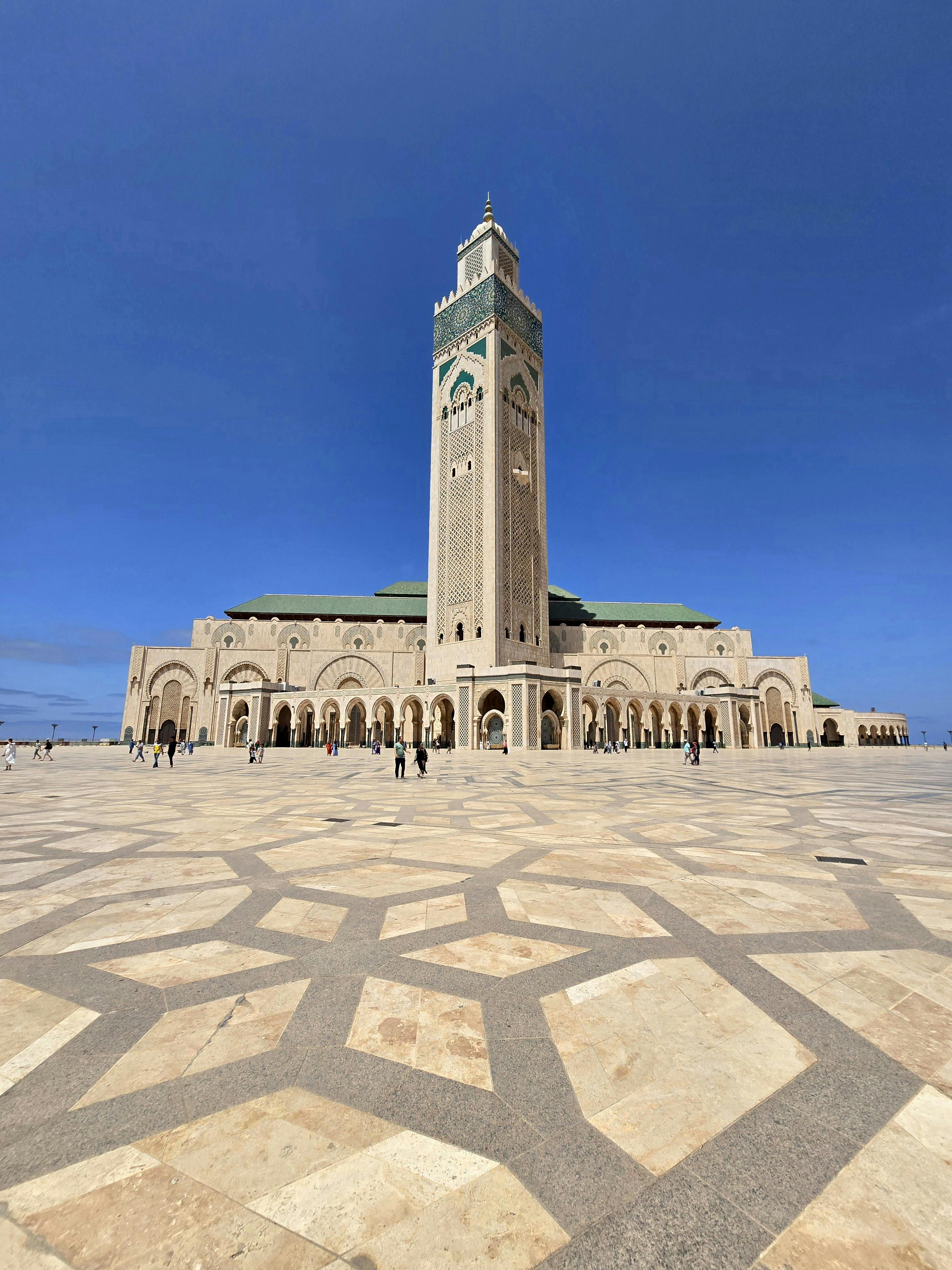
Hassan II Mosque
The world's third-largest mosque, built on a promontory above the Atlantic. Its 210-metre minaret is the tallest in the world. Guided tours available for non-Muslims. Not to be missed.
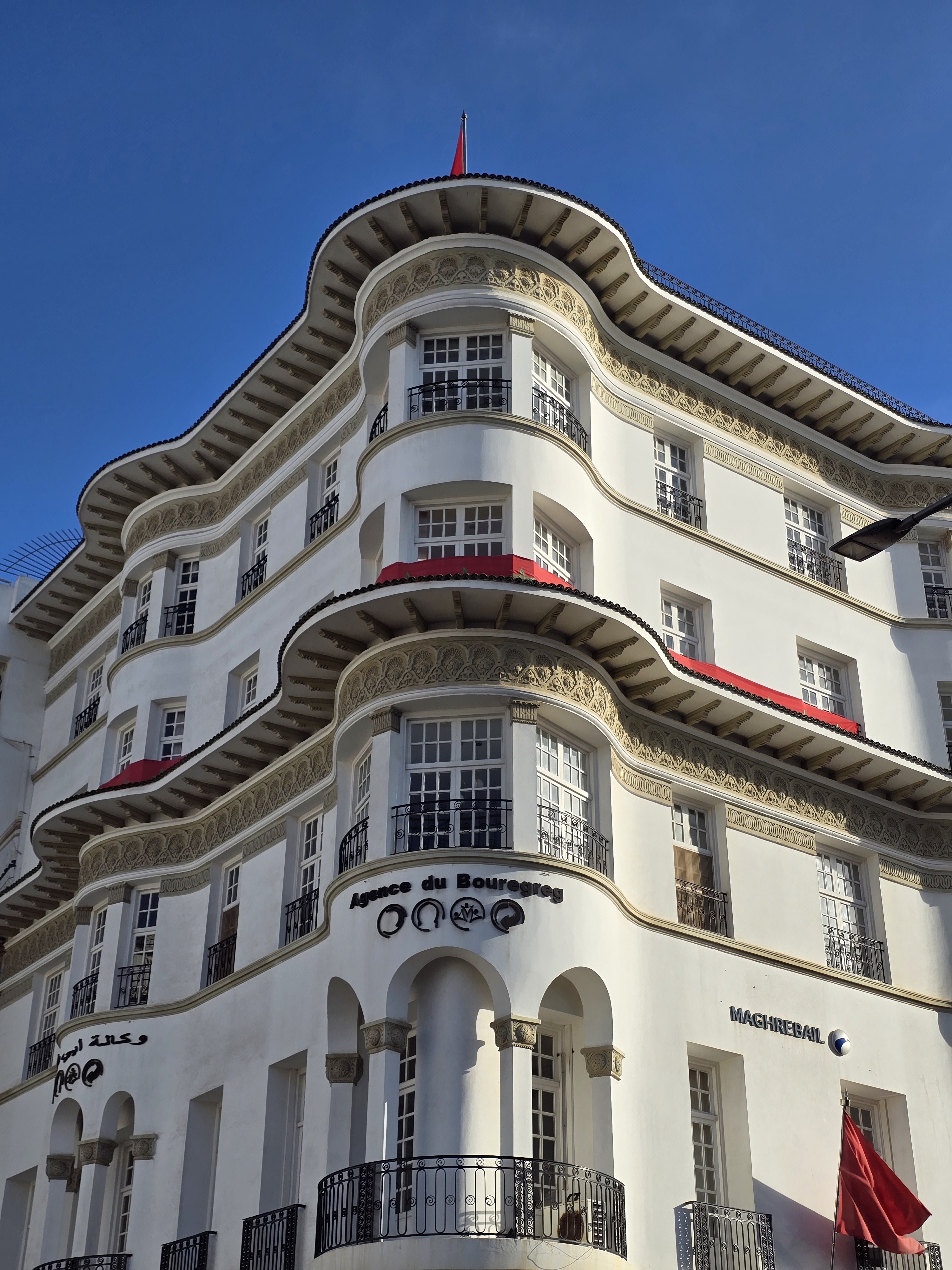
Art Deco Downtown
The streets around Bd Mohammed V hide a treasure trove of 1920s–40s Mauresque architecture — ornate facades blending French art deco with Moorish geometric detail. Take a walking tour.
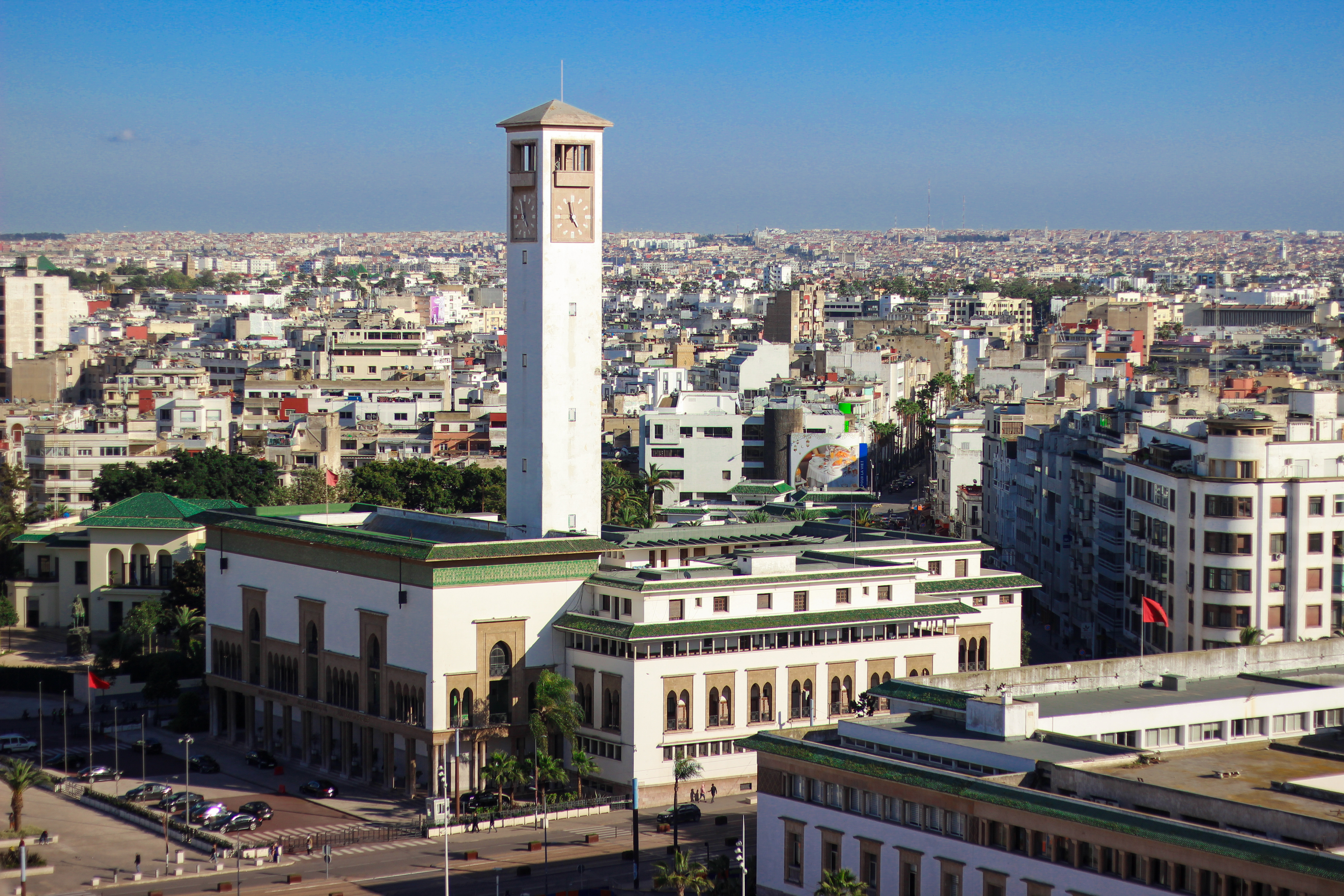
Place Mohammed V
The ceremonial heart of the city — flanked by the Prefecture, the Court of Appeal and the French Consulate, all in the ornate Mauresque style. The illuminated fountain is spectacular at dusk.
More Sights Worth Your Time
- Villa des Arts — A restored 1934 art deco villa turned contemporary art gallery. One of the finest in Morocco. Free entry most days.
- Quartier Habous (New Medina) — Morocco's only planned medina, built in the 1930s. Excellent bookshops, pastry shops selling kaab el ghazal (gazelle horn pastries), and the Royal Palace gates.
- La Sqala — An 18th-century rampart turned restaurant-garden. Breakfast or lunch in the courtyard garden is a Casablanca institution.
- Mohammed V Square Fountains — The illuminated fountains at night make this one of the most photogenic spots in the city. Head here at dusk.
- Twin Center — Casablanca's twin towers and the landmark of the modern CBD. The panorama from the surrounding area shows the city's extraordinary growth.
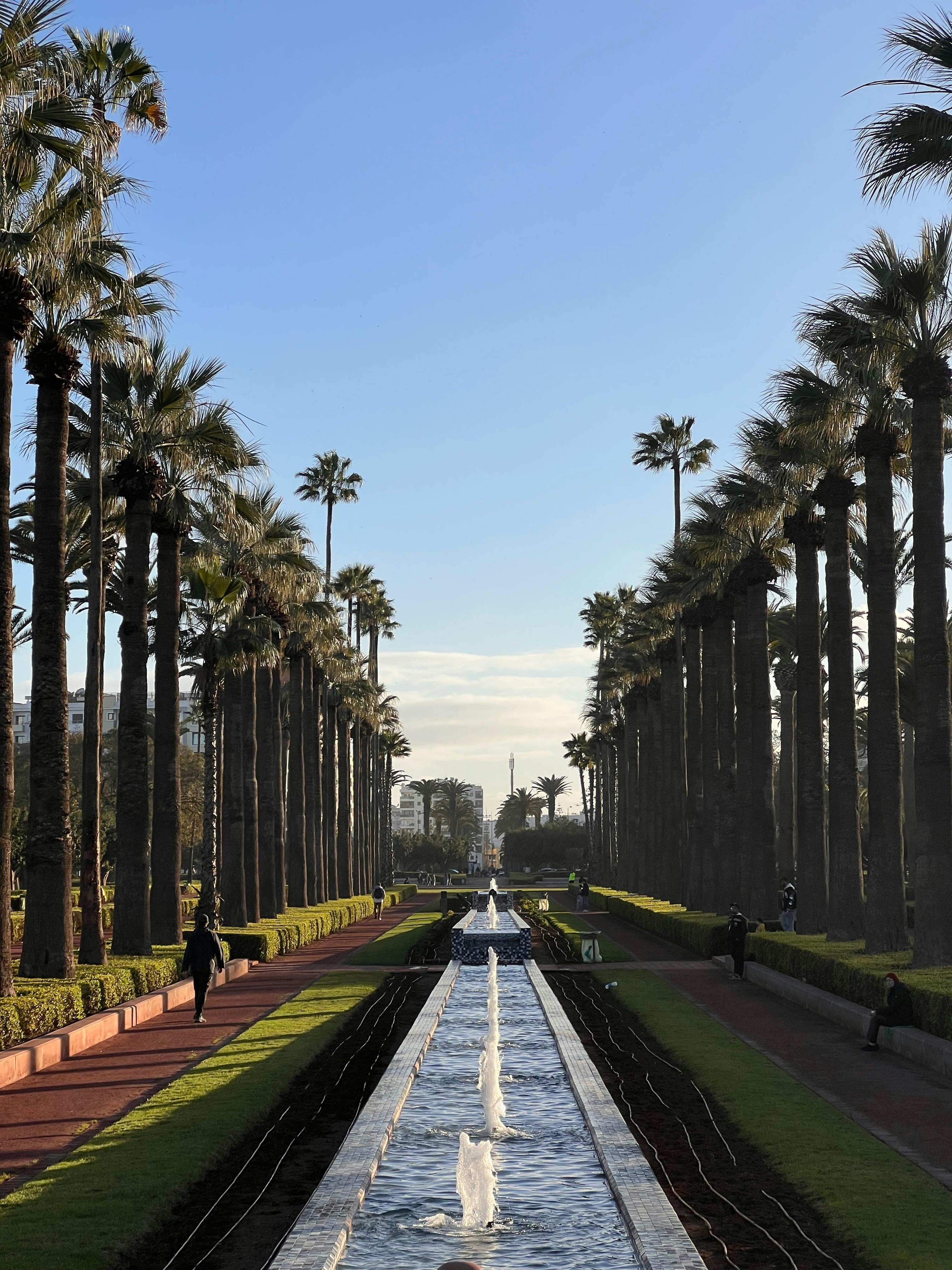
Casablanca's grand parks and boulevards reflect its status as Morocco's most European-influenced city.
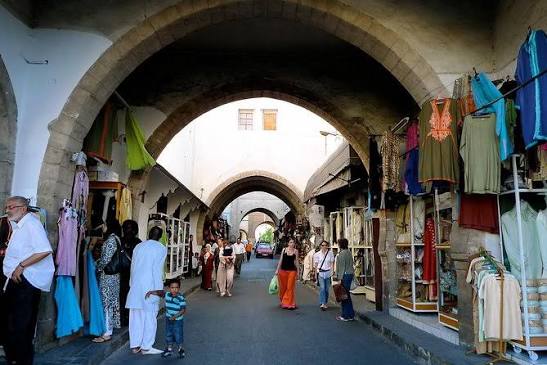
🗺️ Book a Casablanca Tour
The art deco architecture and Hassan II Mosque are best enjoyed with a knowledgeable guide. Find top-rated walking tours and half-day excursions on Viator.
Browse Casablanca Tours on Viator → We may earn a small commission at no extra cost to you.The Hassan II Mosque — What to Know Before You Visit
The Hassan II Mosque is not just Casablanca's landmark — it is one of the most extraordinary buildings in the world. Completed in 1993, it sits on a promontory above the Atlantic Ocean, so that worshippers pray above the sea. The statistics are staggering: the prayer hall holds 25,000 people inside, with room for a further 80,000 in the esplanade. The minaret, at 210 metres, is the tallest in the world.
The craftsmanship is extraordinary even by Moroccan standards. Tens of thousands of Moroccan artisans — zellij tilemakers, woodcarvers, stucco artists, brass workers — spent years constructing the mosque. The retractable roof, the heated marble floors and the glass floor panels revealing the ocean below are architectural feats that still astonish.
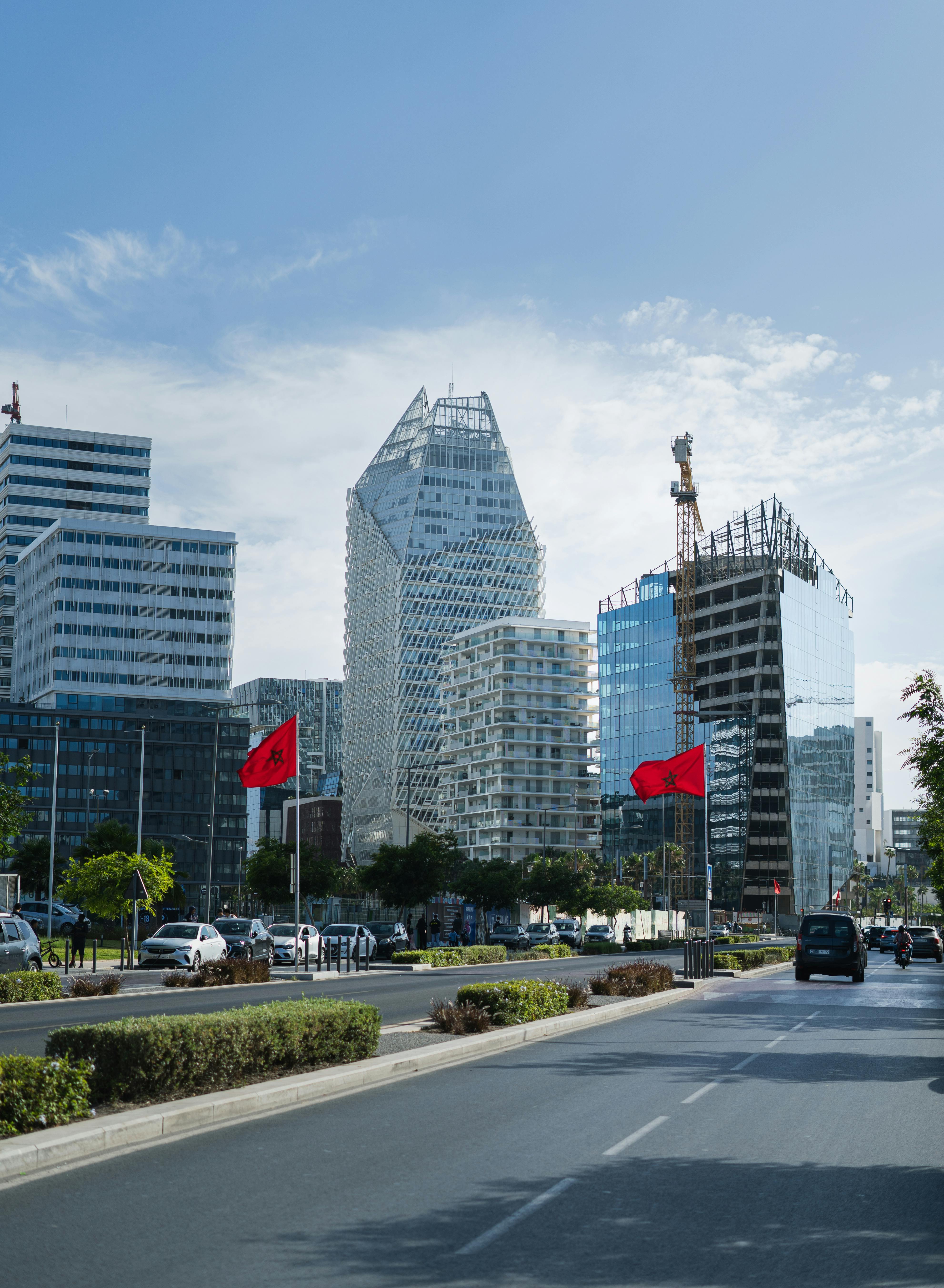
Casablanca's modern skyline, with Moroccan flags marking the financial district — the economic engine of North Africa.
Music & Festivals — Jazzablanca
Every summer, Casablanca celebrates its contemporary cultural identity through Jazzablanca, one of Morocco's leading international music festivals. Since its launch in 2006, the festival has welcomed artists from around the world, presenting jazz alongside soul, funk, pop, rock and world music across several days of performances at the Anfa grounds and other city venues.
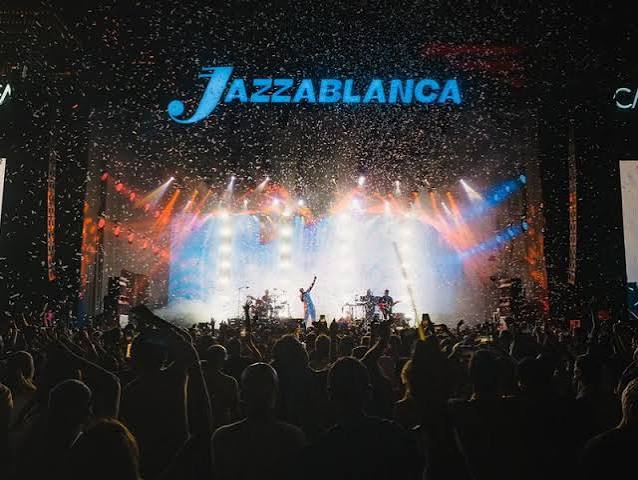
Jazzablanca reflects Casablanca's cosmopolitan character. The festival attracts both Moroccan and international audiences, reinforcing the city's reputation as a place where tradition and modern creativity coexist. Performances are held in venues designed to create an atmosphere quite different from the city's everyday business rhythm — a reminder that Casablanca's cultural life extends well beyond its financial districts and commercial landmarks.
September also brings L'Boulevard (17–20 September 2026) — an urban music festival celebrating hip-hop, rock, metal and electronic culture. It offers a view of contemporary Casablanca that is distinct from Jazzablanca's international showcase. See our Morocco in September 2026 guide for planning advice, confirmed dates and accommodation tips.
Food & Drink in Casablanca
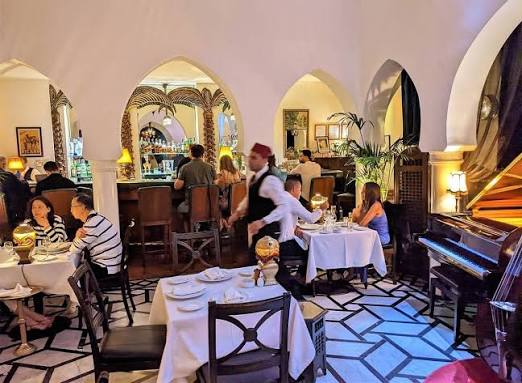
Casablanca has Morocco's most diverse and cosmopolitan dining scene — from traditional Moroccan riads to French brasseries, Japanese restaurants, and the country's best seafood.
Where to Eat
- La Sqala (Bd des Almohades) — Legendary breakfast and lunch spot inside a restored fortress. The courtyard garden, the Moroccan pastries and the mint tea are all exceptional. Budget: 80–150 MAD.
- Le Cabestan (Corniche) — Casablanca's most famous seafood restaurant, perched above the Atlantic. Grilled lobster, langoustines and sea bass. Splurge-worthy.
- Restaurant du Port de Pêche — In the fishing port, this no-frills institution serves the freshest fish in the city — grilled whole, with olives and chermoula. 100–200 MAD.
- Brasserie Bavaroise (Bd Mohammed V) — A magnificent art deco interior unchanged since the 1930s. Excellent French-Moroccan cooking and the city's best people-watching terrace.
- Habous pastry shops — No visit to Casablanca is complete without a box of kaab el ghazal (almond-filled crescents) from the Quartier Habous. Pick any shop with a queue.
What to Drink
- Mint tea — The national ritual, served everywhere. The art of pouring from height (to aerate and froth the tea) is particularly theatrical in Casa's traditional cafés.
- Avocado milkshake (jus d'avocat) — A Casablanca café staple. Thick, cold, mildly sweet — order it at any juice bar.
- Moroccan wine — Casablanca's restaurants stock the widest selection of Moroccan wines. The Guerrouane and Meknès regions produce excellent reds. Castel Frères and Celliers de Meknès are the top labels.
Where to Stay in Casablanca
Casablanca has Morocco's best business hotel infrastructure but fewer traditional riads than the imperial cities. Most tourists stay near the Corniche or in the Centre Ville.
- Four Seasons Hotel Casablanca — The city's finest hotel, overlooking the ocean on the Corniche. Pool, spa and outstanding restaurants. For a splurge.
- Hyatt Regency Casablanca — Central location on Place des Nations Unies, business-friendly, good breakfast. Mid-to-high range.
- Hotel Transatlantique (Centre Ville) — A lovingly maintained art deco hotel in the heart of the downtown. Reasonable rates, tremendous character.
- Barceló Casablanca — Modern hotel near the Hassan II Mosque with clean rooms, reliable wifi and a rooftop pool. Good value for mid-range.
🏨 Find a Hotel in Casablanca
Casablanca has the widest range of international hotels in Morocco. Compare prices across all properties with free cancellation on Booking.com.
Browse Hotels in Casablanca → We may earn a small commission at no extra cost to you.Always the last one at the gate? These hotels are practically on the runway — a 5-minute taxi ride beats a 45-minute sprint through the terminal any day.
- Novotel Casablanca Mohamed V Airport — The gold standard for airport overnights: connected to the terminal, comfortable rooms, 24-hour restaurant. Zero excuse for missing your flight.
- Ibis Casablanca Mohamed V Airport — Budget-friendly and steps from arrivals. Clean, reliable, and saves you the 30km drive into the city if you have an early departure or late arrival.
- Hotel Belle Vue Airport — A smaller, cheaper option right in the airport zone. Basic but perfectly functional for a transit night.
Getting There & Around Casablanca
Getting to Casablanca
- By air: Mohammed V International Airport (CMN) is 30km south of the city. The ONCF Airport Express train runs directly to Casa-Voyageurs station in the city centre (45 mins, 45 MAD) — it's the best option. Grands taxis cost 250–300 MAD.
- By train: Casablanca is the hub of the ONCF network. Trains connect to Rabat (1 hr), Fes (4 hrs), Marrakech (3 hrs) and Tangier (4.5 hrs via TGV to Kenitra).
- By TGV: Morocco's high-speed train (Al Boraq) connects Casablanca to Tangier in 2 hrs 10 mins via Kenitra — the fastest rail journey in Africa.
Getting Around Casablanca
- Tram: Two tram lines cover the main tourist and business districts. Clean, frequent and air-conditioned. Single fare: 8 MAD.
- Petit taxi: Red petits taxis are metered and plentiful. Most rides across the city cost 20–40 MAD. Drivers generally use meters — insist if they don't.
- Careem / inDriver: Ride-hailing apps work well in Casablanca. Often cheaper than negotiating taxi fares and no meter disputes.
- On foot: The Centre Ville, Habous and the Corniche stretch are all walkable. The Hassan II Mosque is a 20-minute walk from the central tram stop.
🚗 Rent a Car in Casablanca
Casablanca is the best place to pick up a rental for a Morocco road trip — the widest agency selection and the best rates. Compare across all providers with Rentalcars.
Compare Car Rentals in Casablanca → We may earn a small commission at no extra cost to you.Practical Tips for Casablanca
- French is essential — More so than in Marrakech or Chefchaouen, Casablanca runs on French. English is spoken in hotels and tourist sites but less so on the street.
- ATMs are everywhere — Attijariwafa Bank and Banque Populaire ATMs across the city. Airport exchange rates are poor — withdraw from ATMs instead.
- Safety — Casablanca is a large city and standard urban precautions apply. The Centre Ville, Corniche and Habous are all safe for tourists. Avoid poorly lit areas of the old medina at night.
- Dress code — More liberal than other Moroccan cities but still conservative by European standards. Beachwear stays on the beach. Shorts are fine in tourist areas.
- The Corniche at night — The oceanfront promenade is the social heart of the city on weekend evenings. Moroccans of all ages walk, eat and gather here — it's a wonderful spectacle.
🛡️ Travel Insurance for Morocco
Morocco's private hospitals are good but expensive for uninsured visitors. World Nomads provides comprehensive cover including medical evacuation — essential for peace of mind.
Get a Quote from World Nomads → We may earn a small commission at no extra cost to you.Frequently Asked Questions
Final Thoughts
Casablanca rewards visitors who approach it with curiosity rather than expectations shaped by cinema or postcards. As Morocco's largest city and economic capital, it offers a perspective on the country's contemporary identity that complements the history of the imperial cities and the relaxed atmosphere of the Atlantic coast.
Whether you come to admire the Hassan II Mosque, explore Art Deco streets, discover the Habous Quarter, enjoy the Corniche, experience Jazzablanca or simply observe everyday life from a neighbourhood café, Casablanca reveals a confident, evolving city that represents modern Morocco as much as its rich past.