Quick Facts — Fes
Why Visit Fes?
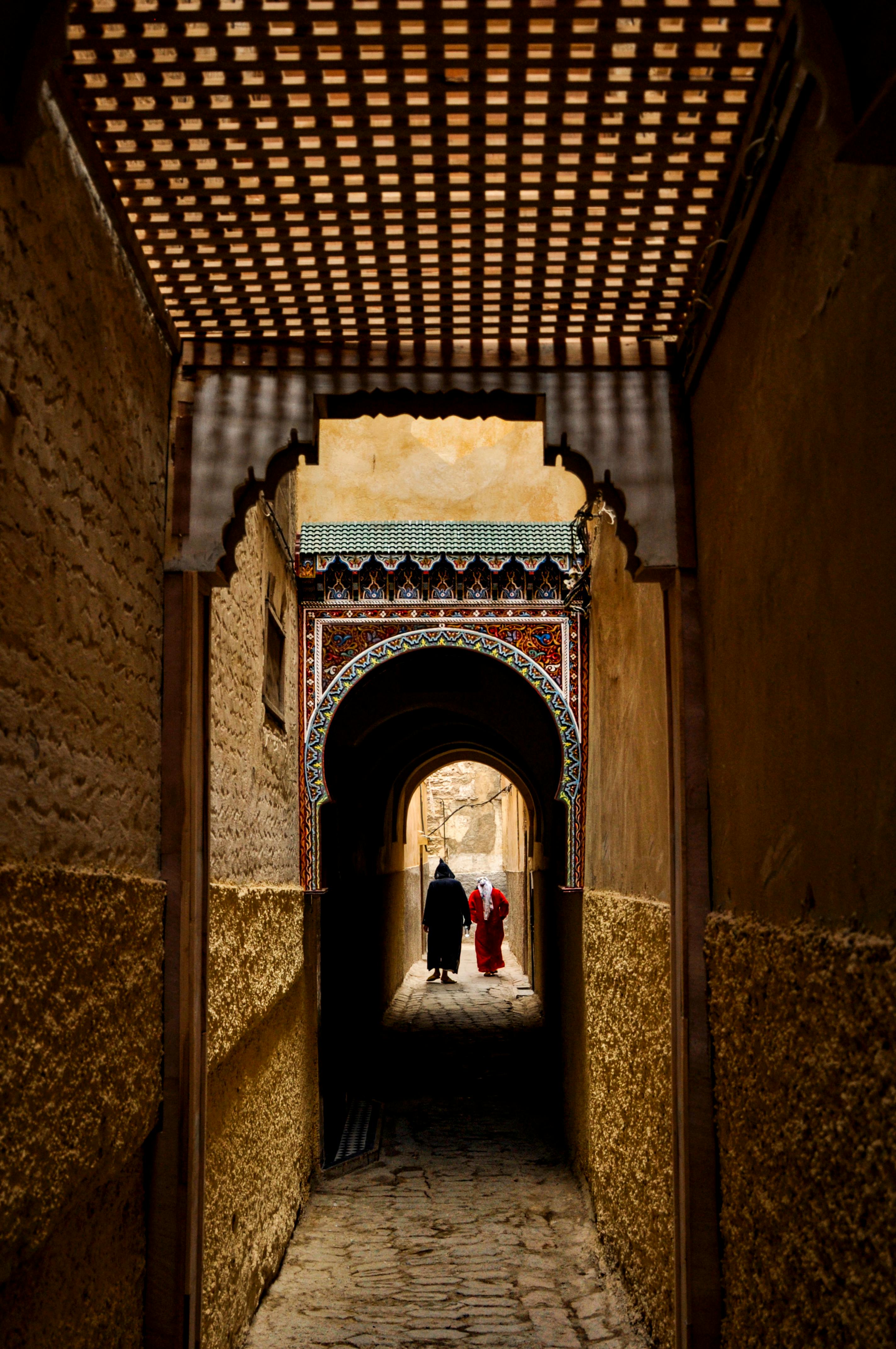
Founded in 789 AD by Idris I, Fes is one of the world's oldest continuously inhabited cities. Its medina, Fes el-Bali, is the largest car-free urban area on earth — 9,400 alleyways, centuries-old madrasas, hammams and workshops where craftsmen continue to work with techniques passed down across generations. Unlike Morocco's other imperial cities, Fes has never fully modernised its historic core, which is precisely what makes it so unusual.
The ancient tanneries have produced hand-dyed leather by the same methods since the 11th century. Al-Qarawiyyin, founded in 859 AD, is recognised by UNESCO as the oldest continuously operating university in the world. The cooking — bastilla, harira, slow-roasted mechoui — is among the most refined in the country. And every spring, the city hosts the internationally acclaimed Festival of World Sacred Music, drawing performers and audiences from across the globe to its historic venues.
Fes is not a simple city to visit. The medina disorients, the heat in summer is demanding, and navigating the souks requires patience. But these are not reasons to avoid it — they are part of what makes Fes worth the effort. Few places in the world give the impression, so consistently, that history is still happening.
✈️ Fly to Fes
Fes-Saïss Airport (FEZ) has direct connections from London, Paris, Madrid and several other European cities. Compare fares and find the best deals with Skyscanner.
Compare Flights to Fes → We may earn a small commission at no extra cost to you.When to Visit Fes
Fes sits inland at 410 metres elevation, which gives it a continental climate: hotter summers and cooler winters than the coast. Spring and autumn are the prime windows.
| Season | Months | Weather | Rating |
|---|---|---|---|
| Spring | Mar – May | 18–26°C, mild days, occasional showers. Countryside lush and green. | Best |
| Autumn | Sep – Nov | 20–28°C, warm and dry. Ideal for exploring the medina all day. | Best |
| Winter | Dec – Feb | 8–14°C, cool evenings. Quiet, few tourists, atmospheric misty mornings. | Good |
| Summer | Jun – Aug | 35–40°C. Intense heat in the medina's narrow lanes. Avoid midday. | Challenging |
Planning a broader Morocco trip? Our complete guide to the best time to visit Morocco covers every region, including how to combine Fes with the Sahara and the Atlantic coast.
For where to stay, see our hand-picked guide to the best riads in Fes — luxury palaces, intimate boutique dars and great-value guesthouses across all budgets in the medina.
The Three Districts of Fes
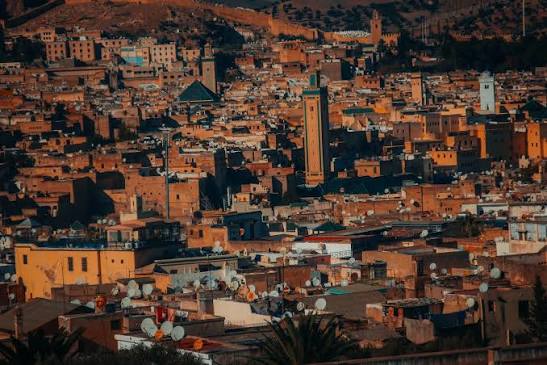
Unlike Marrakech's single medina, Fes is effectively three cities in one — each with its own character and history.
Fes el-Bali
The Ancient MedinaThe UNESCO-listed heart of the city — 9,400 streets, 300+ mosques, the tanneries, Al-Qarawiyyin and the Medersa Bou Inania. Budget the vast majority of your time here.
Fes el-Jdid
The New Old CityFounded in the 13th century, this district holds the Royal Palace (Dar el-Makhzen), the Mellah (historic Jewish quarter) and some excellent street food stalls.
Ville Nouvelle
The French QuarterBuilt during the French Protectorate (1912–1956). Wide boulevards, cafes, banks and the train station. Most budget hotels and riads are in or near the medina though.
After sunset, the character of the medina shifts. Many cafés and rooftop terraces become lively gathering places where visitors can enjoy traditional music, Moroccan cuisine and panoramic views over the illuminated minarets and rooftops of Fes el-Bali.
Top Sights & Attractions
Fes el-Bali Medina
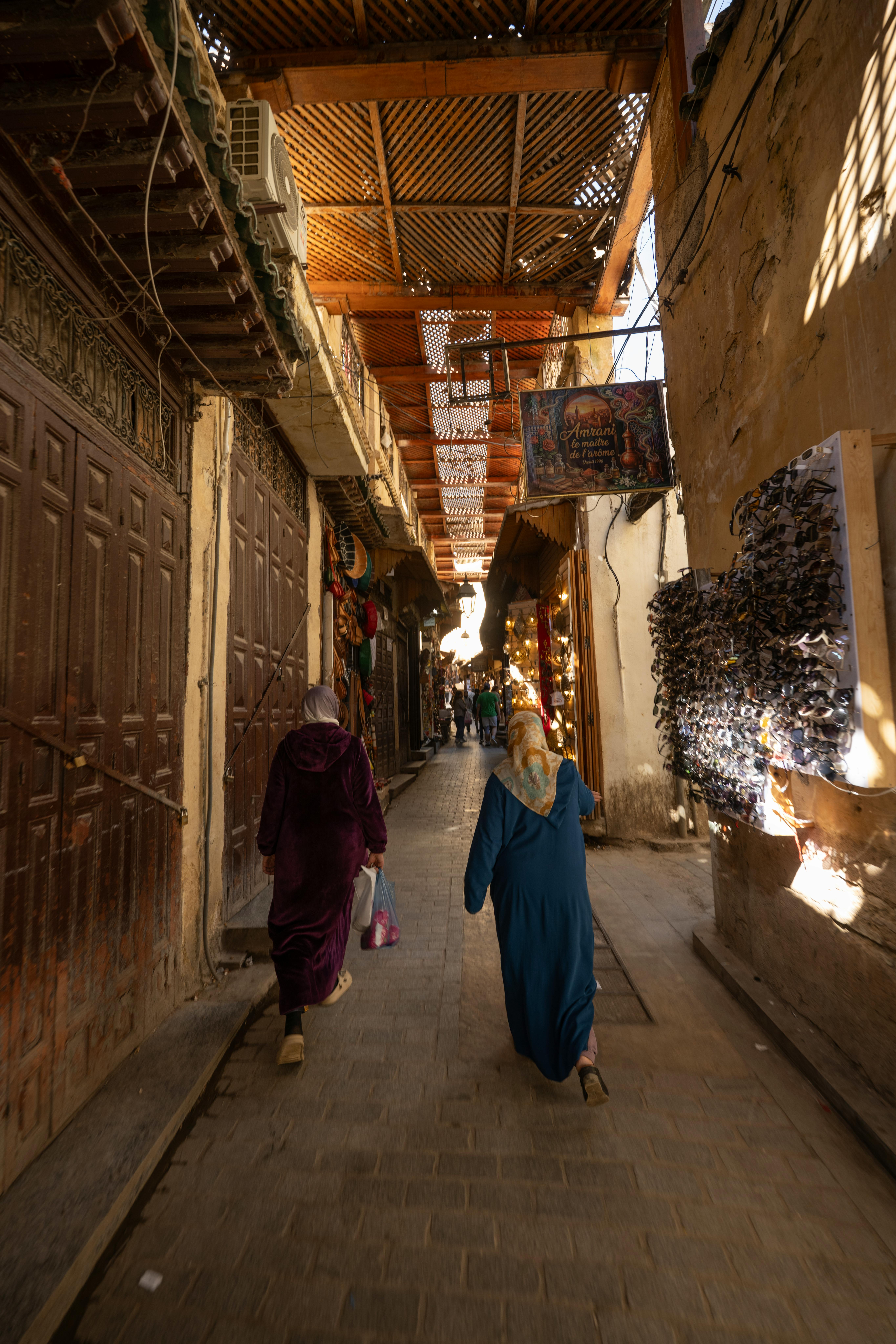
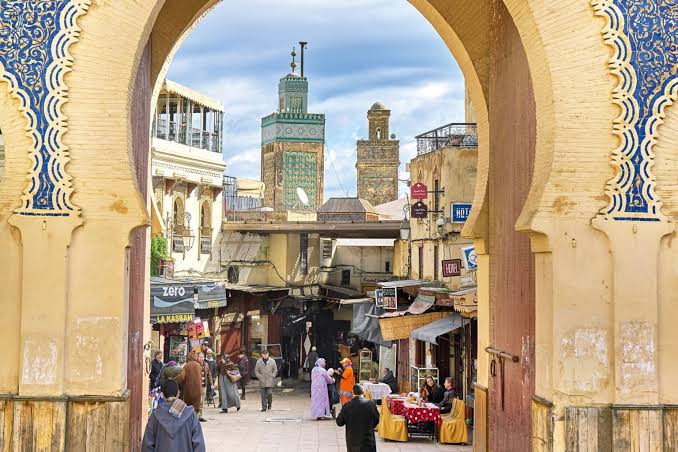
Simply walk — and get lost. The medina's density and visual richness are unlike anywhere else. Enter through Bab Bou Jeloud, the blue-tiled gateway, and let the city unfold around you.
Medersa Bou Inania
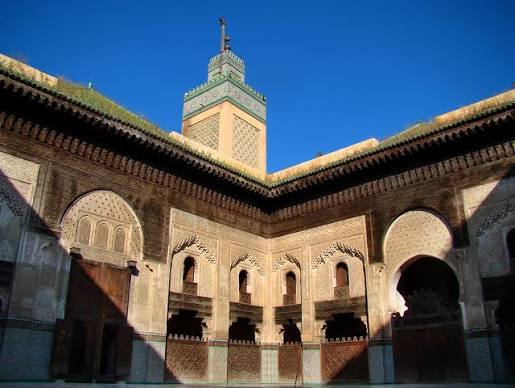
The finest example of Marinid architecture in Morocco — intricate cedar carvings, mosaic tilework (zellige) and a courtyard that stops visitors mid-breath. Entrance: 70 MAD.
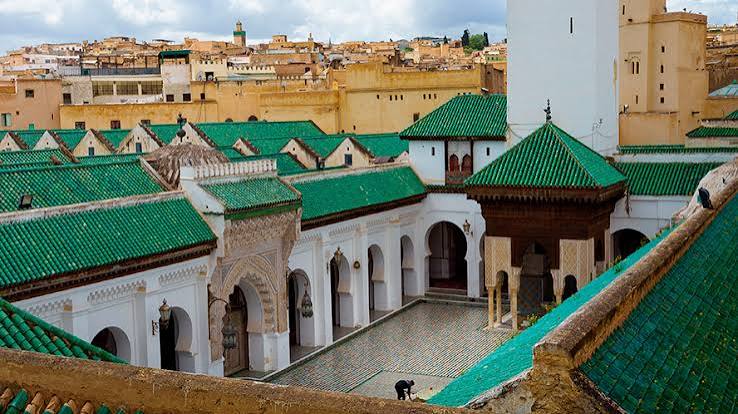
Al-Qarawiyyin Mosque & University
Founded in 859 AD — the oldest continuously operating university on earth. Non-Muslims may not enter the mosque, but the courtyard glimpsed through ornate doors is breathtaking.
More Sights Worth Your Time
- Borj Nord & Borj Sud — Twin Portuguese-era fortresses above the medina offering panoramic views. Borj Nord houses the Arms Museum.
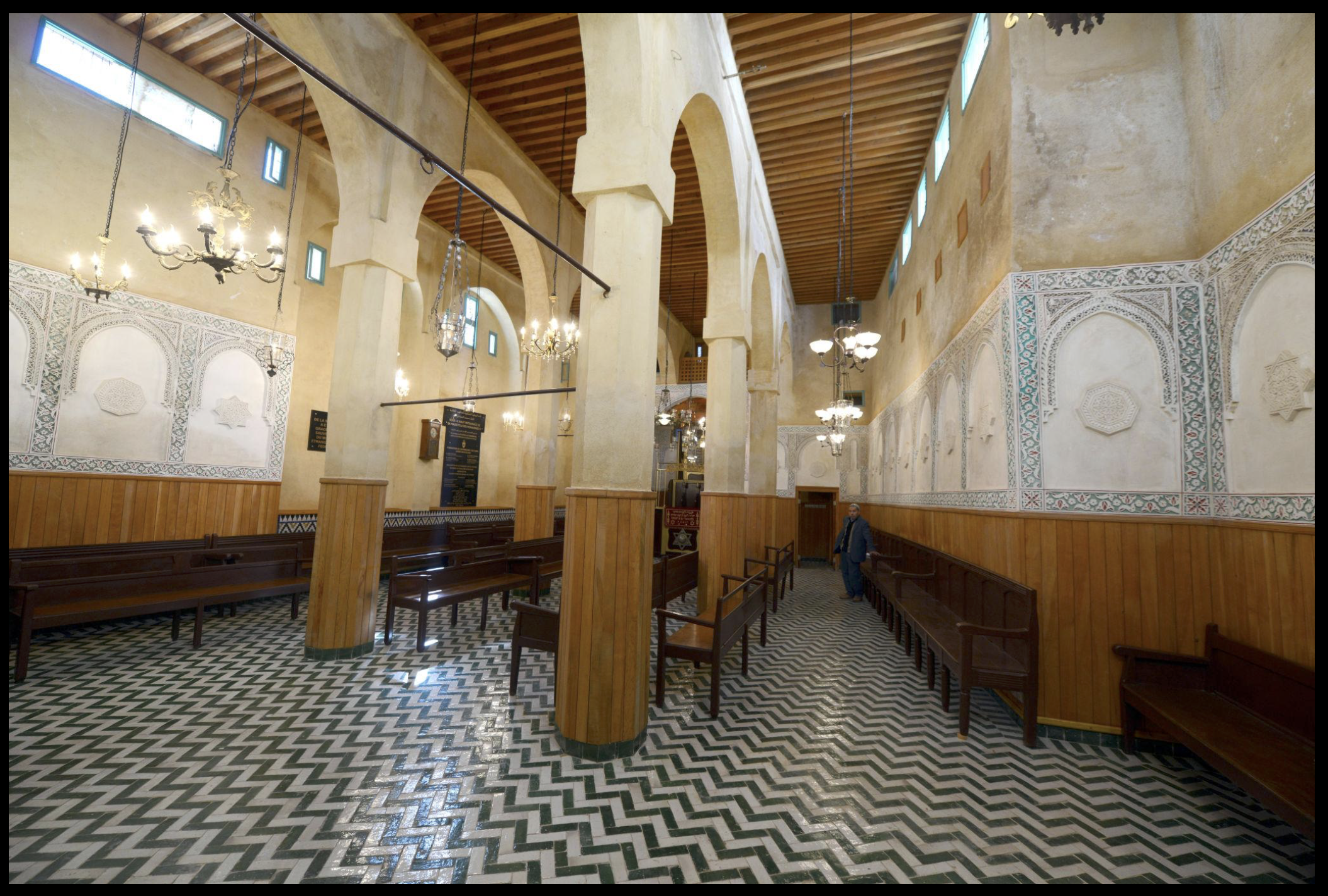
- Mellah (Jewish Quarter) — In Fes el-Jdid, the historic Jewish quarter has elaborate wrought-iron balconies and the Ibn Danan Synagogue.
- Nejjarine Fountain & Museum — A magnificent carved cedarwood fountain in the woodworkers' souk, next to a restored funduq (caravanserai) now housing a museum of wooden crafts.
- Andalusian Mosque — Built in 859 AD by the sister of Al-Qarawiyyin's founder, in the quieter eastern half of Fes el-Bali. Far fewer tourists.
- Royal Palace Gates (Dar el-Makhzen) — Seven monumental brass doors in Fes el-Jdid, one of Morocco's most photographed facades. The palace itself is not open to the public.
🗺️ Book a Guided Medina Tour
The medina's 9,400 streets can be genuinely disorienting — a knowledgeable local guide unlocks the hidden layers. Find top-rated half-day and full-day Fes tours on Viator.
Browse Fes Tours on Viator → We may earn a small commission at no extra cost to you.The Famous Chouara Tanneries
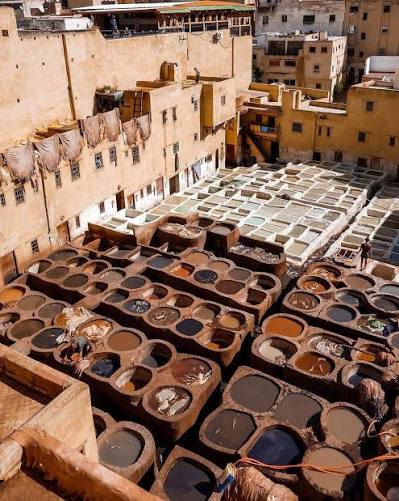
No visit to Fes is complete without seeing the Chouara Tanneries — the city's most iconic sight and one of the most photographed places in all of Morocco. Dating back to the 11th century, these open-air dyeing pits have been in continuous operation for over a thousand years.
Workers stand knee-deep in circular stone vats, treading hides in a sequence of natural dyes — saffron for yellow, poppy for red, indigo for blue, mint for green, and henna for orange. The smell is unforgettable: the hides are first softened in a mix of cow dung, pigeon excrement and quicklime before dyeing. Leather merchants surrounding the tannery will offer you a sprig of fresh mint to hold under your nose — accept it gratefully.
The best views are from the tannery-side leather shops; most will let you onto their terraces for free if you tolerate a brief sales pitch. The Chouara Tannery (near Rue Chouara) is the largest and most impressive. There are smaller tanneries — Ain Azliten and Sidi Moussa — that see far fewer tourists.
The Fez Festival of World Sacred Music
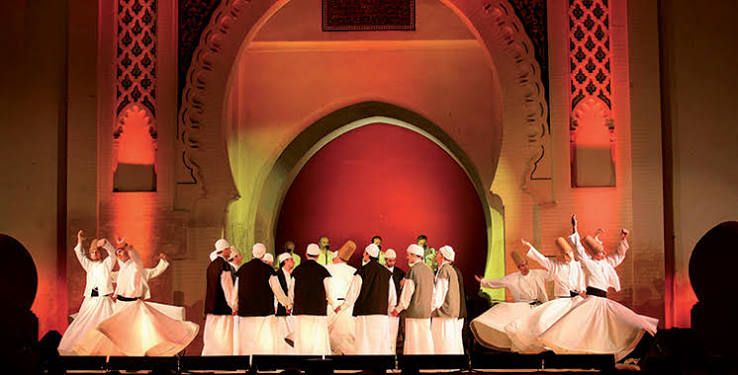
Every spring, Fes welcomes visitors from around the world for the Fez Festival of World Sacred Music. Founded in 1994, the festival has become one of Morocco's most respected cultural events, bringing together musicians, vocalists and performers representing a wide variety of spiritual and artistic traditions.
Concerts take place in remarkable historic venues, including Bab Al Makina — the vast esplanade beside the Royal Palace — where the architecture of the city becomes part of the experience. Rather than focusing on a single musical genre, the festival celebrates dialogue between cultures: artists from Morocco, Africa, Europe, the Middle East, Asia and the Americas share the same programme. Visitors may hear Sufi music, Andalusian orchestras, gospel choirs, Gregorian chant, African rhythms and classical ensembles across the same ten days.
The festival reflects Morocco's long-standing history as a crossroads of civilisations. It is worth noting that the setting itself — a medina that has been home to Arab, Berber, Jewish, Andalusian and Saharan communities across twelve centuries — gives the event a resonance that few purpose-built cultural venues can match. For many visitors, attending the festival offers a different perspective on Fes: not only a city of monuments, but a living place where history, spirituality and the performing arts continue to intersect.
Food & Drink in Fes
Fassi cuisine — the traditional cooking of Fes — is widely considered the most refined in Morocco. The city's historic role as a royal capital left a culinary legacy of extraordinary depth.
What to Eat
- Bastilla (Pastilla) — The dish that defines Fassi cooking. Thin warqa pastry filled with slow-cooked pigeon (or chicken) with almonds, eggs and cinnamon, dusted with icing sugar and served as a starter. Order it at Dar Roumana or Riad Fes.
- Harira — The rich tomato, lentil and chickpea soup eaten to break the Ramadan fast, but available year-round. A bowl costs 10–15 MAD at any medina café.
- Mechoui — Whole lamb slow-roasted in a clay pit oven until the meat falls from the bone. Head to the mechoui stalls near Bab Guissa for the best.
- Rfissa — A celebratory dish of shredded msemen flatbread soaked in rich chicken-and-lentil broth with fenugreek. Usually made for special occasions but some restaurants serve it daily.
- Seffa — Sweet couscous with cinnamon, almonds and raisins, traditionally served as a dessert or separate course after the main meal.
Where to Eat
- Café Clock (Derb el-Magana) — Legendary Fes institution. The camel burger is famous, but the real draws are the Fassi cooking classes and the lively, welcoming atmosphere.
- The Ruined Garden (Rue Boutouil) — A beautifully restored riad garden restaurant. Excellent bastilla and the grilled lamb is superb.
- Medina street stalls — The best harira, bissara (fava bean soup with olive oil and cumin) and msemen (layered flatbreads) are found at the small stalls near Bab Bou Jeloud. Budget 30–50 MAD for a full street meal.
Where to Stay in Fes
Staying inside the medina — in a traditional riad — is the definitive Fes experience. Prices are higher than elsewhere in Morocco but the settings are extraordinary: hidden courtyards, hand-painted ceilings, rooftop terraces overlooking a sea of minarets.
- Riad Fes — The grande dame of Fes riads. A converted 18th-century palace with a hammam, two restaurants and a rooftop pool. Splurge-worthy.
- Dar Roumana — Boutique riad with just 6 rooms. Outstanding Fassi cooking and an intimate, unhurried atmosphere.
- Riad Laaroussa — Mid-range with exceptional service, beautifully decorated rooms and a knowledgeable host who can arrange medina walks and cooking classes.
- Dar Bensouda — Budget-friendly with a lovely central courtyard. Breakfast on the rooftop is a highlight.
🏨 Find a Riad in Fes
Book your medina riad through Booking.com for the widest selection, free cancellation on most properties, and reliable guest reviews from travellers who've stayed there recently.
Browse Riads in Fes → We may earn a small commission at no extra cost to you.Fes-Saïss is a small, civilised airport — but it's still 15km from the medina. If you've got an early departure and the thought of a 6am taxi through the medina fills you with dread, sleep closer to the runway.
- Ibis Fès (Ville Nouvelle) — The most reliable budget option between the airport and the medina. Clean, straightforward and a short taxi from the terminal.
- Golden Tulip Farah Fes — A mid-range hotel in Ville Nouvelle with a pool and comfortable rooms. Well-positioned for both the airport and the Bab Bou Jeloud entrance to the medina.
- Hotel Volubilis Inn — Simple and no-frills but decent value, with the airport accessible in about 20 minutes by taxi.
Getting There & Around Fes
Getting to Fes
- By air: Fes-Saïss Airport (FEZ) is 15km south of the city. Grands taxis to the medina cost around 120–150 MAD. No Uber in Fes; negotiate taxi fare before departure.
- By train: ONCF runs comfortable trains from Casablanca (5.5 hrs, from 130 MAD), Rabat (3.5 hrs, from 100 MAD) and Tangier (4 hrs with a change at Sidi Kacem). The train station is in Ville Nouvelle — a 15-minute taxi ride from the medina.
- By CTM bus: Long-distance coaches connect Fes with Marrakech (7–8 hrs), Chefchaouen (4 hrs via Meknes), and Tangier (5 hrs). CTM buses are comfortable and reliable.
- By car: The A2 motorway connects Fes to Casablanca and Rabat. Note: there is no reason to have a car inside the medina — park it at your riad or in Ville Nouvelle.
Getting Around Fes
- On foot: The only way to explore Fes el-Bali. Download an offline map (Maps.me or Google Maps offline) before entering — phone signal is patchy in the deep medina alleys.
- Petit taxi: Blue petits taxis serve routes within the city. Metered fares; insist the driver use the meter. 20–40 MAD for most cross-city trips.
- Mule traffic: Donkeys and mules still carry goods through the medina. If you hear "Balek! Balek!" — step aside immediately.
🚗 Rent a Car for Day Trips
Fes is a perfect base for exploring the Middle Atlas mountains, the Roman ruins of Volubilis and the holy town of Moulay Idriss. Compare rental rates across all agencies with Rentalcars.
Compare Car Rentals in Fes → We may earn a small commission at no extra cost to you.Practical Tips for Visiting Fes
Navigating the Medina
- Get lost deliberately — but carry a charged phone. The medina is designed to disorient; embrace it. Major landmarks (Bab Bou Jeloud, Chouara Tanneries, Medersa Bou Inania) are signposted and locals will point you in the right direction.
- Official guides vs. unofficial guides — The Moroccan Tourism Authority (ONMT) certifies official guides who wear a badge and can be hired at the tourist office near Bab Bou Jeloud. Unofficial guides offering "free" tours are likely to end your tour at a shop where they earn commission.
- Respect religious sites — Dress modestly (shoulders and knees covered) when approaching mosques, madrasas and shrines. Remove shoes before entering prayer spaces.
Money & Costs
- ATMs are plentiful in Ville Nouvelle and near Bab Bou Jeloud. The medina interior has almost none — withdraw cash before entering.
- Budget travellers can manage on 300–400 MAD/day (street food, cheap riad, walking). Mid-range comfort costs 700–1,200 MAD/day. Top riads and restaurants can add up quickly.
- Bargaining is expected in the souks. A starting offer of 40–50% of the asking price is reasonable. Never feel obliged to buy after entering a shop.
Health & Safety
- Drink bottled water; tap water is not reliably safe. Avoid ice in street stalls.
- The medina is generally very safe for tourists — petty theft (bag-snatching) is the main risk. Keep your bag in front of you in crowded areas.
- Solo female travellers report more persistent attention in Fes than in Marrakech. Walking with confidence and purpose (rather than consulting a map at every junction) helps significantly.
🛡️ Travel Insurance for Morocco
Medical costs in Morocco can be high for visitors without cover. World Nomads offers flexible travel insurance with solid adventure-activity cover — buy or extend from anywhere in the world.
Get a Quote from World Nomads → We may earn a small commission at no extra cost to you.Frequently Asked Questions
Final Thoughts
Fes is not a city that reveals all of its character in a single day. Its greatest rewards come from slowing down — wandering through the ancient medina, discovering quiet courtyards, visiting traditional workshops, and taking time to appreciate a city that has shaped Morocco's intellectual, religious and artistic heritage for more than a thousand years.
Whether you come to admire its architecture, explore one of the world's oldest continuously inhabited medinas, sample its celebrated cuisine, or attend the Festival of World Sacred Music, Fes offers one of North Africa's most substantial cultural experiences. More than a destination to visit, it is a place to understand — and that makes it an essential stop for anyone who wants to know Morocco beyond its surface.