Quick Facts — Morocco's Sahara
In This Guide
There is a moment, arriving at the edge of the Erg Chebbi dunes for the first time, when Morocco stops being merely beautiful and becomes something else entirely. The dunes rise from a flat gravel plain without warning — walls of gold and amber sand reaching 150 metres, silence so complete that you become aware of your own heartbeat. This is one of Africa's genuinely transformative experiences, and it is one that Morocco makes more accessible than almost anywhere else on the continent.
The Moroccan Sahara is not technically the full Sahara — Morocco's share of the great desert is a relatively narrow band along its southeastern flank. But what it offers is concentrated and extraordinary: the Erg Chebbi dunes near Merzouga, the remote Erg Chigaga near M'Hamid, the dramatic Draa Valley palm groves stretching south from Ouarzazate, and the kasbahs of the Dadès and Todgha gorges along the "Road of a Thousand Kasbahs."
Erg Chebbi — Morocco's Grand Dune Sea
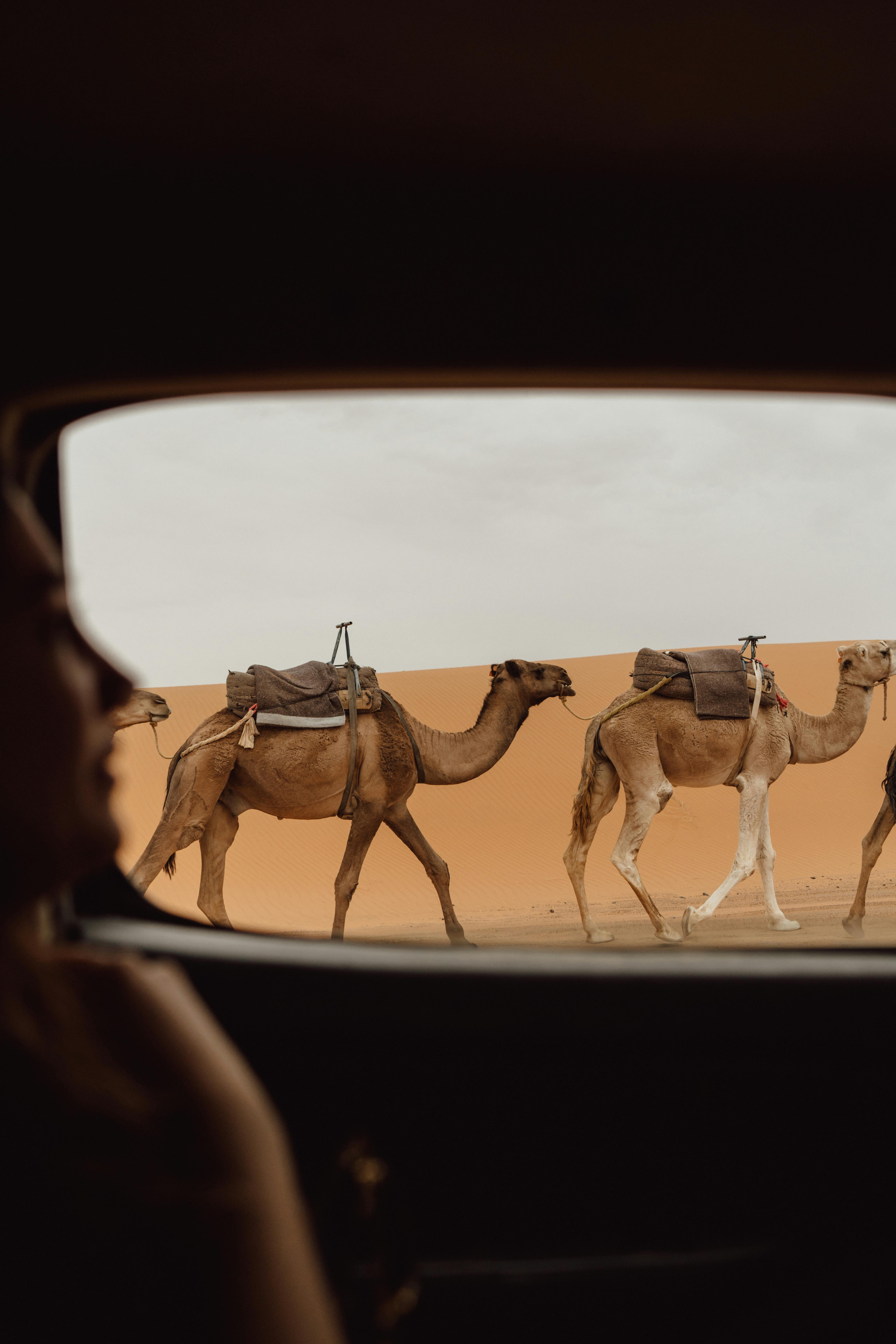
The Dunes of Merzouga
The Erg Chebbi is a sea of Saharan sand dunes rising to 150 metres — the largest in Morocco. The village of Merzouga sits at its western edge; at dawn and sunset the colours shift from pale gold to deep burnt orange and finally purple. Nothing else in Morocco looks remotely like it.
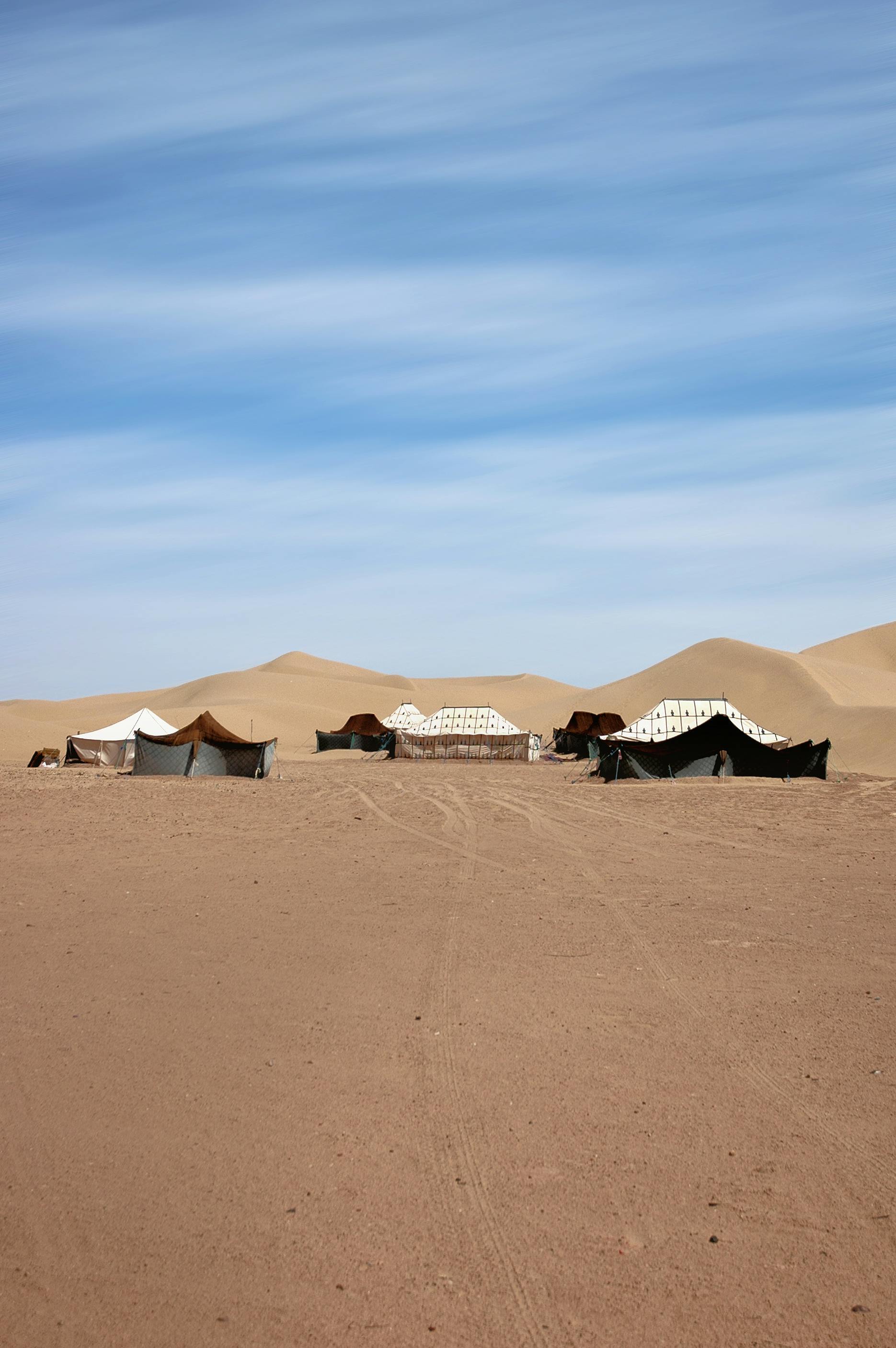
Desert Bivouac Camps
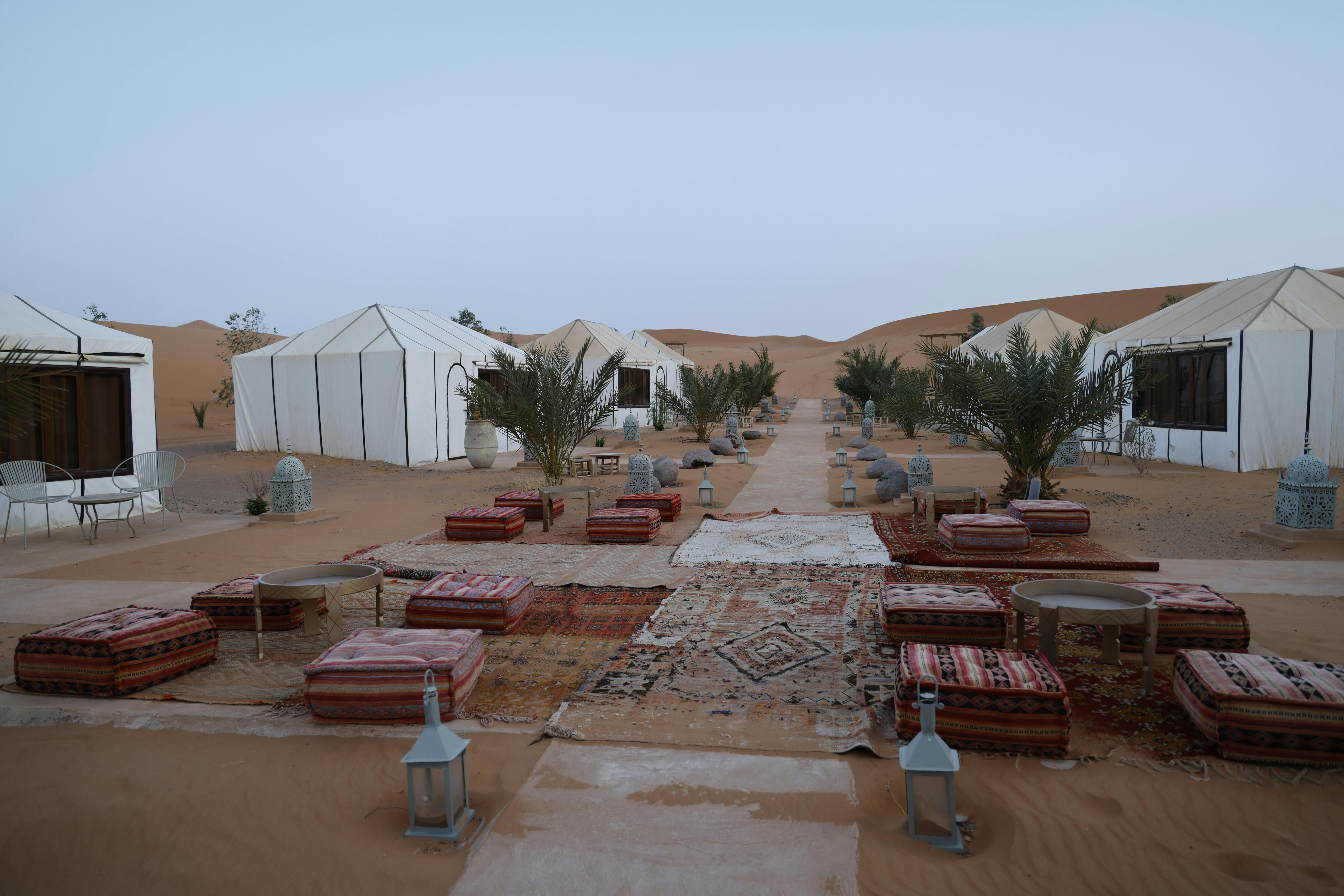
Spending a night in a Berber bivouac deep in the dunes is the defining Moroccan desert experience. Camps range from basic shared tents with communal meals to luxury ensuite accommodations with private terraces, heated showers and wine lists. Stars here — far from any light pollution — are overwhelming.
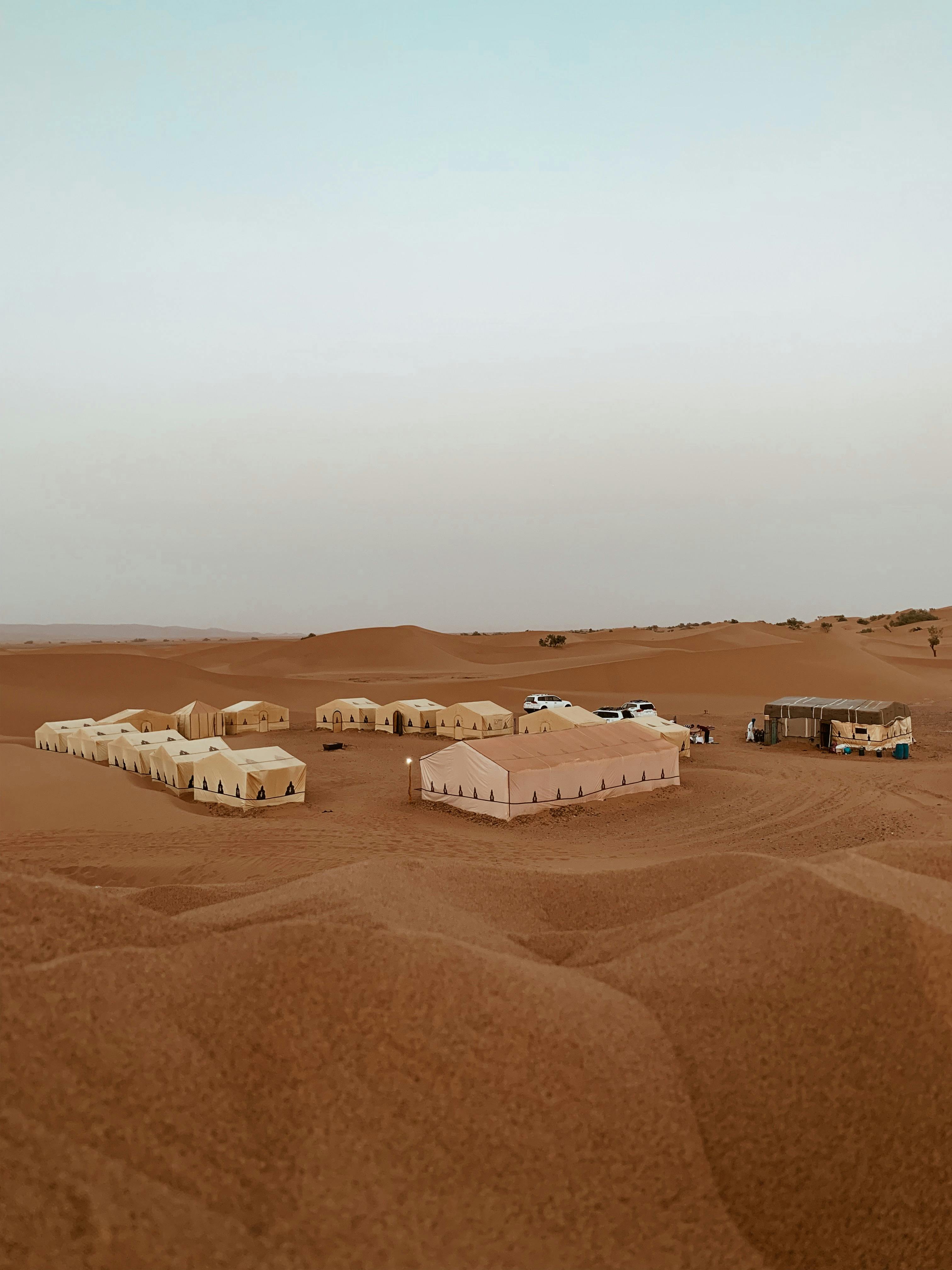
Camel Treks at Sunrise & Sunset
A camel caravan riding into the dunes as the light changes is an image that defines Morocco for much of the world. The classic route is a 45-minute sunset ride to a bivouac camp, overnight stay, then a sunrise ride back — timing the return to watch colours transform the dunes from deep orange to pale gold.
When to Go to the Sahara
| Season | Temperature (Day) | At Night | Verdict |
|---|---|---|---|
| Oct–Nov | 28–35°C · comfortable heat | 15–18°C · jacket needed | Best |
| Dec–Feb | 15–22°C · pleasant | 0–5°C · cold · warm layers essential | Good |
| Mar–Apr | 24–30°C · warm · some wind | 10–15°C · mild | Best |
| May–Jun | 35–42°C · very hot | 20–25°C | Manageable |
| Jul–Sep | 42–48°C · extreme heat | 28–32°C · hot | Avoid |
For a full breakdown of Morocco's seasons by region — including when to combine a Sahara trip with the imperial cities — see our complete month-by-month guide to visiting Morocco.
The Road to the Sahara — The Best Route
The journey to Merzouga is itself one of Morocco's great experiences — the "Road of a Thousand Kasbahs" through the Draa Valley and across the Dadès and Todgha gorges is arguably more impressive than the destination. It rewards those who take two days rather than one to reach the dunes.
Over the Tizi n'Tichka Pass
The N9 road over the High Atlas via the Tizi n'Tichka pass (2,260m) is spectacular. The pass offers panoramic views over the mountain range, and the descent into the Draa Valley begins the transition from Mediterranean Morocco to Saharan Morocco. Ait Ben Haddou, the UNESCO-listed ksar used in dozens of Hollywood films (Gladiator, Game of Thrones), is just outside Ouarzazate and worth a stop.
The Dadès Valley & Roses
The road east from Ouarzazate follows the Dadès Valley through a landscape of red rock kasbahs and palm oases. In May, the valley around Kelâat M'Gouna hosts Morocco's Rose Festival — a sea of pink Damascus roses harvested for attar and rosewater production. The Dadès Gorge, above Boumalne, has dramatic rock formations known locally as "monkey fingers."
Todgha Gorge
The Todgha Gorge is a narrow canyon of vertical red limestone walls rising to 300 metres — one of Morocco's most dramatic natural features and a world-class rock climbing destination. The gorge narrows to just 10 metres at its tightest. A detour here adds two hours to the journey and is worth every minute.
Into the Pre-Sahara
The final stretch descends from the Atlas foothills into the flat gravel plains of the pre-Sahara. The transition is abrupt and theatrical — and then the Erg Chebbi dunes appear on the horizon, rising impossibly from the flat earth, and the journey is complete.
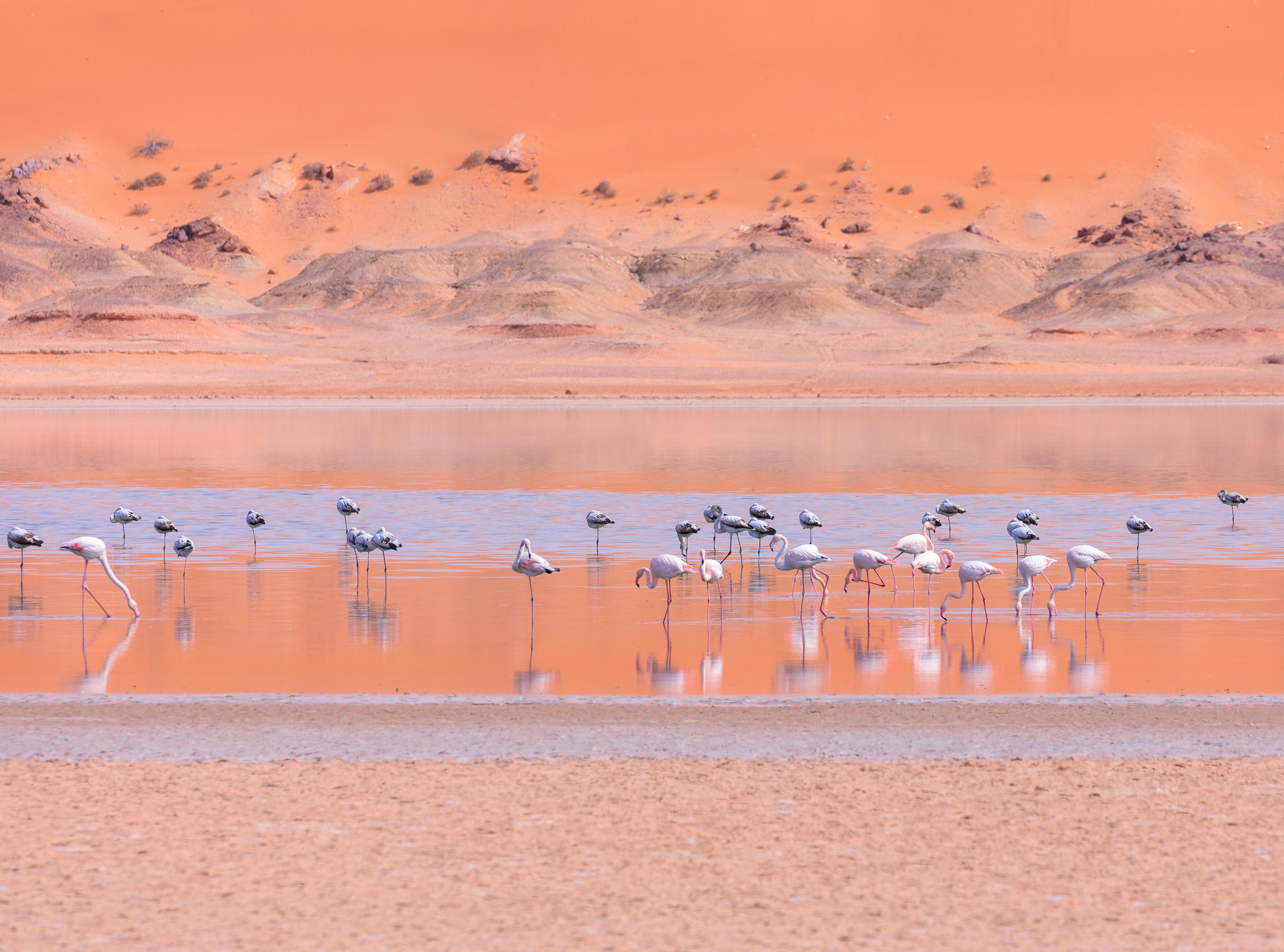
Erg Chebbi at first light — the dunes shift colour from deep orange to pale gold as the sun rises
Camel Treks & Bivouac Camps
The standard Sahara experience runs like this: arrive at Merzouga in the late afternoon, mount a camel from one of the operators on the village edge, ride into the dunes for 45–90 minutes to reach a camp, watch the sunset over the dune crests, eat a communal Berber dinner around a fire, sleep under stars of almost hallucinatory intensity, and then ride back on camelback as the dawn light transforms the dunes.
Types of Bivouac Camp
Basic camps offer shared Berber tents (caidal tents), communal toilets, mattresses on the floor and a communal tagine dinner. They are genuine and inexpensive — usually 300–500 MAD per person including camel ride and dinner. Mid-range camps add private tent rooms, en-suite showers and a more varied dinner menu. Luxury camps offer proper beds, private bathrooms, sometimes heated water, a wider food and wine selection, and sometimes private terraces from which to watch stars and sunrise. Prices for luxury camps range from 1,500 to 4,000+ MAD per person.
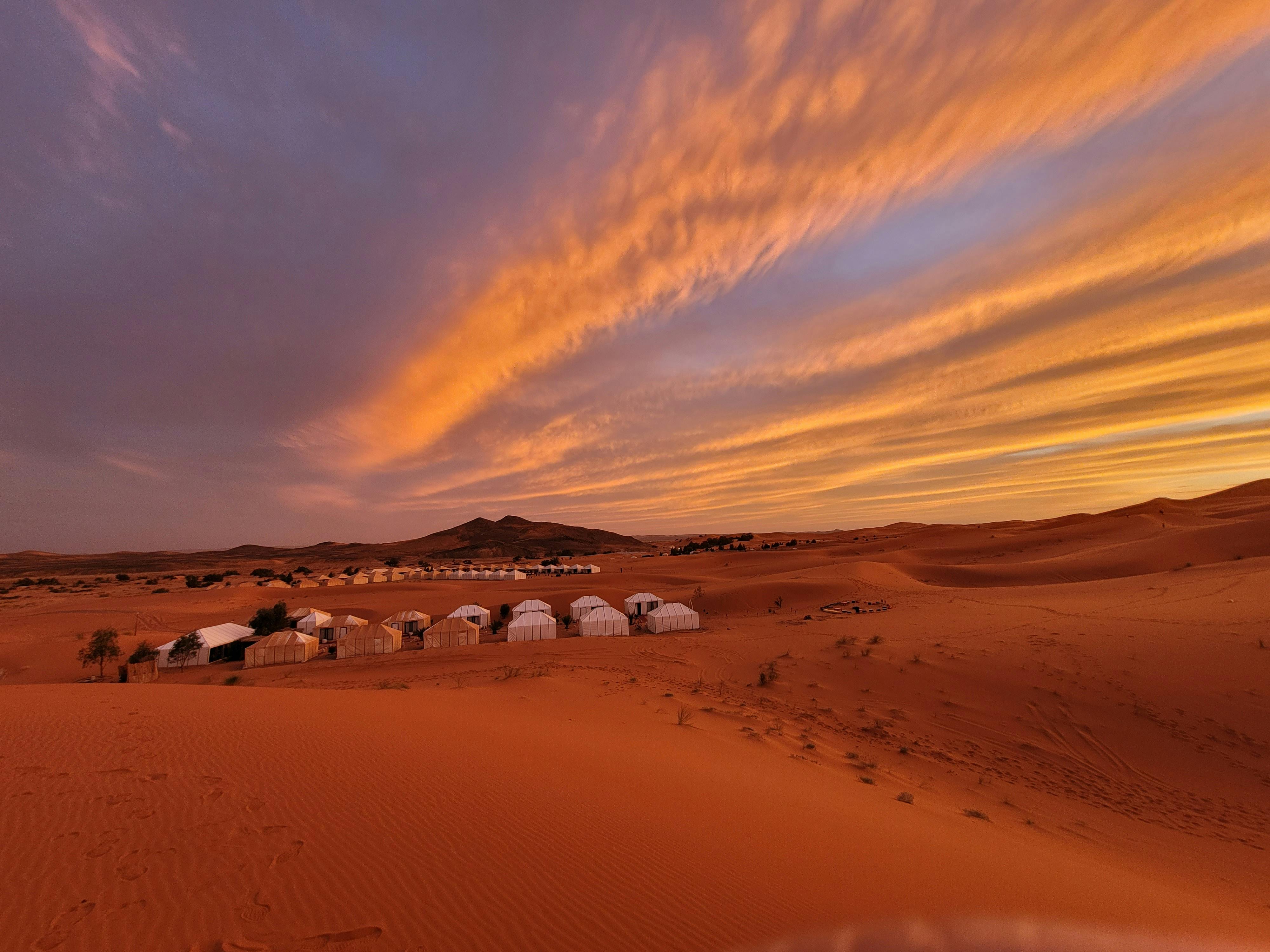
A luxury bivouac camp in the Erg Chebbi — private tents, fire pit and absolute silence
What to Do in the Desert
Sandboarding
Most camp operators and Merzouga guesthouses can arrange sandboarding on the dune faces — essentially snowboarding on sand. The technique is similar but slower, and falling is considerably softer. The best slopes are on the windward faces of the larger dunes. Boards are available for hire for around 50–100 MAD.
Quad Biking & 4x4 Excursions
Quad bikes can be rented in Merzouga for independent exploration of the desert tracks around the dune base. 4x4 excursions take longer routes through the surrounding desert, visiting nomadic camps, fossil beds near Erfoud and the Tafilalt oasis — the largest in Morocco at over 15,000 hectares.
Stargazing
The Erg Chebbi sits in one of the darkest skies in Morocco — a consequence of its remoteness from any major city. On a clear night (most nights October through April), the Milky Way is completely visible, and the density of stars is genuinely staggering to anyone accustomed to urban or suburban skies. Bring a good camera and a tripod for astrophotography; the dunes in moonlight create extraordinary silhouettes.
Fossil Hunting near Erfoud
The town of Erfoud, 20 km from Merzouga, sits atop a vast deposit of Devonian fossils — trilobites, ammonites and orthoceras — some 370 million years old. Numerous workshops carve and polish these fossils for sale, and guided excursions visit active quarry sites. The black marble tables and decorative pieces sold throughout Morocco often contain these fossils.
Erg Chigaga — The Remote Alternative
The Erg Chigaga, accessible via the village of M'Hamid el-Ghizlane (560 km from Marrakech), is Morocco's largest and most remote dune system — stretching over 40 km in length and reachable only by 4x4 or camel caravan. It sees a fraction of the visitors that Erg Chebbi does, and for those willing to make the longer journey, the solitude is extraordinary.
The road to M'Hamid passes through the entire length of the Draa Valley — a 200 km corridor of date palms, mudbrick kasbahs and ancient granaries that was once the main caravan route between Timbuktu and Marrakech. The UNESCO-listed ksar of Ait Ben Haddou is along this route. If you have time for only one desert dune system, go to Erg Chebbi. If you want the most authentic and undisturbed experience and have an extra day, go to Erg Chigaga.
Where to Stay
In the Dunes (Bivouac Camps)
The most memorable option: a night in a bivouac camp inside the dunes themselves. See the Bivouac Camps section above. Book well in advance for peak season. Most camps offer a package including camel ride in and out.
In Merzouga Village (Guesthouses)
Merzouga has dozens of guesthouses ranging from simple family-run rooms to well-designed boutique hotels with pools. Staying in the village allows more flexibility — you can ride into the dunes for sunset and return before dawn, or go out again for sunrise independently. Several guesthouses have excellent rooftop terraces with direct dune views.
In Ouarzazate (Gateway City)
Breaking the journey in Ouarzazate — Morocco's "Hollywood of Africa" — is highly recommended. The city has excellent hotels, the stunning Ksar Ait Ben Haddou nearby, and the Atlas Corporation Studios where films from Lawrence of Arabia to The Mummy have been shot.
🏨 Find Accommodation Near the Sahara
From bivouac camps in the dunes to guesthouses in Merzouga and hotels in Ouarzazate — compare options across the full desert route.
Browse Desert Region Hotels → Powered by Booking.com · We may earn a commission at no cost to youGetting There
By Organised Tour from Marrakech
The most convenient option is a 2 or 3-day organised tour from Marrakech, typically including a private driver, accommodation in Ouarzazate and a bivouac camp in the dunes. These tours follow the classic route through the Atlas, Dadès Valley, Todgha Gorge and then Merzouga. Prices vary from budget (shared minibus, 1,200–1,800 MAD/person) to private (3,500–6,000 MAD/person for a private 4x4 and guide).
By Rental Car
Driving yourself to Merzouga is entirely possible and gives the most flexibility — you can linger at Ait Ben Haddou, stop at the gorges, and time your arrival at the dunes perfectly. The road is paved all the way to Merzouga and navigable in a standard car. Allow two days from Marrakech to enjoy the route properly.
🚗 Rent a Car for the Desert Route
A self-drive journey along the Road of a Thousand Kasbahs is one of Morocco's finest experiences. A standard car is sufficient for the Merzouga route — a 4x4 is only required for the Erg Chigaga track.
Compare Car Rental in Marrakech → Powered by Rentalcars.com · We may earn a commission at no cost to youBy Bus or Shared Taxi
CTM buses run from Marrakech to Errachidia via Ouarzazate and Tinerhir. From Errachidia, shared taxis (grand taxis) cover the 60 km to Merzouga. The journey takes a full day and requires coordination, but it is cheap and — sitting back-seat in a grand taxi crossing the hammada — quite atmospheric.
By Air to Errachidia
Regional Air Lines operates flights from Casablanca to Errachidia (ERH) airport, 60 km from Merzouga. Flight time is about an hour. A grand taxi from Errachidia to Merzouga takes approximately 90 minutes and costs around 300 MAD for the whole taxi (negotiable).
Practical Tips for the Sahara
- Pack layers — Saharan nights are cold even when days are warm. October to March nights can drop to near freezing. Bring a warm jacket regardless of season.
- Protect against sand — A cheche (traditional Berber turban-scarf) is sold in every Merzouga shop and is the most practical thing you can buy. It keeps sand out of eyes, nose and mouth during any wind.
- Sunrise vs. sunset — Sunrise is photographically superior (cooler temperatures, cleaner light, fewer people). If you can only do one, choose sunrise. This means sleeping in the dunes the night before.
- Leave no trace — The dunes are pristine. Take all rubbish with you. The number of bivouac camps has grown significantly — please choose operators who practise responsible camp management.
- Photography — Sand gets everywhere in cameras. Keep a UV filter on at all times and store cameras in sealed bags when not shooting. The light at golden hour is extraordinary, particularly 20–30 minutes before sunset.
- Cash — Merzouga and the desert route beyond Ouarzazate have limited ATMs. Draw sufficient cash in Ouarzazate or Errachidia before heading to the dunes. Most camps and small guesthouses do not accept cards.
🗺 Book a Guided Sahara Tour
The most popular option: a 2 or 3-day guided tour from Marrakech including transport, accommodation, camel ride and bivouac. Viator lists verified operators with real reviews.
Browse Sahara Tours on Viator → Powered by Viator · We may earn a commission at no cost to you🛡 Travel Insurance for Remote Morocco
Desert travel is remote. Medical facilities near Merzouga are very limited — comprehensive travel insurance including emergency evacuation is strongly advised.
Get a Quote from World Nomads → Powered by World Nomads · We may earn a commission at no cost to you