✦ Essaouira at a Glance
Why Essaouira is Different
Essaouira — known to the Portuguese as Mogador and to the Phoenicians long before that — is a walled Atlantic port city with an unusually layered identity. Its UNESCO World Heritage medina combines Portuguese military architecture, a once-thriving Jewish quarter, Sub-Saharan African spiritual traditions and a contemporary art scene within two square kilometres of whitewashed streets. The working fishing port, the historic fortifications, the open Atlantic beach and the Gnaoua cultural heritage are not separate attractions — they are different aspects of the same city.
Essaouira's maritime history has always made it a place of exchange. For centuries it served as one of Morocco's most important Atlantic trading ports, drawing merchants, craftsmen and settlers from across the Mediterranean and beyond. That history of openness left a cultural inheritance that still shapes the city today. Musicians, painters, photographers and surfers continue to be drawn to Essaouira for reasons that are easy to understand once you arrive: the quality of the light, the relaxed pace, the creative community, and an atmosphere that feels genuinely tolerant and unhurried.
Orson Welles filmed Othello here. Jimi Hendrix famously visited. The Rolling Stones spent time in its riad alleys. The Gnaoua and World Music Festival, held here every June since 1998, has made the city internationally known in musical circles. The medina remains a living community, not a museum. The fish grills at the port still feed fishermen alongside tourists.
Portuguese & Jewish Heritage
The Portuguese Legacy
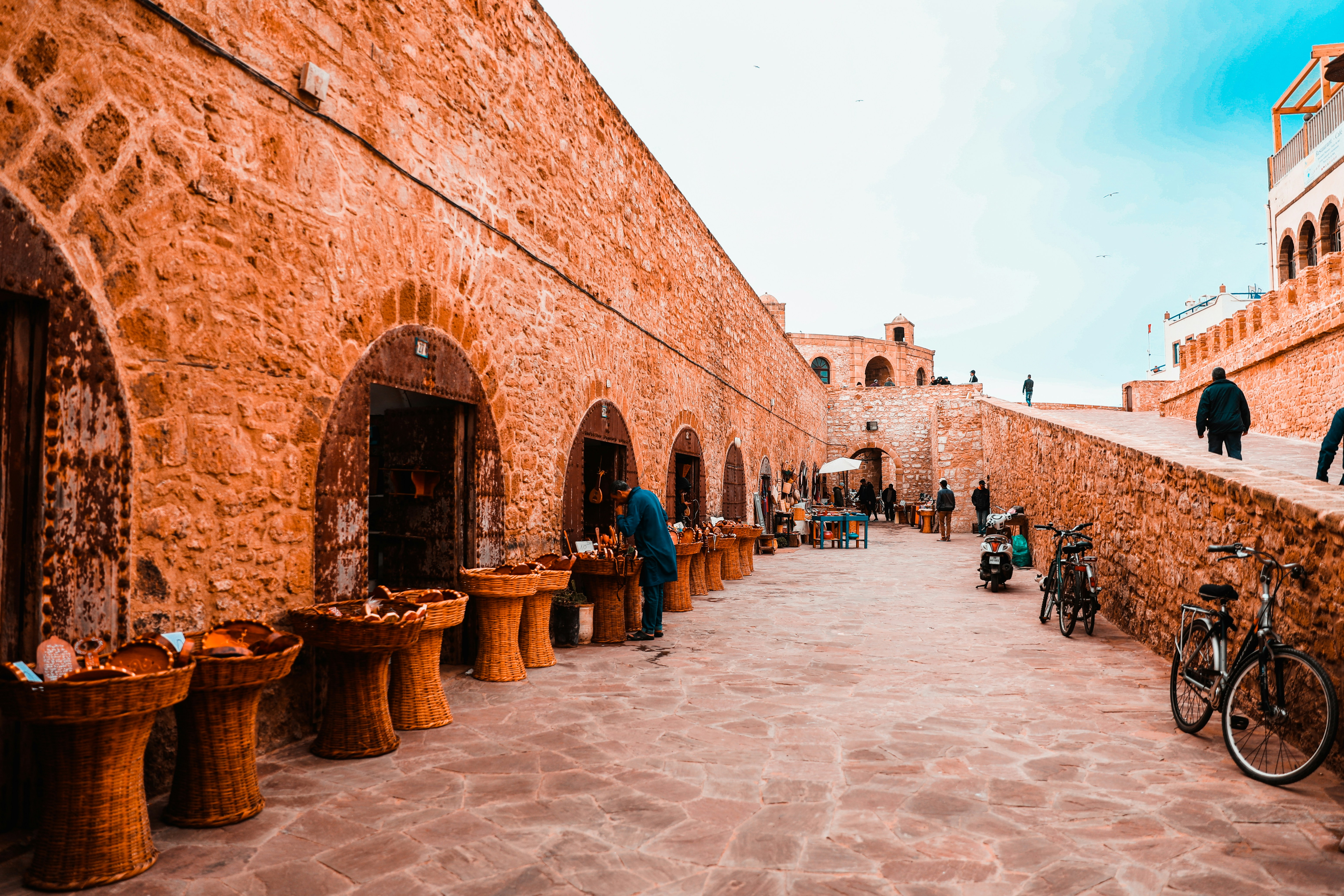
Long before the medina took its current form, the Portuguese established a trading post and fortification here in the 15th century, naming it Mogador. The city's most distinctive architectural feature — the Skala de la Ville, the dramatic sea-facing rampart lined with bronze cannons — is a direct inheritance of that era. The geometric street grid of the medina, unusual in Morocco, also reflects the Portuguese town planning that French architect Théodore Cornut later formalised in the 18th century under Sultan Sidi Mohammed ben Abdallah.
Walk the ramparts at sunset and the Portuguese influence is unmistakable: the clean lines of the bastions, the scale of the sea walls, the cannon mounts aimed at the Atlantic horizon. It is military architecture conceived for a world where the ocean was both highway and threat.
🕍 The Jewish Mellah of Essaouira
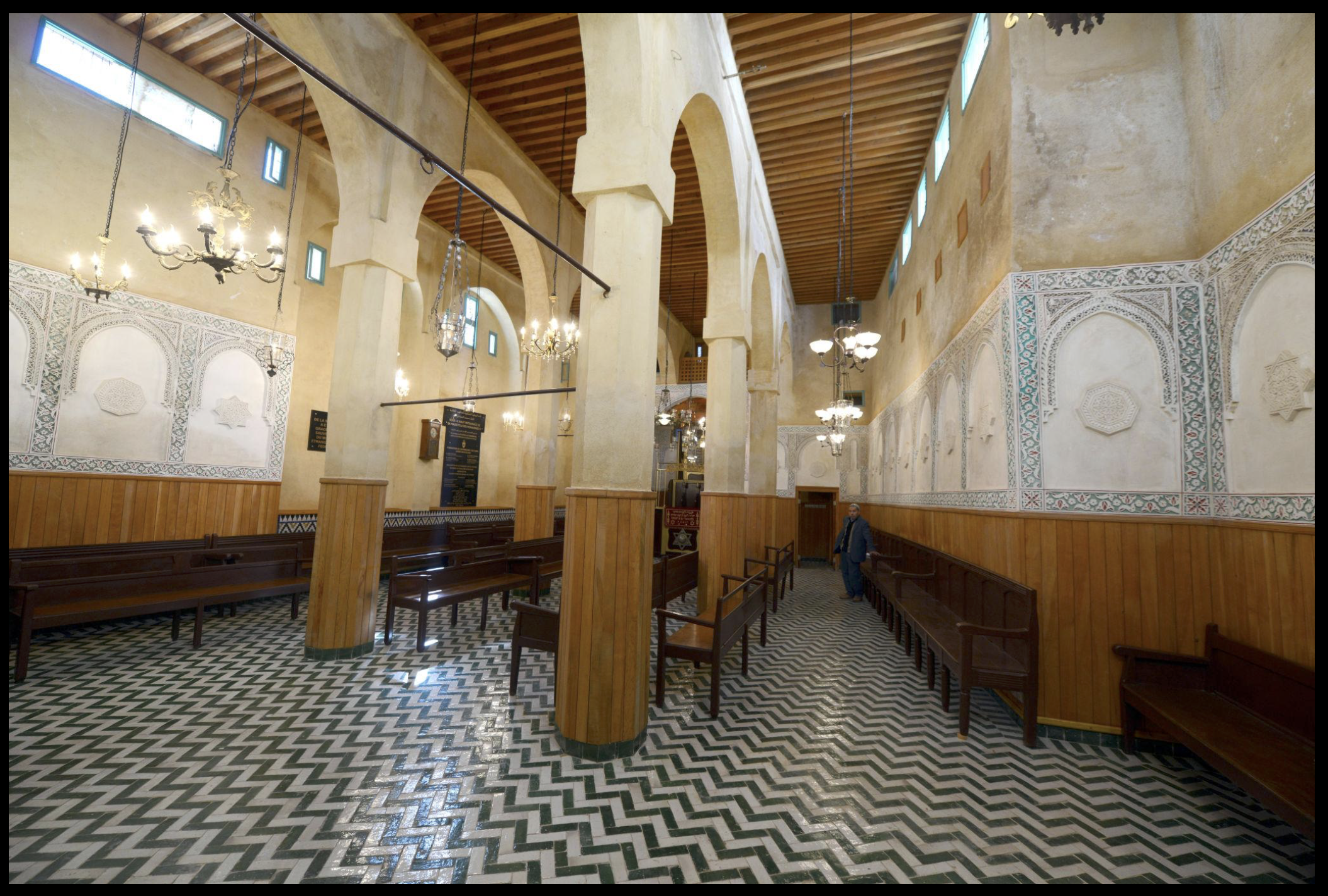
Essaouira was home to one of the most significant Jewish communities in 19th-century Morocco. The mellah (Jewish quarter) flourished under Sultan Sidi Mohammed ben Abdallah, who actively encouraged Jewish merchants — known as tujjar al-sultan (merchants of the sultan) — to settle here and manage the city's European trade relationships. At its peak, the Jewish population represented nearly 40% of the city's inhabitants, making Essaouira one of Morocco's most cosmopolitan ports. The Simon Attias Synagogue, restored in the 1990s, still stands in the mellah and is open to visitors. The Jewish cemetery at Bab Doukkala contains tombstones in Hebrew that date to the early 1800s. The Essaouira-Mogador Association works actively to preserve and celebrate this heritage.
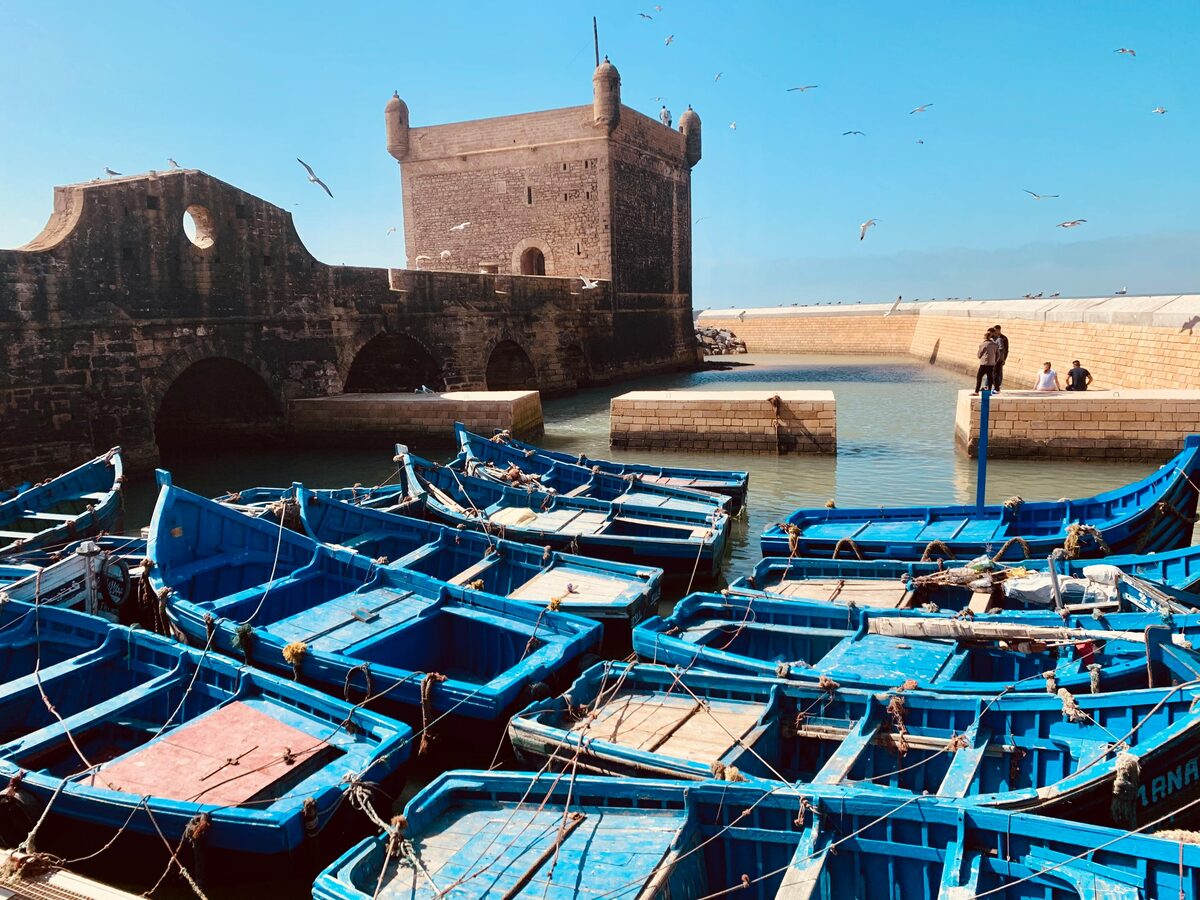
The working port of Essaouira — fishing boats painted in the city's signature blue and white.
Every afternoon, local fishing boats return to the harbour, where visitors can watch fishermen unload their catch before enjoying freshly grilled seafood at the nearby stalls and restaurants lining the port entrance.
The Gnaoua World Music Festival
Festival d'Essaouira Gnaoua et Musiques du Monde
Every summer, Essaouira becomes the international gathering point for Gnaoua music during the renowned Gnaoua and World Music Festival. Since its creation in 1998, the festival has transformed the city's historic squares, beaches and ramparts into open-air stages where traditional Moroccan Gnaoua musicians perform alongside internationally acclaimed artists representing jazz, blues, reggae, rock, African music and many other genres.
More than a music festival, the event celebrates the cultural heritage of the Gnaoua community while encouraging artistic collaboration between musicians from different backgrounds. Performances often bring together traditional maâlems — Gnaoua master musicians who play the guembri bass lute and qraqeb castanets — and contemporary artists, creating musical encounters that have become the festival's signature. Gnaoua music itself is listed by UNESCO as Intangible Cultural Heritage of Humanity.
For visitors, the festival offers an opportunity to experience Essaouira at its most vibrant. Streets remain lively late into the evening, cafés overflow with music lovers, and the entire city takes on the atmosphere of a large, relaxed cultural celebration. Many visitors come from Marrakech for the day, but staying in Essaouira gives access to the informal late-night performances and street sessions that don't appear on the official programme.
A Festival With Deep Roots
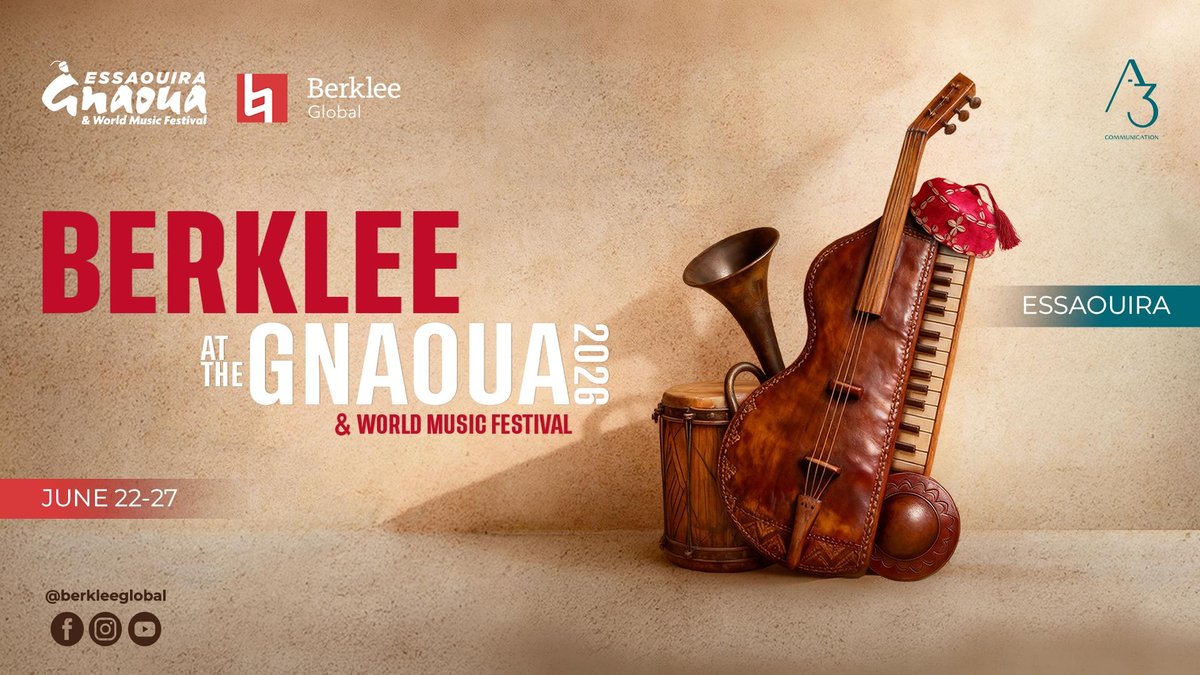
The festival was born in 1998 from a simple conviction: that Gnaoua music, long confined to private healing ceremonies, deserved a world stage. What started as a local gathering has grown into one of Africa's defining cultural events — 27 editions, over a million cumulative visitors, and a permanent place on the world music calendar. Below, an early poster from the 3rd edition captures the spirit that has never changed.
Then
2000
3rd Edition · June 8–11
"Tombouctou · Mogador"
The third edition already drew international artists to the ramparts of Mogador, bridging the trans-Saharan trading routes of antiquity with contemporary world music. website: festival-gnaoua.co.ma
Now
2026
27th Edition · June 25–27
Festival d'Essaouira
Gnaoua et Musiques du Monde
Under the patronage of HM King Mohammed VI. Over 500,000 visitors. Free outdoor stages on Place Moulay Hassan, the Skala and the seafront. The largest free music festival in Africa.
festival-gnaoua.net | @gnaouafestival
Art Scene & Galleries
Essaouira has been a magnet for artists since the 1960s, when its cheap rents, extraordinary light and creative tolerance drew Moroccan, European and American painters and sculptors. Today the medina contains over 30 active art galleries — a remarkable density for a city of 75,000 people.
The dominant visual language is Gnaoua-inspired art: bold colour, spiritual symbolism, eyes, hands and geometric patterns drawn from Sub-Saharan African and Berber sources. Artists like Mohamed Tabal, Ali Maimoun and Ahmed Stitou have developed international reputations while remaining rooted in Essaouira. The Galerie Damgaard, established by Danish art dealer Frédéric Damgaard in 1988, was instrumental in bringing this art to global attention and remains an essential stop.
Beyond painting, Essaouira is Morocco's capital of thuya wood craftsmanship. The resinous thuya tree grows in the hills around the city, and its burled root produces an extraordinarily fragrant, flame-grained wood that local craftsmen work into boxes, frames, furniture and decorative objects of remarkable quality. The cooperative workshops along Rue Sidi Mohammed ben Abdallah are worth an hour of your time.
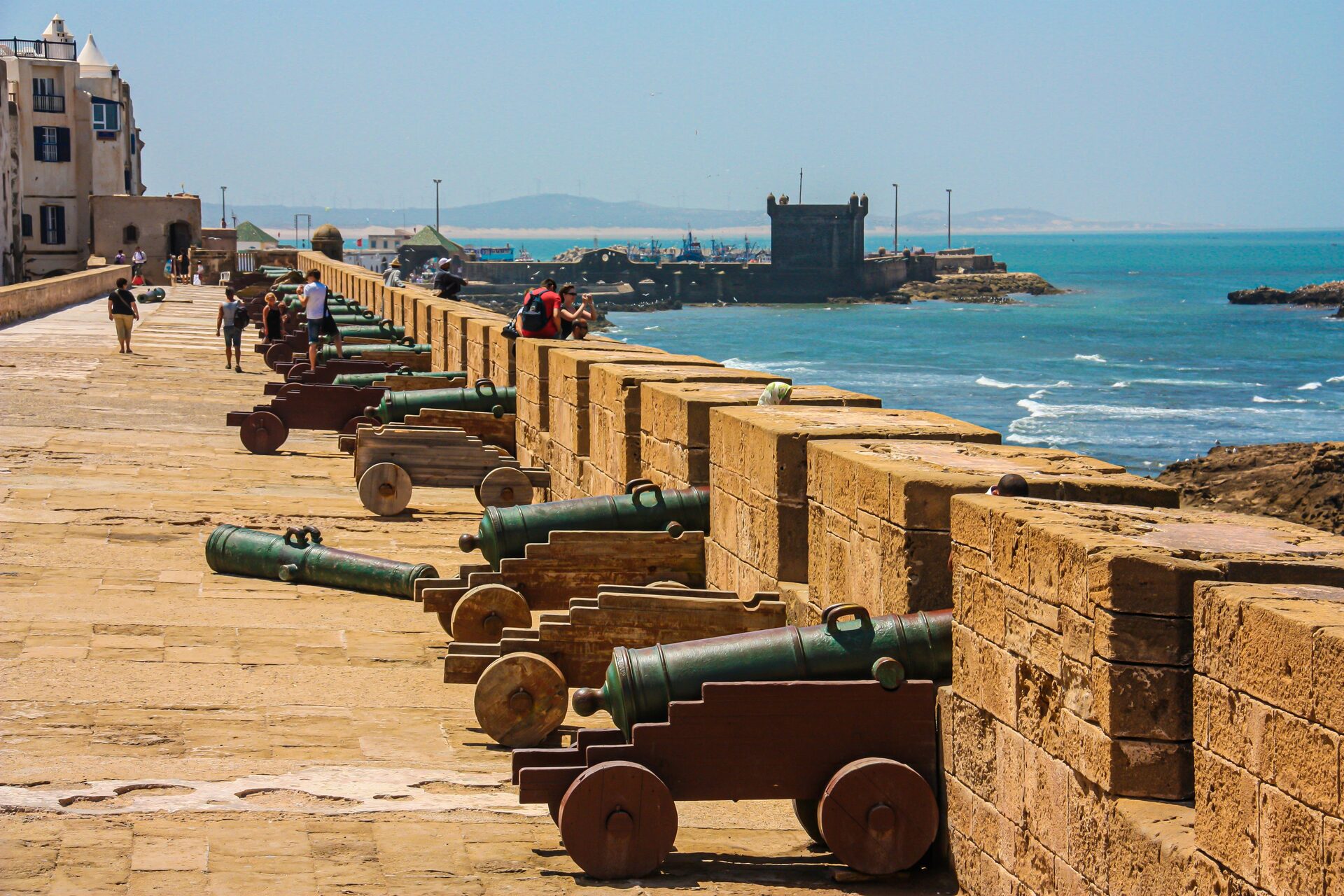
Skala de la Ville
The 18th-century sea ramparts with their original bronze cannons. Walk the full length at sunset for dramatic Atlantic views and the city's best photography.
The Working Port
One of Morocco's most authentic fishing harbours. Blue-painted boats, fresh sardines grilled at harbour stalls, and the constant cry of seagulls riding the Atlantic wind.
The Medina Souks
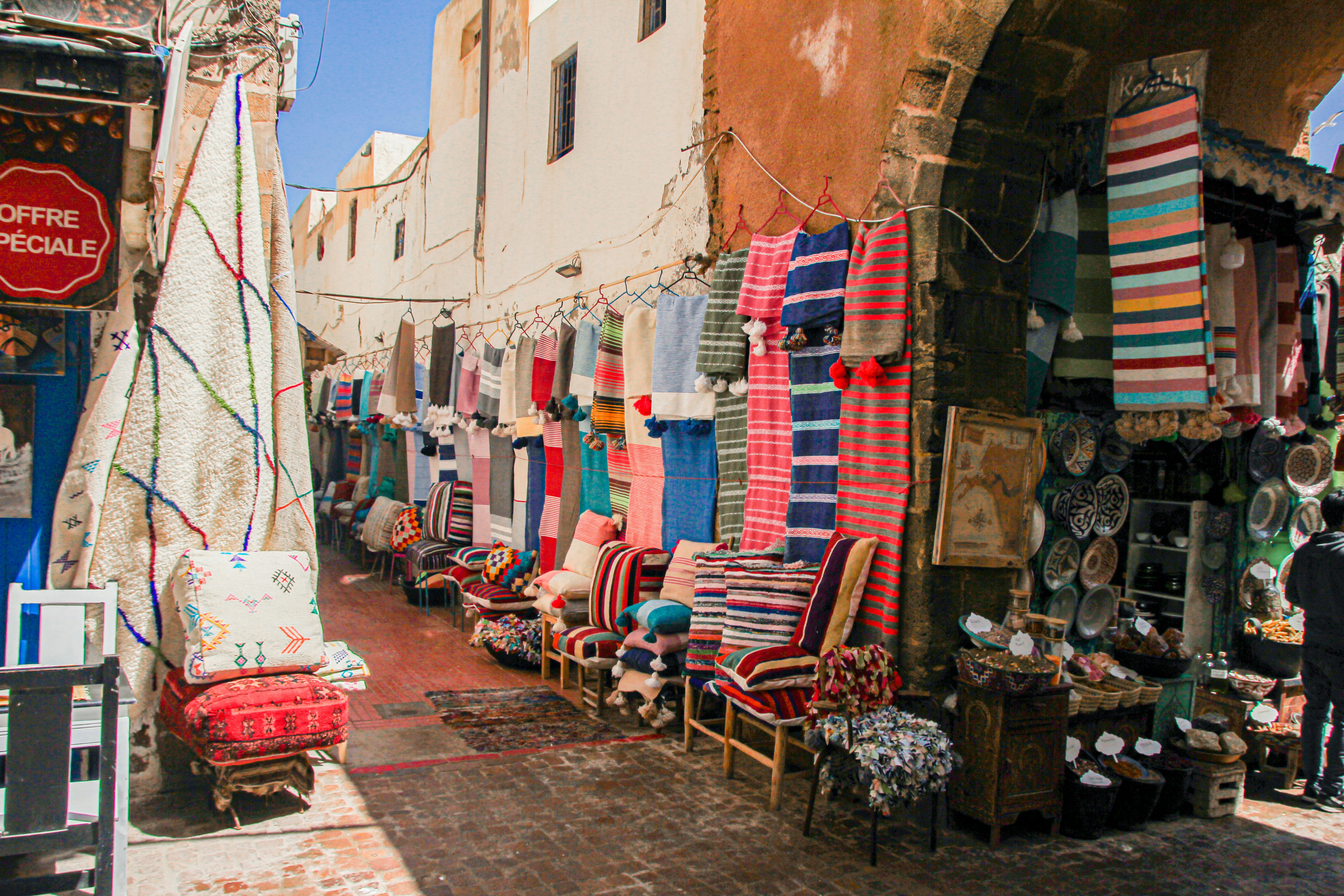
Calmer and less pressured than Marrakech. Browse thuya wood workshops, spice stalls, argan oil cooperatives and the galleries of the Gnaoua art movement.
Top Attractions
- Skala de la Ville — The sea-facing ramparts with bronze cannons, best visited at sunset. Free entry.
- Skala du Port — The port-facing fortification. Climb for panoramic views over the harbour and the Île de Mogador.
- Mellah & Simon Attias Synagogue — The restored 19th-century synagogue and surrounding Jewish quarter. A remarkable window into Morocco's pluralist history.
- Galerie Damgaard — The gallery that put Essaouira's art on the world map. Essential for understanding the Gnaoua art movement.
- Île de Mogador — The offshore island, visible from the port. Home to a breeding colony of Eleonora's falcons. Boat trips available seasonally.
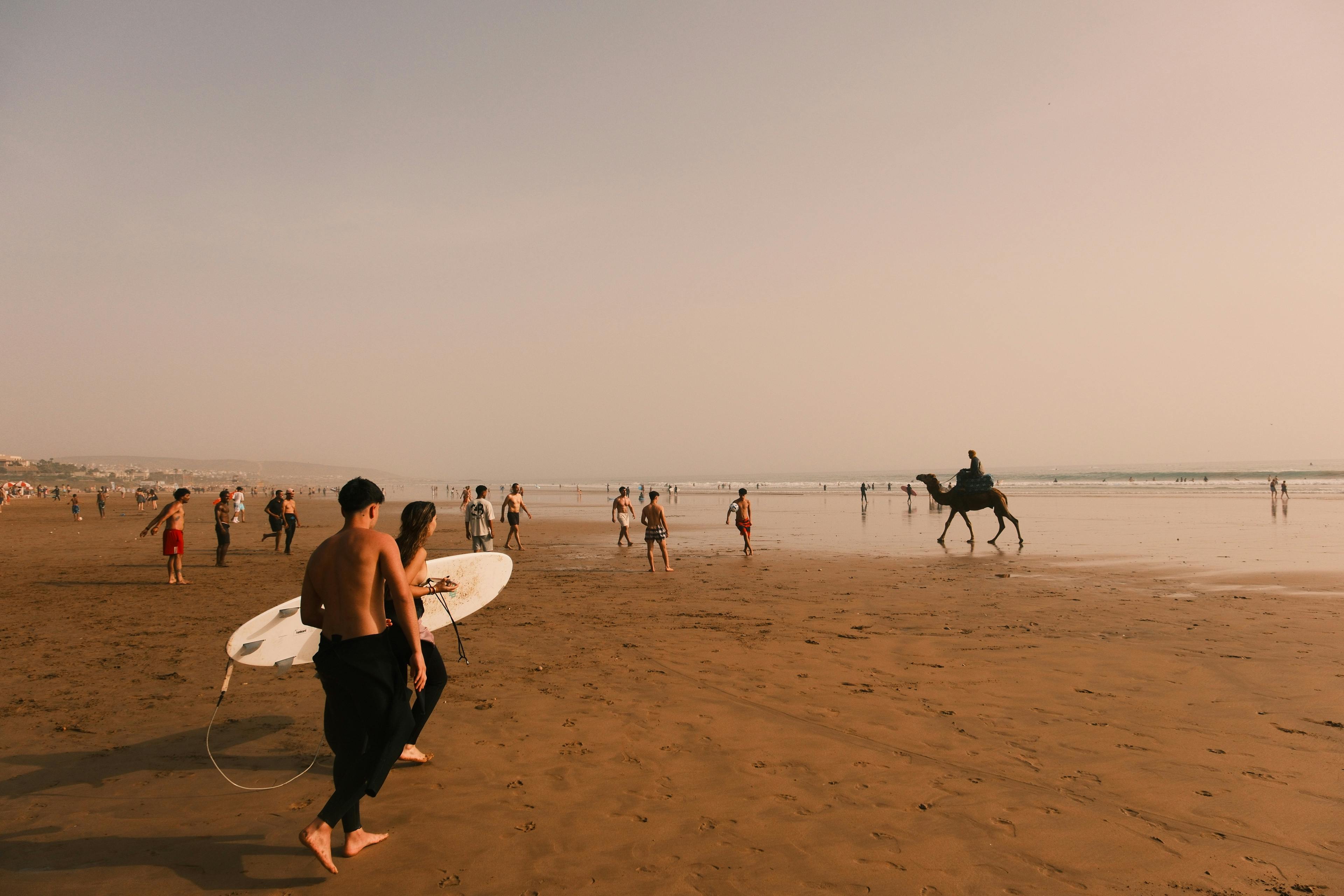
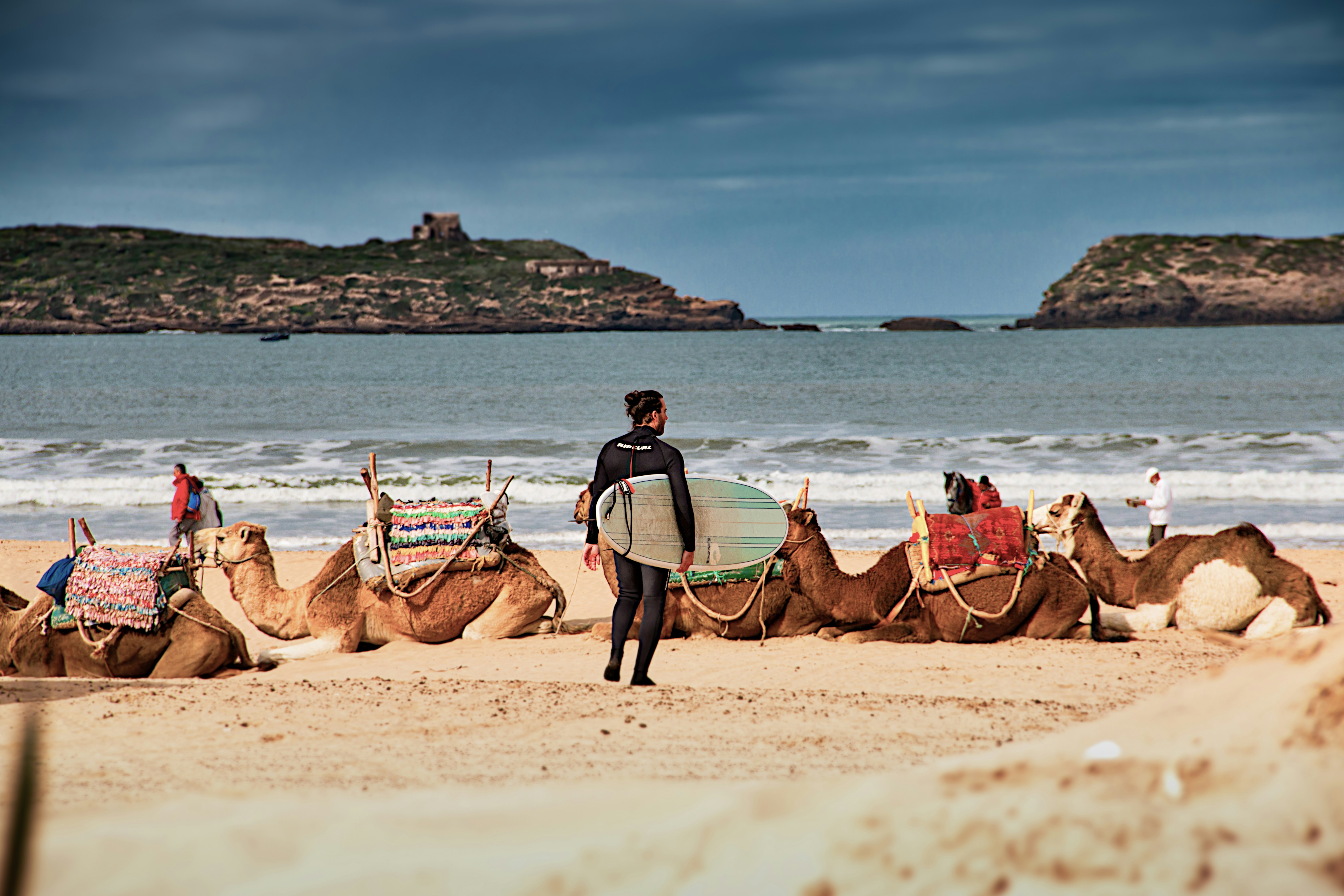
- Essaouira Beach (Plage de Safi) — A vast Atlantic beach stretching south of the medina. World-class windsurfing and kitesurfing from June–August.
- Thuya Wood Cooperatives — Watch craftsmen transform thuya root into intricate marquetry and carved objects along Rue Sidi Mohammed ben Abdallah.
- Jewish Cemetery — Outside Bab Doukkala, the 19th-century Jewish cemetery contains hundreds of Hebrew-inscribed tombstones in a remarkable state of preservation.
Neighbourhoods to Explore
Medina & Souks
The UNESCO-listed walled city centre. Grid-pattern streets, whitewashed walls with blue trim, galleries, craft workshops and the main square Place Moulay Hassan.
The Mellah
The historic Jewish quarter in the northeast of the medina. Quieter and less visited than the main souks. The synagogue and cemetery are here.
The Port Quarter
The working fishing harbour with its blue boats, fish auction hall and grill stalls. Least touristy, most atmospheric. Arrive early for the morning catch.
The Beach & Diabat
The long Atlantic beach south of the medina. Windsurfing and kite schools, surf camps, and the atmospheric ruins of a palace in the village of Diabat.
September in Essaouira: MOGA Festival begins in Essaouira on 30 September 2026 — electronic music, cultural programming and the city's Atlantic atmosphere. For seasonal weather, packing advice and itinerary planning, see the Morocco in September 2026 travel guide.
Where to Stay in Essaouira
Essaouira has a superb range of riads and boutique guesthouses within the medina walls — staying inside the medina is strongly recommended for the full experience. The city is small enough that everything is walkable. Accommodation fills quickly during the Gnaoua Festival (June), MOGA (late September) and summer weekends — book at least 3–4 weeks ahead for festival periods.
🏨 Find Your Riad in Essaouira
From intimate courtyard riads in the medina to boutique hotels overlooking the ramparts — Booking.com has the most comprehensive selection with verified guest reviews and free cancellation on most properties.
Search Essaouira Hotels on Booking.com → Free cancellation available on most properties. No booking fees.Where to Stay by Type
- Best for atmosphere: A traditional riad inside the medina walls, within walking distance of the Skala and the souks.
- Best for sea views: Guesthouses near the Skala de la Ville or the ramparts facing the Atlantic.
- Best for surfers: Accommodation near the beach and Diabat village, south of the medina.
- Best for budget: The medina has several well-maintained guesthouses and hostel-style riads from around €30/night.
Where to Eat
Essaouira is one of Morocco's best cities for seafood. The harbour grill stalls — a row of blue-tabled outdoor grills just inside the port entrance — serve the freshest fish in Morocco: you point at what you want, agree a price, and it arrives grilled minutes later. It is the most honest restaurant experience in the country.
- Port grill stalls — Freshest seafood, lowest prices, highest atmosphere. Get there by noon.
- Place Moulay Hassan cafés — The main square is lined with cafés ideal for mint tea, watching the world go by and catching the Atlantic breeze.
- Chez Sam — A long-established fish restaurant inside the port, with harbour views. Book ahead.
- Argan oil products — The market stalls and cooperatives sell extraordinary argan-based products: pure culinary argan oil (different from cosmetic oil), amlou (a paste of argan, almonds and honey), and argan-dressed salads.
Getting to Essaouira
- From Marrakech by bus: CTM and Supratours run comfortable direct buses (2.5–3 hrs, ~100 MAD). Book online at ctm.ma or at Marrakech bus station.
- From Marrakech by taxi: A grand taxi from Bab Doukkala can be arranged for 4–6 passengers (~350–450 MAD total). Faster and more flexible.
- From Agadir: About 2.5 hrs by road. Several daily buses.
- By car: The N1 coastal road from Agadir or the N8 from Marrakech are both straightforward. Parking outside the medina walls is easy and free.
- Essaouira Airport: Mogador Airport (ESU) has limited seasonal flights from Europe. Most visitors arrive overland via Marrakech.
Best Time to Visit Essaouira
| Season | Conditions | Verdict |
|---|---|---|
| Spring (Apr–May) | Warm, mild Atlantic breeze, green hills. Crowds manageable. | Best |
| Gnaoua Festival (June 25–27, 2026 — 27th Edition) | Windy, buzzing, packed. Book accommodation months in advance. | Best for Music |
| Summer (Jul–Aug) | Strong wind, cool temps (~22°C), busy weekends. Best for windsurfing. | Good |
| Autumn (Sep–Oct) | Calmer wind, excellent weather, smaller crowds. Ideal. | Best |
| Winter (Nov–Mar) | Quiet, cool, occasional rain. Atmospheric but some restaurants close. | Quiet & Cheap |
🎟️ Book Essaouira Tours & Experiences
Book guided city walks, surfing lessons and Gnaoua cultural experiences.
Browse Essaouira Experiences on Viator → We may earn a small commission at no extra cost to you.📱 Stay Connected in Essaouira
Mobile coverage in the medina and around the port is generally good. For seamless data across Morocco without SIM-swapping, an Airalo eSIM is the easiest solution — install before you leave home.
Get a Morocco eSIM on Airalo →Frequently Asked Questions
Final Thoughts
Essaouira offers a different perspective on Morocco. Rather than the pace of larger cities, it invites visitors to slow down and appreciate the rhythm of daily life along the Atlantic coast. Its UNESCO-listed medina, working fishing port, historic fortifications, ocean views and relaxed atmosphere create a destination that feels both authentic and genuinely approachable.
Whether you come to walk the ancient ramparts, enjoy freshly grilled seafood at the harbour, discover local art galleries, learn about Gnaoua culture or attend the internationally acclaimed Gnaoua and World Music Festival, Essaouira rewards visitors who take the time to look beyond its landmarks. It is a city where history, music, creativity and the Atlantic Ocean come together — and one that tends to stay with travellers long after they leave.