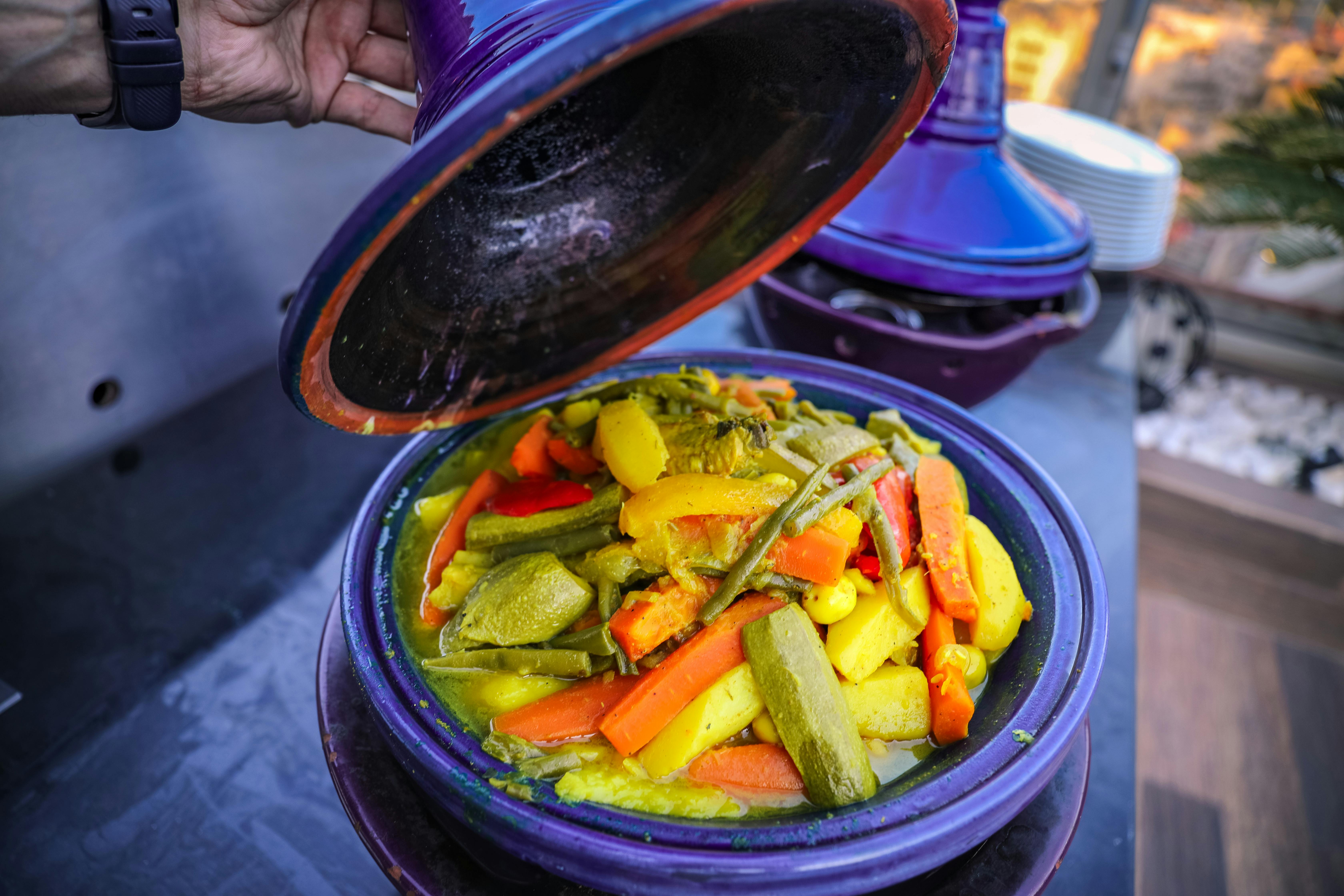
✦ Moroccan Food — At a Glance
In This Guide
Moroccan food is one of the world's great culinary traditions — a cuisine shaped by Berber foundations, Arab spice routes, Andalusian exile and French colonial influence, all layered over a thousand years into something completely its own. It is bold, aromatic, generous and deeply tied to the rhythms of family and hospitality. To eat well in Morocco is to understand the country.
This guide covers everything from the perfect tagine to the chaos of Jemaa el-Fna's night kitchens, and from the Friday couscous ritual to where to find the best pastilla in Fes.
The Essential Moroccan Dishes
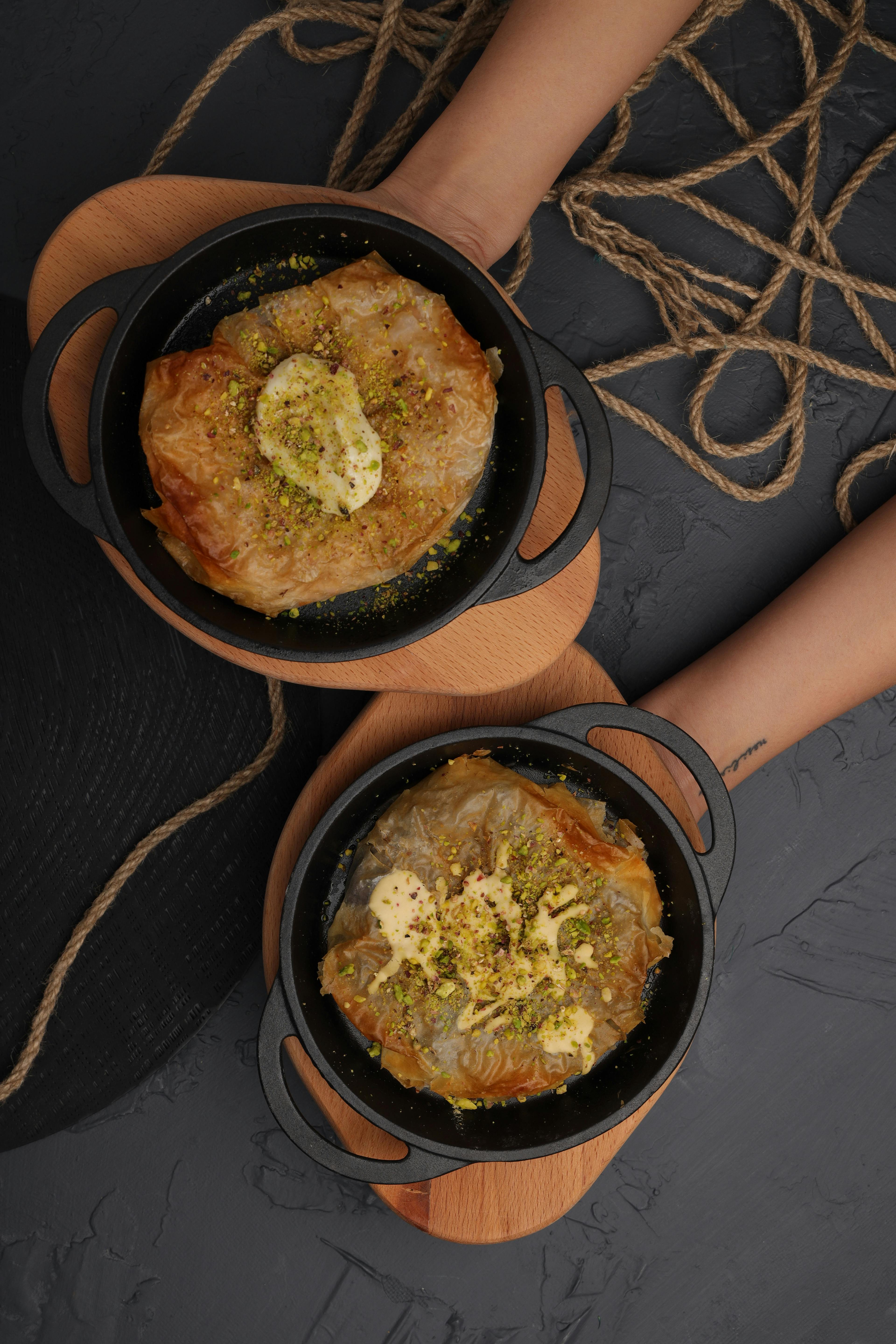
More Essential Dishes
- Harira — The soup of Morocco. A thick, warming broth of tomatoes, lentils, chickpeas, fresh herbs and a squeeze of lemon. Eaten throughout the year but essential during Ramadan to break the fast at sunset.
- Mechoui — Whole lamb slow-roasted in a pit or wood oven until the meat falls from the bone. A celebration dish, particularly in Marrakech's Djemaa el-Fna food stalls and rural festivals.
- Merguez — Spiced lamb sausage, grilled over charcoal. Morocco's answer to fast food — found in every souk, market stall and roadside café.
- Rfissa — A rich, saffron-scented dish of shredded msemen flatbread layered with chicken, lentils and fenugreek. Associated with celebrations and post-birth recovery meals.
- Tangia — Marrakech's own signature slow-cook. A clay amphora filled with lamb, preserved lemon and spices, sealed and cooked overnight in the embers of the hammam furnace. Deeply rich and powerfully aromatic.
- Seafood — Morocco's Atlantic coast produces outstanding fish. Grilled sardines in Essaouira, shrimp pastilla in Agadir, and fried calamari with chermoula sauce along the entire coastline are not to be missed.
🌿 The Spice Rack — What Goes Into Moroccan Food
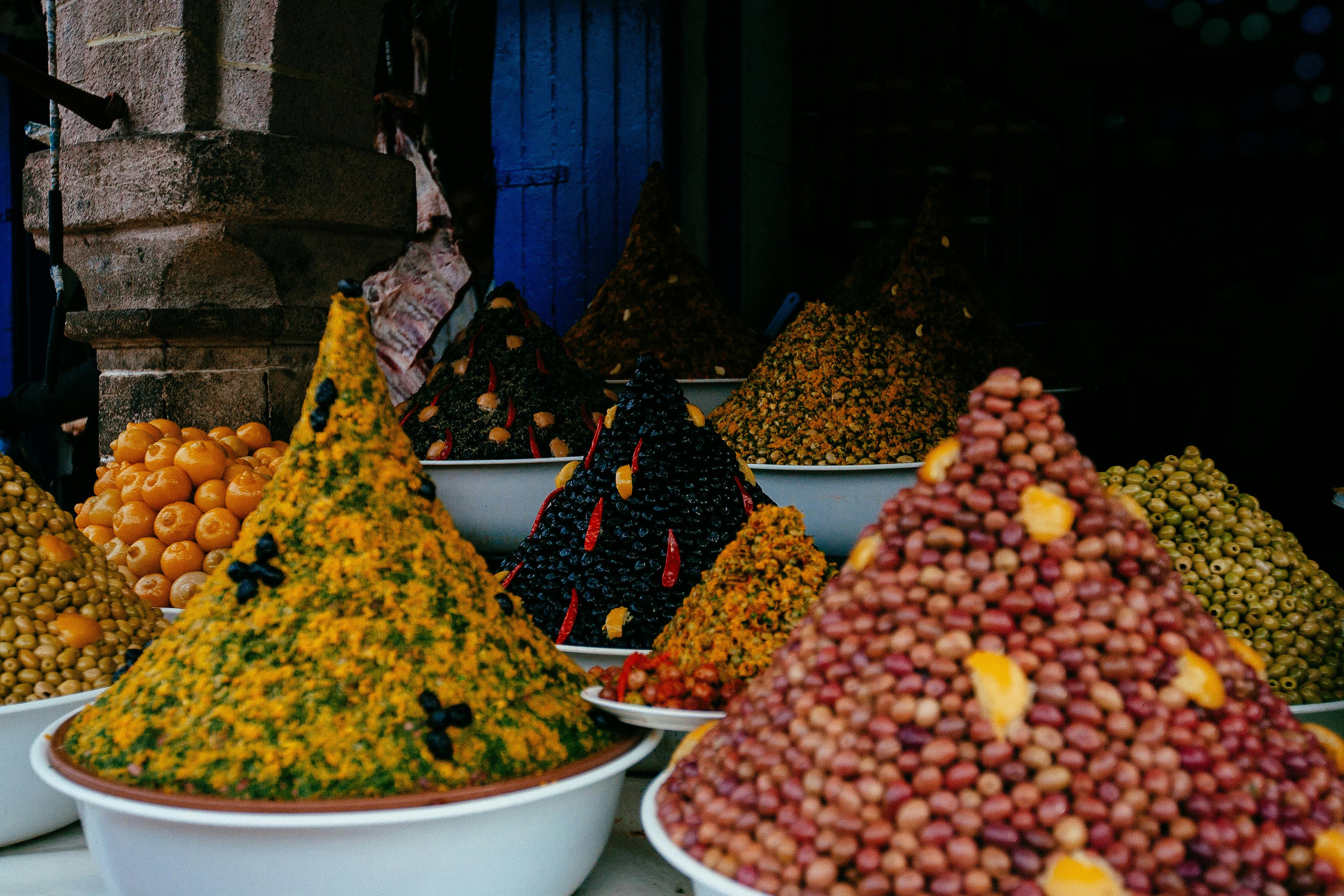
Moroccan cooking is built on a spice vocabulary that is complex but consistent. The key flavours are: cumin (earthy base), ginger (warmth without heat), saffron (the luxury note — Morocco is one of the world's top producers), cinnamon (used in savoury dishes, not just sweet), turmeric (colour and earthiness), paprika (mild sweetness), and the famous spice blend ras el hanout — a house blend of up to 30 spices that varies by region and family. Fresh herbs — coriander, flat-leaf parsley, preserved lemon and olives — complete the flavour profile.
Moroccan Breakfast
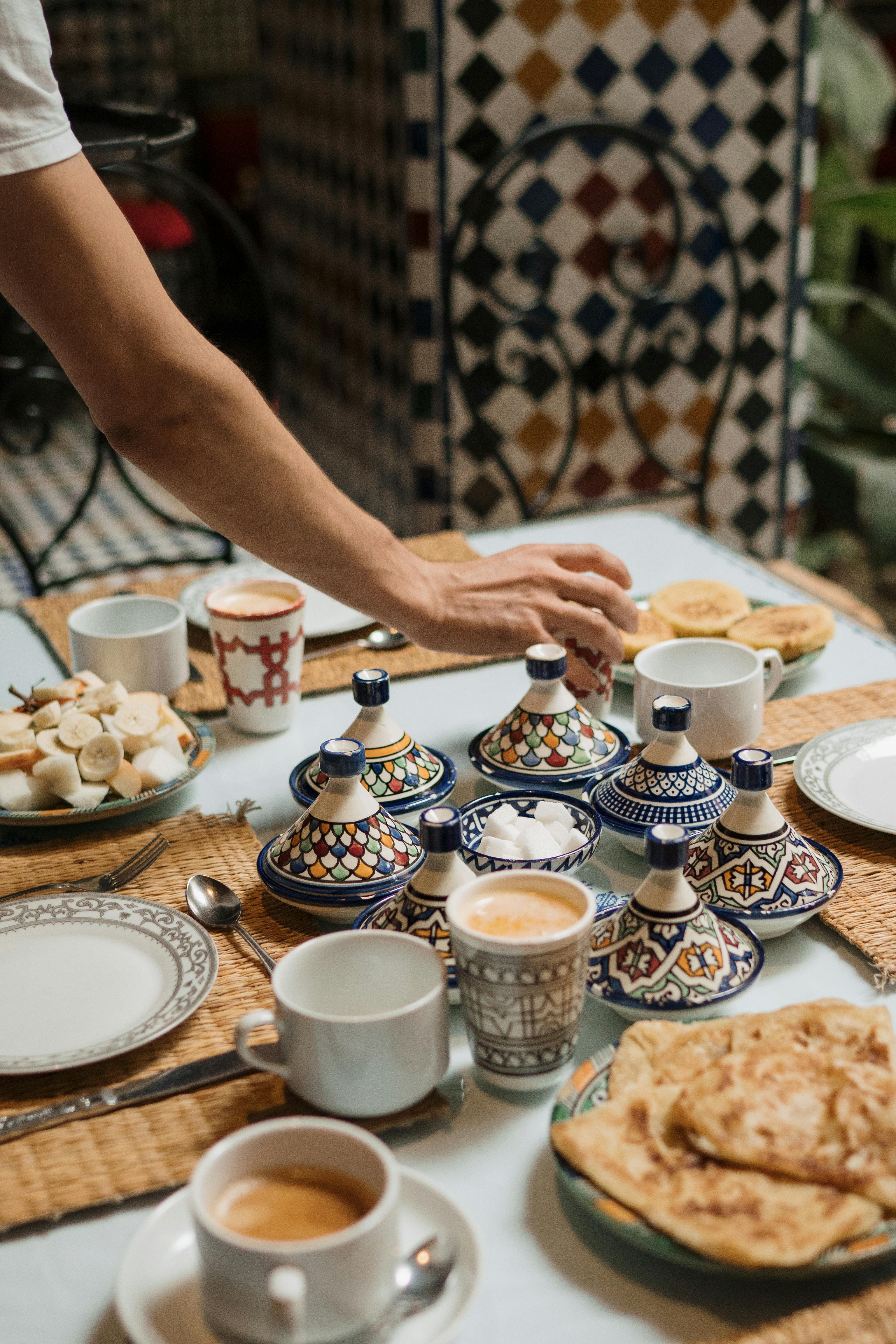
The Moroccan breakfast table is one of the great joys of travel in the country — particularly when served on a riad rooftop. It arrives as a spread rather than a single dish, and typically includes:
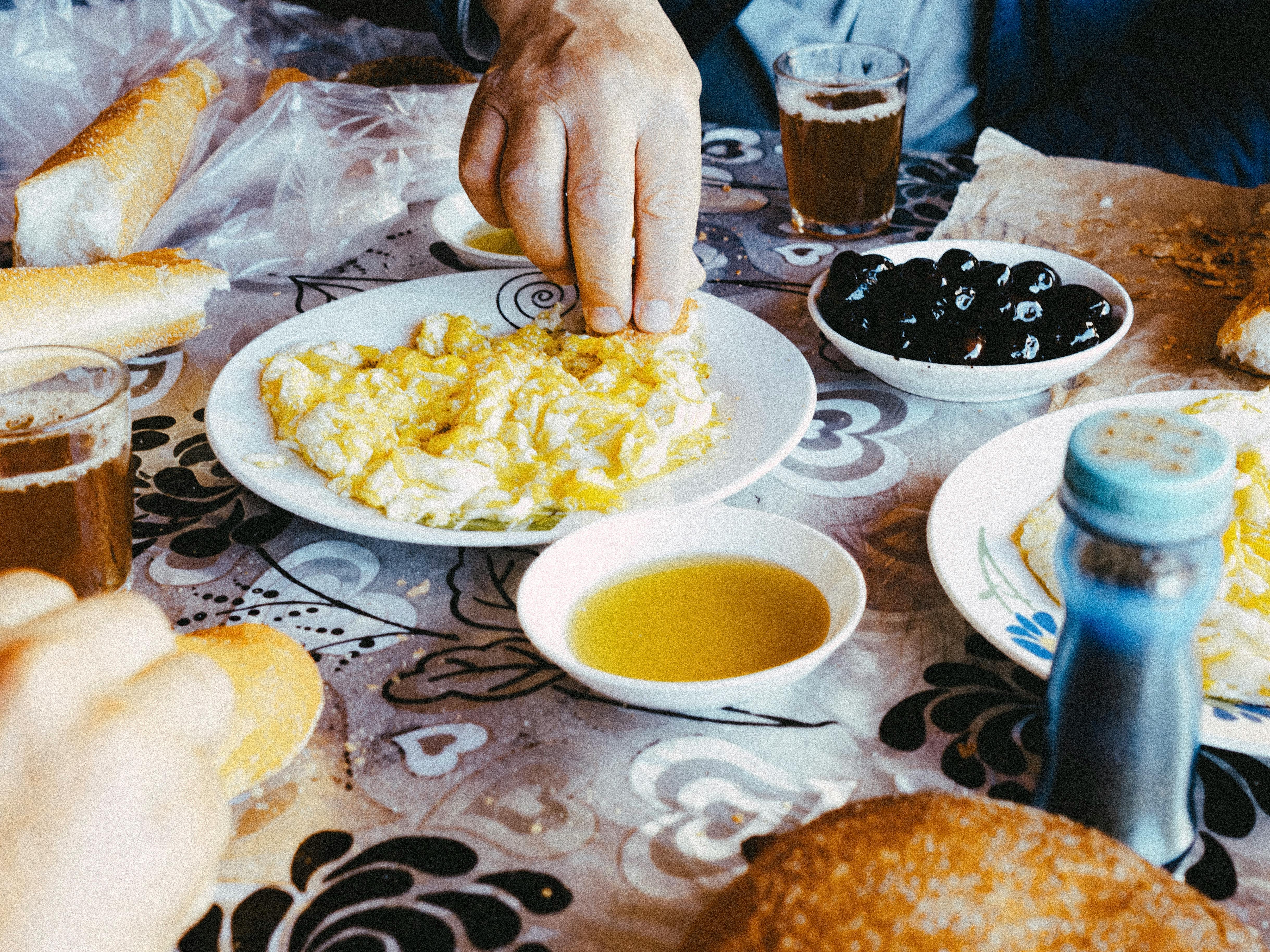
- Msemen — Square, layered flatbread with a flaky, slightly chewy texture. Eaten with butter, honey or argan oil. One of Morocco's most distinctive bread traditions.
- Khobz — Round, domed bread with a thick crust and dense crumb. The everyday bread of Morocco — present at every meal including breakfast.
- Beghrir — Spongy semolina pancakes with thousands of tiny holes that soak up butter and honey. Known as "thousand-hole pancakes."
- Amlou — A thick paste of roasted almonds, argan oil and honey. Similar to peanut butter but richer, nuttier and distinctly Moroccan. Served alongside bread.
- Jben — Fresh white cheese, mild and slightly salty. A common breakfast accompaniment in the Atlas and rural areas.
- Atay — Moroccan mint tea. Never absent from the Moroccan breakfast table. Strong, sweet, poured from height. See the dedicated section below.
🏨 Stay at a Riad for the Breakfast Experience
The best Moroccan breakfasts come from riads — family-run guesthouses where the morning spread is part of the hospitality. A riad breakfast in Marrakech or Fes is worth booking alone.
Find a Marrakech Riad on Booking.com → Affiliate link — we may earn a small commission at no cost to you.Street Food — Jemaa el-Fna & Beyond
Moroccan street food is extraordinary, and nowhere is it more spectacular than the nightly open-air kitchen that takes over Jemaa el-Fna square in Marrakech. After dark, the square transforms into one of the world's great food experiences — hundreds of smoke-billowing stalls offering snails, sheep heads, grilled meats, harira, fresh-squeezed orange juice and merguez sausages, surrounded by storytellers, musicians and acrobats.
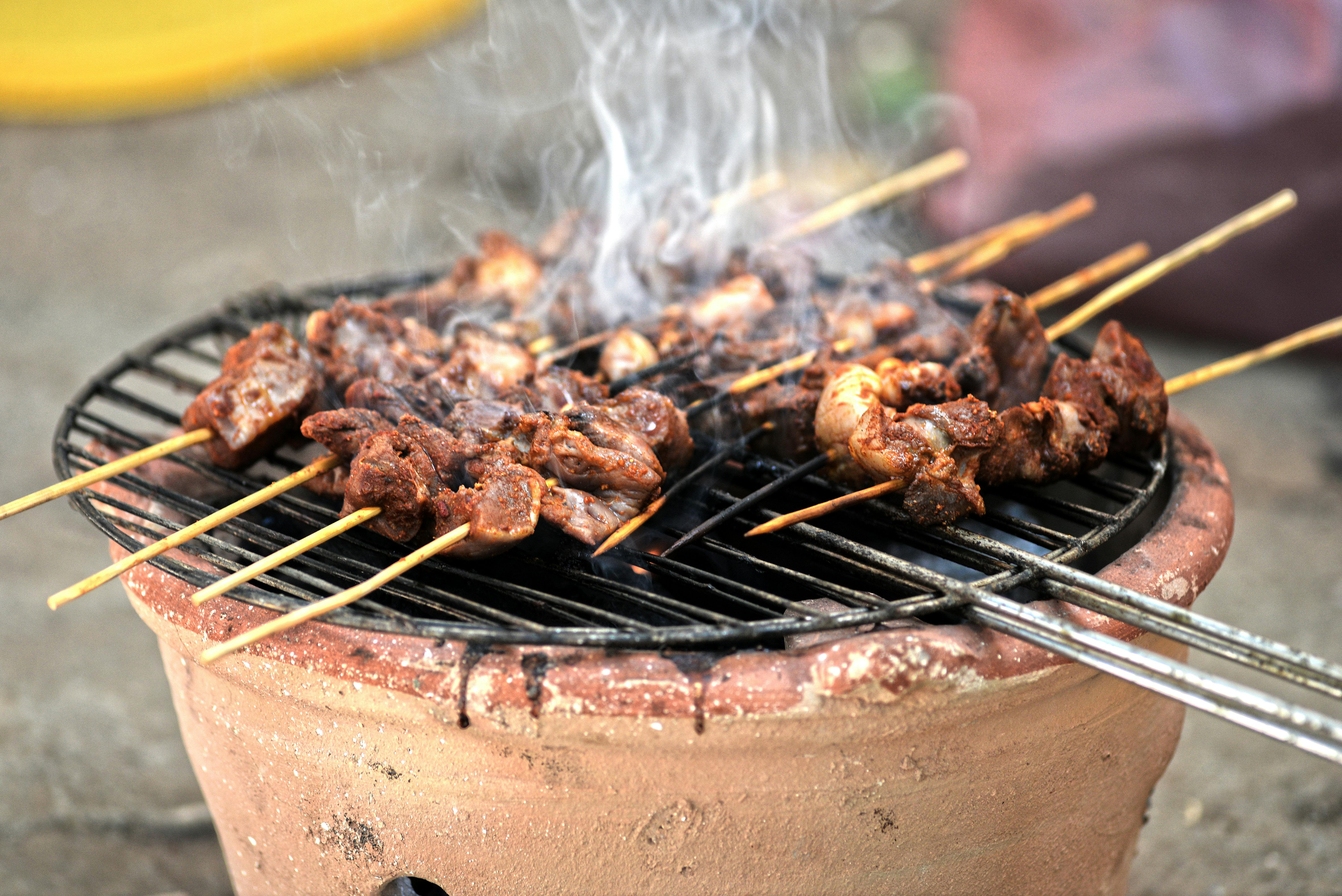
What to Order at Jemaa el-Fna
- Grilled merguez and kefta — The centrepiece of the night stalls. Lamb sausage and spiced minced meat skewers, grilled over charcoal and served with bread.
- Fried fish and seafood — Stalls near the edges of the square serve fresh-fried sardines and calamari.
- Mechoui — Whole roasted lamb served by weight in the Mechoui Alley, just off the square. One of Marrakech's unmissable food experiences.
- Snails (Babbouche) — Bowls of snails in a fragrant herbal broth. A Marrakchi institution. More delicious than they sound.
- Fresh orange juice — Stalls 1–50 at the northern edge squeeze to order. The cheapest and best orange juice in the world. 4 MAD a glass.
- Harira — A bowl of Morocco's national soup with bread and dates. The street version, eaten at a communal table, is often better than the restaurant version.
⚠️ A Few Jemaa el-Fna Tips
Look at the price board before you sit down — stalls aimed at tourists can charge 10x the fair price. Stalls numbered in the 40s–60s tend to be more local. Avoid stalls with very aggressive touting at the entrance. The orange juice stalls and harira bowls are always fairly priced. For grilled meat, agree the price before ordering or point and ask.
Street Food Beyond Marrakech
- Fes — The medina's food stalls around Bab Bou Jeloud and R'cif Square serve excellent msemen, harira and meloui. The Fes food scene is more authentic and less tourist-oriented than Marrakech.
- Casablanca — The fish market at the port has outstanding fresh seafood. The Central Market (Marché Central) is excellent for buying spices and produce.
- Essaouira — The harbour fish stalls are legendary. Choose your catch (sardines, sea bream, sole, prawns) and they grill it immediately in front of you.
- Agadir — The fishing port area has excellent grilled fish. The morning fish market is worth visiting even if you just browse.
🗺 Take a Guided Street Food Tour
A local guide unlocks Moroccan street food at a different level — knowing which stalls to trust, which dishes to order and the stories behind them. Viator's Marrakech food tours are consistently well-reviewed and include areas beyond Jemaa el-Fna.
Browse Marrakech Food Tours on Viator → Affiliate link — we may earn a small commission at no cost to you.The Moroccan Mint Tea Ceremony
Moroccan mint tea — atay in Darija — is far more than a drink. It is an act of hospitality, a social ritual and a mark of welcome. To be offered tea in Morocco is to be treated as a guest. Refusing it is considered impolite. The preparation is deliberate, the pouring theatrical, and the result — strong, sweet, fragrant — is unlike any tea you will find elsewhere.
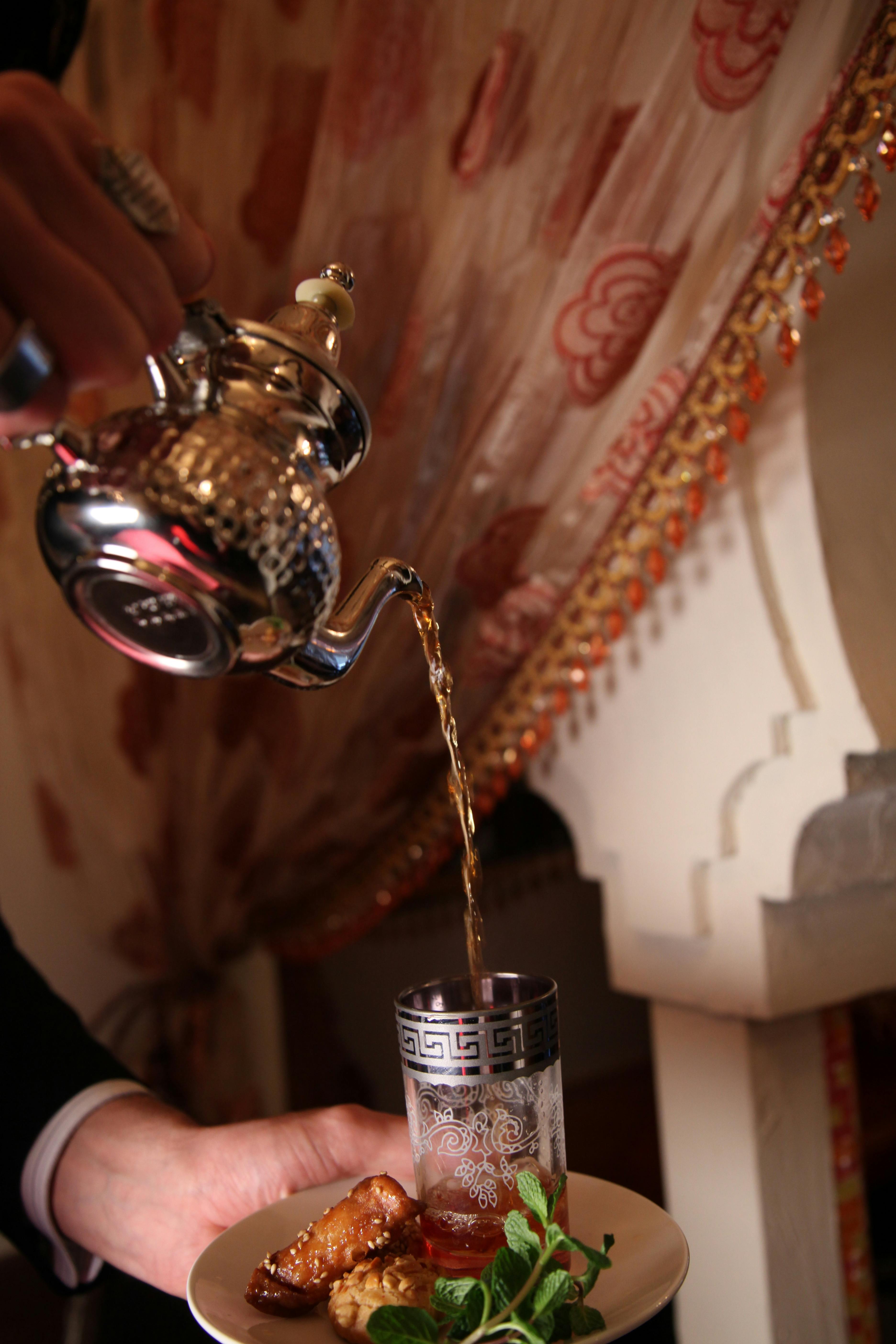
☕ How Moroccan Tea is Made
Chinese gunpowder green tea is steeped with a large bunch of fresh spearmint and sugar — quantities that would shock a European palate. The tea is poured from the pot held high above the glass to create a frothy head. This aeration is deliberate: it cools the tea slightly and creates the characteristic foam. Three glasses are traditional: "The first glass is as gentle as life, the second is as strong as love, the third is as bitter as death."
The tea ceremony slows everything down. Drinking tea in Morocco is never rushed. Whether in a riad courtyard, a souk merchant's shop or a Saharan bivouac, the ritual of tea-making creates the space for conversation, negotiation and connection. It is one of Morocco's most beautiful customs.
Regional Food Differences
| Region | Signature Dish / Speciality | What Makes It Distinct |
|---|---|---|
| Marrakech | Tangia, Mechoui | Slow-cook traditions using the hammam furnace. Stronger use of cumin. The most internationally recognised Moroccan cuisine. |
| Fes | Pastilla, Rfissa | The most refined and complex Moroccan cooking. Fassi cuisine uses more saffron, more layers of flavour and more elaborate techniques. The home of pastilla. |
| Casablanca | Fish & seafood, French-influenced bistros | The most cosmopolitan food scene. Strong French and Spanish influence. The city has Morocco's best fine-dining restaurants. |
| Atlantic Coast | Grilled sardines, chermoula fish | Outstanding fresh seafood from Essaouira, Agadir, Safi and El Jadida. Chermoula — a marinade of coriander, cumin and lemon — is the signature flavour. |
| Souss (Agadir area) | Amlou, Argan oil, Tagine Berber | Tachelhit-speaking Amazigh (Berber) traditions dominate. Argan oil is used in cooking and dressings. Simpler, earthier tagines than the imperial city versions. |
| Sahara South | Taguella (sand bread), camel meat | Nomadic traditions. Bread baked in the sand. Camel milk. Date palm products. Simple but deeply flavourful in context. |
Restaurants to Know by City
Marrakech
- Nomad — Modern Moroccan cuisine on a rooftop terrace in the heart of the medina. Creative dishes using traditional ingredients. Book ahead.
- Le Jardin — Set in a 1930s riad garden in Mouassine. The best setting in Marrakech for lunch — open courtyard, excellent tagines, beautiful atmosphere.
- Dar Moha — Fine Fassi cuisine served in a restored palace. The most celebrated traditional restaurant in Marrakech. Ideal for a special occasion.
- Mechoui Alley (Souk Ahl Fes) — Not a restaurant but an experience. Choose your mechoui (roasted lamb) by weight, eat at a communal table. Budget, brilliant, unmissable.
Fes
- Nur — The best fine-dining restaurant in Fes. A daily-changing menu of Fassi dishes in a beautifully restored riad. The tasting menu is exceptional value.
- Riad Rcif Restaurant — Solid traditional cooking in the heart of Fes el-Bali. The pastilla here is outstanding.
- Café Clock — Famous for the camel burger and cultural programming (storytelling, music). A Fes institution for visitors.
Casablanca
- La Sqala — Set inside a 18th-century Portuguese fortification. Traditional Moroccan cuisine in an extraordinary setting. One of the best restaurant locations in Africa.
- Rick's Café — Yes, inspired by the film. Excellent Moroccan-international menu in a beautifully designed space near the medina. The piano player plays, of course.
- Le Cabestan — Casablanca's finest seafood restaurant, overlooking the Atlantic on the Corniche. The bouillabaisse and grilled fish are outstanding.
Moroccan Cooking Classes
Taking a cooking class in Morocco is one of the best investments you can make — you'll learn to make dishes you'll cook for the rest of your life, and the classes typically include a market visit where you source the ingredients alongside your instructor. Most classes in Marrakech and Fes begin with a souk tour, then move to a riad kitchen for 2–3 hours of hands-on cooking followed by eating what you've made.
What to expect to learn: tagine construction (the spice base, layering, timing), couscous steaming technique, Moroccan salads (zaalouk, taktouka), Moroccan bread (khobz), and usually how to make proper mint tea. Some classes include pastilla or msemen.
👨🍳 Book a Moroccan Cooking Class
Viator offers a wide range of cooking classes in Marrakech and Fes — from half-day market-to-table experiences to full-day immersions with a Moroccan family. One of the highest-rated Morocco travel experiences.
Browse Cooking Classes on Viator → Affiliate link — we may earn a small commission at no cost to you.Morocco Cookbooks to Buy
The best way to continue your Morocco food journey at home. These are the definitive cookbooks for Moroccan cuisine — a combination of classic reference works and modern interpretations.
📚 Shop Morocco Cookbooks on Amazon
Find all of the above and more in our curated selection — delivered to your door before you travel, so you can cook Morocco at home and know exactly what to order when you arrive.
Browse Morocco Cookbooks on Amazon → Amazon affiliate link — we earn a small commission at no cost to you.Frequently Asked Questions
Ready to Taste Morocco?
Use our city guides to plan where to eat in each destination — from Marrakech's Jemaa el-Fna to Fes's hidden riad restaurants.
Browse All Morocco Travel Guides →