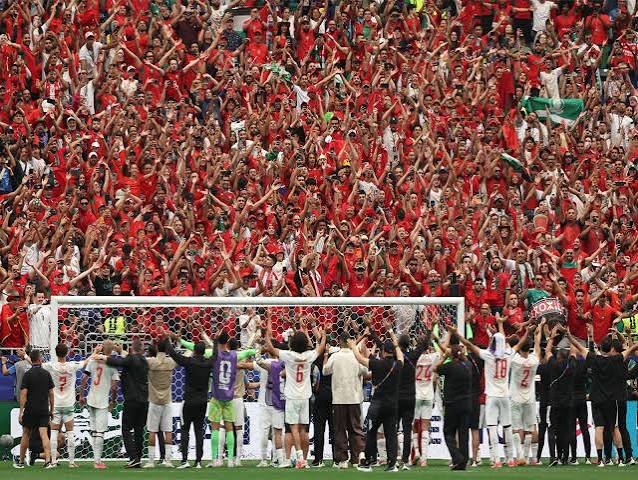
The first 48-team World Cup was football on a scale never previously attempted.
Across Canada, Mexico and the United States, 48 national teams played 104 matches in 16 host cities. Stadiums were filled, goals arrived in record numbers, millions gathered at official fan festivals, and Spain defeated Argentina 1–0 after extra time to become world champion.
Morocco also confirmed that its historic 2022 semifinal was not an isolated achievement. The Atlas Lions advanced from a demanding group, eliminated the Netherlands and Canada, and reached the quarter-finals before falling 2–0 to France.
That is the celebratory side of 2026.
The tournament also produced important warnings. Ticket prices generated fierce criticism. Transportation costs around certain venues became controversial. Heat and access to drinking water raised health concerns. Visa restrictions complicated the promise of a genuinely global gathering. The distances between host cities reminded supporters that a multi-country World Cup is not automatically an easy tournament to navigate.
Morocco should study both realities.
The lesson is not that 2026 failed. By several important measurements, it was an extraordinary success. The lesson is that full stadiums and record revenues do not, by themselves, guarantee an affordable, accessible or equitable experience.
Morocco has four years to build on the achievements and avoid the mistakes.
Editor's Summary
World Cup 2026 demonstrated that the expanded 48-team format can produce strong football, enormous global interest and unprecedented attendance. It also demonstrated that the quality of a World Cup must be measured beyond the stadium gates. For Morocco, the central lessons are:
- Protect ordinary supporters from excessive prices
- Treat transportation as part of the ticketed experience
- Publish clear entry and visa information early
- Prepare for heat affecting players, workers and spectators
- Make water readily available
- Build multilingual digital information around complete fan journeys
- Use fan zones to showcase Moroccan culture and local businesses
- Design accessibility into transportation, streets and venues
- Report infrastructure progress transparently
- Ensure that stadiums and public investment retain value after 2030
World Cup 2026 in Numbers
Confirmed Fact · FIFA Official Statistics| Measure | Result |
|---|---|
| Participating teams | 48 |
| Matches | 104 |
| Host countries | 3 |
| Host cities | 16 |
| Total stadium attendance | 6,810,966 |
| Average attendance | 65,490 |
| Stadium occupancy | 99.7% |
| Goals | 308 |
| Goals per match | 2.96 |
| Fan Festival attendance | More than 9 million |
| Champion | Spain |
| Morocco's finish | Quarter-finals |
Source: FIFA official tournament statistics. Fan Festival figures from FIFA Fan Festival report.
FIFA reported a total attendance of 6,810,966 across 104 matches, with stadiums operating at 99.7% occupancy. The tournament produced 308 goals, averaging 2.96 per game. These figures make clear that expanding from 32 to 48 teams did not reduce public demand.
The official Fan Festival program attracted more than nine million visits across 13 host cities. FIFA reported that all 104 matches were screened and that hundreds of musical and cultural performances were staged alongside football.
These are FIFA's figures and should be understood as the organizer's official measurements. Nevertheless, they document the extraordinary scale Morocco, Spain and Portugal must prepare to inherit.
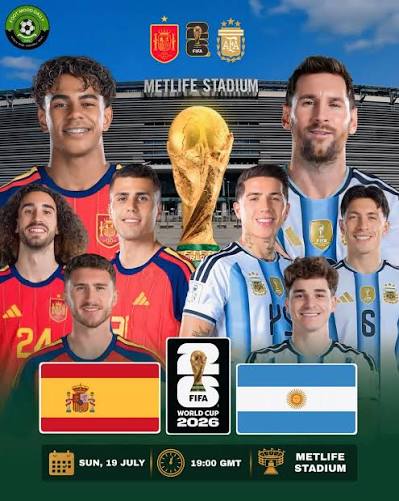
Record scale. FIFA reported 6,810,966 spectators across 104 matches, with stadiums operating at 99.7% capacity. The expanded 48-team format delivered extraordinary public demand.
Morocco's 2026 Campaign
Confirmed Fact · FIFA Match Records| Stage | Match | Result |
|---|---|---|
| Group C | Brazil vs. Morocco | 1–1 |
| Group C | Scotland vs. Morocco | 0–1 |
| Group C | Morocco vs. Haiti | 4–2 |
| Round of 32 | Netherlands vs. Morocco | 1–1; Morocco won 3–2 on penalties |
| Round of 16 | Canada vs. Morocco | 0–3 |
| Quarter-final | France vs. Morocco | 2–0 |
Source: FIFA final tournament standings. ▐ Green = win · Gold = draw · Red = loss
Morocco finished second in Group C after drawing with Brazil and defeating Scotland and Haiti. It then eliminated the Netherlands on penalties and defeated Canada 3–0 before France ended the campaign in the quarter-finals.
The quarter-final defeat was disappointing, but the larger conclusion is positive. Morocco followed Africa's first World Cup semifinal appearance in 2022 with another place among the final eight in 2026.
One deep run can be created by timing, form and fortune. Two consecutive deep runs indicate something more durable: player development, recruitment, tactical maturity, institutional planning and the belief that Morocco belongs among the leading football nations.
That should inspire Morocco—but not make it complacent. The 2030 team will face a different form of pressure. Playing at home brings energy and familiarity, but it also brings expectation. The national team's preparation must be protected from the commercial and ceremonial demands surrounding a home World Cup.
What World Cup 2026 Accomplished
1. The 48-team format proved commercially and popularly viable
Confirmed FactBefore the tournament, critics questioned whether expansion would dilute quality and produce too many uncompetitive matches. There were uneven contests, as there are in every international tournament. But the broader evidence does not support the idea that supporters rejected the expanded format. Stadium occupancy approached 100%, and the tournament delivered a record number of goals.
More nations participated. More supporters saw their countries represented. New football stories emerged.
For Morocco, this means 2030 must prepare for the expanded format as a permanent reality. The larger tournament brings more delegations, more supporters, more languages, more training sites, more security operations, more accommodation demand, more transportation movements, more media infrastructure and more matches requiring workers and volunteers. Expansion creates opportunity, but it magnifies every organizational weakness.
2. Stadium demand remained extraordinary
Confirmed FactMore than 6.8 million spectators attended matches. FIFA reported an average crowd above 65,000 and occupancy of 99.7%. Morocco should take confidence from this demand. Large Moroccan stadiums can become powerful stages, especially when combined with the country's football culture.
But capacity alone is not enough. A stadium experience begins at the airport, hotel, railway station or neighborhood from which the supporter starts. It continues through security, pedestrian access, toilets, water, signage and the journey home. A full stadium is an attendance statistic. A safe and efficient complete journey is a successful event.
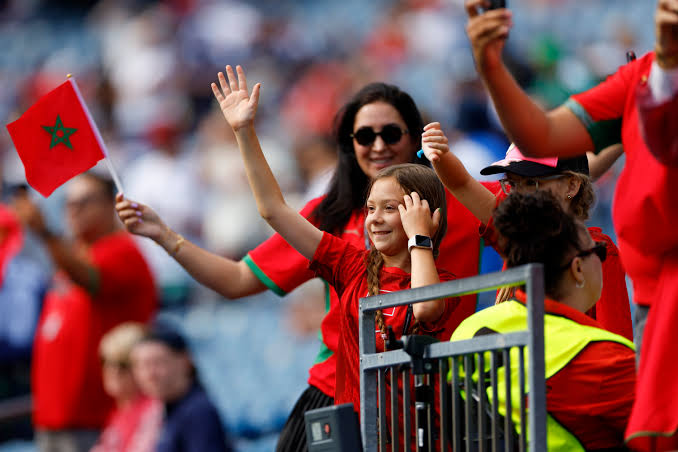
More than nine million visits. Official Fan Festivals demonstrated that most World Cup participation happens outside stadiums. For Morocco, this represents an extraordinary opportunity to present Moroccan culture, music, cuisine and local businesses to the world.
3. Fan festivals became part of the tournament itself
Confirmed FactMore than nine million visits to Fan Festival locations demonstrated that most World Cup participation happens outside stadiums. Many visitors never possess a match ticket. Residents may attend public screenings throughout the tournament. Families, young people and tourists use fan zones as their principal connection to the event.
This presents Morocco with an enormous cultural opportunity. A Moroccan fan festival should not feel like a generic sponsor exhibition transported from another country. It should incorporate Moroccan and African music, regional cuisine, local crafts, contemporary Moroccan design, cultural storytelling, youth football, women's football, local performers, small Moroccan businesses, and experiences representing each host city. The World Cup should come to Morocco without Morocco disappearing behind the World Cup.
4. Technology and accessibility advanced
Confirmed FactFIFA reported large-scale digital infrastructure supporting broadcasts, private 5G services and venue operations. It also reported audio-described commentary, sign-language streams, sensory bags, wheelchairs and haptic boards at selected matches.
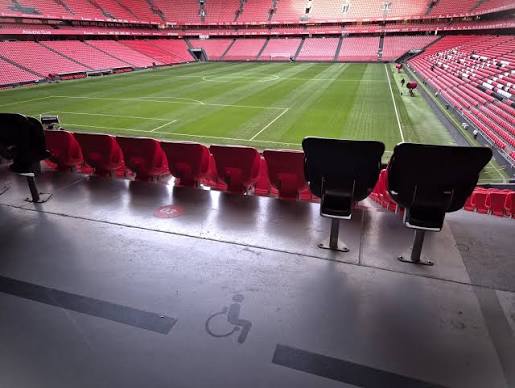
Accessibility cannot be added at the end of construction. Morocco must plan accessible paths covering airports, railway stations, tram stops, pavements, stadium entrances, seating, toilets, fan zones and emergency evacuation — not only the stadium seat itself.
Those initiatives matter because accessibility cannot be added at the end of construction. Morocco must plan accessible paths covering airports, railway stations, tram and bus stops, pavements, stadium entrances, seating, toilets, food and beverage areas, fan zones, emergency evacuation and digital information. A wheelchair-accessible stadium is not truly accessible if the route from the station to the entrance is blocked by stairs, broken pavement or inaccessible transportation.
What World Cup 2026 Exposed
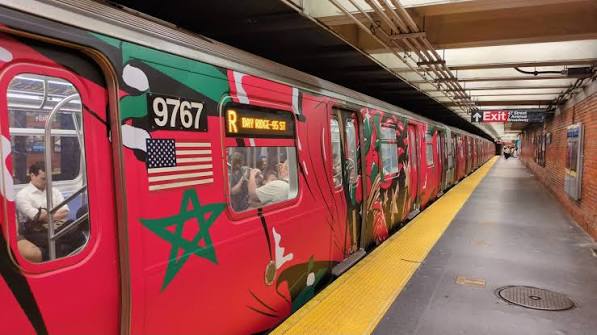
The complete supporter journey. A supporter's experience does not end at the railway station. Transfers, pedestrian routes, signage and post-match departures determine whether transportation truly succeeds. Controversial event-rail pricing around the New Jersey venue became one of the tournament's most prominent concerns.
1. A tournament can be full and still be unaffordable
Documented ConcernTicket demand was enormous, but FIFA's pricing generated serious criticism. Supporters' groups objected to dynamic pricing and the cost of following a national team through multiple rounds. FIFA subsequently introduced a limited supporter tier at lower prices, but reporting indicated that this represented only a small proportion of available seats. (The Guardian's reporting on the supporter ticket tier.)
This distinction is fundamental: high demand proves that people want the product. It does not prove that the product is fairly accessible.
Morocco will not control every FIFA ticketing decision. Nevertheless, Moroccan organizers can advocate for transparent price categories, meaningful supporter allocations, protection against deceptive resale, affordable public fan zones, reasonably priced local transportation, published food and water prices, and community-access programs. The 2030 World Cup should not become an event Moroccans can see being built around them but cannot afford to experience.
2. Last-mile transportation can determine the entire experience
Documented ConcernThe 2026 tournament spanned a vast continent. Air travel was often necessary between host regions, while individual venues presented their own last-mile challenges. One particularly controversial example involved transportation to the New York/New Jersey stadium, where event rail and parking prices drew public criticism. The dispute illustrated how expensive final-stage transportation can undermine years of planning. (Guardian report on New Jersey World Cup transportation.)
This should not be generalized to every 2026 host city. It should be treated as a warning.
Morocco possesses an important advantage: its proposed host cities are connected through a national network that can be planned as one system. But the critical question is not merely whether a supporter can travel from Tangier to Casablanca. It is whether that supporter can travel from a hotel to the station, understand the platform, reach the destination city, transfer to local transportation, enter the stadium, and return safely after a late match.
3. Heat planning must include spectators and workers
Documented ConcernNorth American summer heat placed player welfare and hydration under scrutiny. Hydration breaks became part of the competition, while supporters raised concerns about restrictions on bringing reusable water bottles into stadiums. Football Supporters Europe warned that difficult access to water could increase the risk of heat illness. (Guardian report on stadium water concerns.)
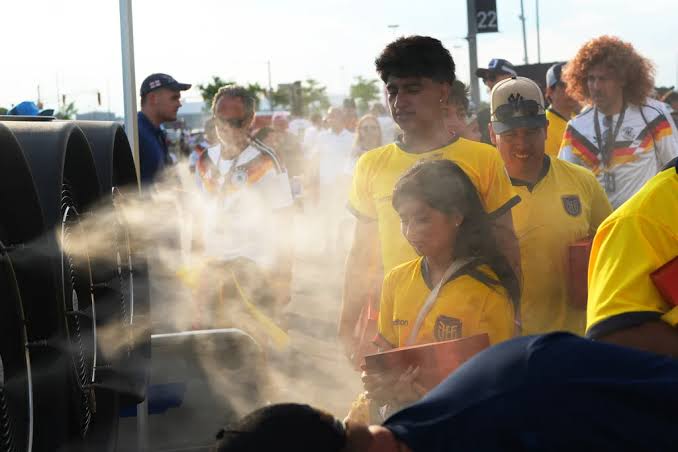
Hydration is a health requirement, not a commercial product. Morocco's coastal cities may offer moderate summer conditions, but June and July heat remains a serious concern — especially in Marrakech and Fes. Free water, shade and clear medical protocols must be planned before 2030.
Morocco's coastal cities may enjoy more moderate summer conditions than some inland North American locations, but June and July heat remains a serious operational concern, especially in Marrakech and Fes. Morocco's plan should include free drinking-water points, shaded queues, shaded fan-zone seating, cooling and medical areas, published water rules, reasonably priced bottled water, heat information in multiple languages, protection for volunteers and security workers, match scheduling informed by local climate, and emergency protocols for heat illness.
4. Border access shapes whether a World Cup is truly global
Documented ConcernThe United States' entry rules and visa restrictions became a significant source of criticism before and during the tournament. Human Rights Watch and other organizations argued that restrictions prevented or discouraged supporters from certain qualified nations from attending. (Human Rights Watch assessment.)
Morocco's situation will be different, but the lesson remains relevant. 2030 entry information must be published early, nationality-specific, multilingual, consistent across official platforms, clear about permitted stays and documentation, clear about travel between Morocco, Spain and Portugal, and updated when rules change. Supporters attending matches in more than one host country will need to understand different entry systems. Coordination between Morocco, Spain and Portugal will therefore be essential.
5. Record scale creates new opportunities for fraud
Documented ConcernHigh ticket prices and accommodation demand create ideal conditions for scams. Reuters reported warnings that expensive tickets and transportation could drive supporters toward fraudulent offers. (Reuters reporting on World Cup scam risks.)
Morocco should begin consumer-protection education well before ticket sales. A dedicated 2030 safety system should explain the only authorized ticket channels, how official resale works, how to recognize fake accommodation, common payment scams, fraudulent transportation offers, impersonation of government or FIFA officials, emergency and reporting contacts, and how to verify licensed guides and tour operators. MoroccoMondial2030 can contribute independently by maintaining an updated fraud-warning page.
Ten Lessons Morocco Must Carry Into 2030
Defend Affordability as Part of Morocco's Reputation
Morocco cannot control every FIFA ticket price, but it can influence the wider cost of attendance. Transportation, fan zones, food, water, local events and cultural programming should include meaningful affordable options. Morocco's hospitality must not be reduced to luxury hospitality.
Publish transparent local prices and provide free or affordable ways for residents to participate
Especially young Moroccans who will inherit the tournament's legacy. Ordinary participation should not require an international supporter's travel budget.
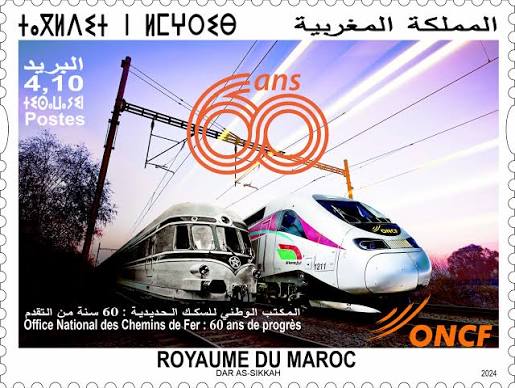
A powerful foundation — but only the beginning. Morocco's Al Boraq high-speed rail connects Tangier, Kenitra, Rabat and Casablanca at 320 km/h. The greater challenge for 2030 will be connecting long-distance rail with airports, local transportation, stadiums and late-night return services across all six host cities.
Build One National Mobility Plan
Railways, airports, motorways, trams, buses, taxis and pedestrian routes must operate as components of one supporter system. Separate infrastructure projects are not enough. Visitors need a single journey-planning experience.
Develop an official multilingual journey planner
Covering airports, railway stations, host cities, stadium shuttles, walking routes, accessibility and post-match departures — available before the first ticket is sold.
Solve the Final Kilometer
The most impressive high-speed railway cannot compensate for confusion between the arrival station and the stadium. Late-night departures are especially important. Thousands of spectators may leave at once after extra time and penalties.
Every venue needs tested plans for the complete final-stage journey
- Railway transfers and bus/tram capacity after the match
- Taxi organization and pedestrian separation
- Lighting, signage and crowd management
- Accessible transportation and post-match service extensions
Treat Heat and Water as Public-Health Responsibilities
Players, supporters, volunteers, vendors and security workers all face heat exposure. This is a logistical and medical responsibility, not only a commercial consideration.
Guarantee free water access, shade and clearly published heat protocols
Test those systems during major events before 2030. Match scheduling in Marrakech and Fes should be informed by local climate data and include evening kick-off options where feasible.
Make Information Multilingual and Consistent
2030 will connect Africa, Europe and South America. Supporters will arrive speaking Arabic, English, French, Spanish, Portuguese, Amazigh languages and many others.
Core information in Arabic, English, French, Spanish and Portuguese — minimum
With consistent terminology across websites, stations, airports and stadiums. Inconsistency between official channels is one of the fastest ways to lose supporter trust.
Let Fan Zones Express Morocco
The Fan Festival attendance in 2026 showed that public gathering spaces can reach more people than stadiums. This is Morocco's cultural stage as much as it is a FIFA product.
Present Morocco's regional identities — not a decorative version of them
Morocco's African, Amazigh, Arab, Saharan, Andalusian, Jewish and Mediterranean heritage should be present in fan zones in living form. Local artists, chefs, artisans and businesses should participate economically — not merely as backdrop.
Design Accessibility Across the Entire Journey
Accessibility must extend beyond reserved stadium seating. A supporter with a disability should be able to navigate every stage of the journey with the same dignity as any other visitor.
Audit airports, stations, pavements, shuttles, entrances and emergency systems
Then publish accessibility guides that describe actual conditions rather than vague promises. The gap between announced accessibility and experienced accessibility is where trust breaks down.
Clarify Entry Requirements Early
Supporters should not plan expensive journeys while uncertain whether they can enter a host country. The uncertainty itself — not only the restriction — discourages attendance.
Create one verified entry-information center and update it continuously
MoroccoMondial2030 should link readers to the official authority while explaining changes in plain language and in every language supporters need.
Report Progress Honestly
World Cup preparations naturally generate optimism and promotional announcements. But a credible host needs more than announcements.
Every major project should carry a verifiable status — not a percentage invented for a press release
That is the principle behind the MoroccoMondial2030 Readiness Tracker: Confirmed · Announced · Planning · Work Underway · Near Completion · Completed · Delayed · Status Not Independently Confirmed.
Judge Every Investment by What Remains Afterward
A tournament lasts several weeks. Infrastructure, debt, maintenance obligations and urban changes remain for decades. Stadium capacity is not a legacy — sustainable use is.
Every major investment should answer these questions before construction begins
- Who will use it after 2030? Who will maintain it?
- Does it serve local residents or primarily tournament visitors?
- Does it create permanent employment?
- Does it improve ordinary transportation?
- Can the stadium attract sustainable post-tournament use?
- Does the project benefit communities outside the event zone?
Legacy should be planned before construction — not invented after the final.
The Football Lesson for Morocco
Morocco's quarter-final finish should be celebrated because it confirms continuity at the highest level. The Atlas Lions demonstrated that Moroccan football's rise has deeper foundations than one exceptional month in Qatar. The national academy system, diaspora recruitment, federation planning and growing expectations have changed Morocco's position in world football.
But hosting creates a new danger: believing that infrastructure guarantees sporting success. It does not.
Morocco must continue investing in youth coaching, local academies, domestic-club development, women's football, sports science, coach education, player welfare, competitive opportunities across Africa, and development beyond the largest cities.
The most meaningful football legacy would not be one successful 2030 team. It would be a system capable of producing competitive Moroccan teams for generations.
Scale Creates Spectacle. Preparation Creates Trust.
World Cup 2026 was neither the flawless triumph described by organizers nor the failure portrayed by its strongest critics. It was an enormous sporting and operational achievement. The attendance, goals, global engagement and public celebrations were real. So were the concerns about prices, transportation, heat, water and border access.
Morocco should reject the temptation to choose between celebration and criticism. A serious future host must study both.
Morocco has assets that could make 2030 exceptional: a deeply rooted football culture, geographic proximity to Europe, strong connections with Africa, expanding airports, high-speed rail, established tourism, distinctive cities, international hospitality experience, and a population emotionally invested in the tournament.
The challenge is to ensure that ambition reaches the complete visitor journey — and that investment produces lasting value for Moroccans.
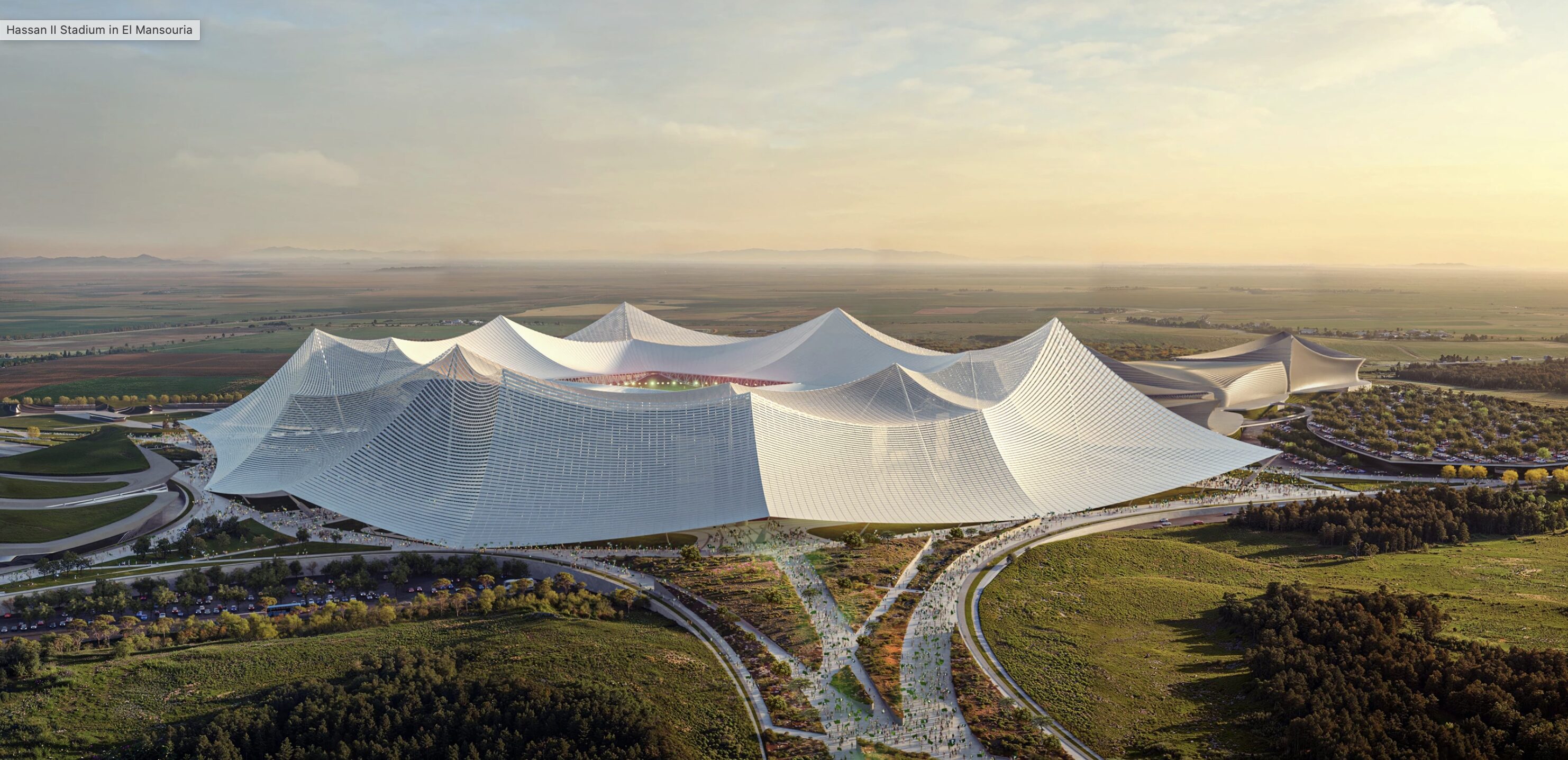
Grand Stade Hassan II. Morocco's proposed centrepiece for 2030 — planned at approximately 115,000 seats in the commune of El Mansouria, Benslimane Province, approximately 38 kilometres from Casablanca. Its long-term value will depend not only on capacity, but on transportation, accessibility, maintenance and sustainable use after the tournament. Final match allocations have not been officially confirmed by FIFA.
Conclusion: Four Years to Convert Evidence Into Action
North America showed that the 48-team World Cup can fill stadiums, create extraordinary football and engage millions beyond match venues. It also showed how quickly supporters can feel excluded by prices, transportation costs, confusing entry rules or inadequate heat planning.
Morocco does not need to copy 2026. It needs to study it.
The Kingdom's opportunity is to deliver a World Cup that is spectacular without becoming inaccessible; modern without losing its identity; profitable without forgetting ordinary supporters; and ambitious without losing sight of what remains after the world leaves.
Morocco's road to 2030 has begun. The standard should not merely be whether the tournament succeeds for several weeks. The standard should be whether Morocco is stronger, more connected and better prepared for the future when the final whistle has blown.
Sources and Methodology
This analysis uses official FIFA tournament statistics for attendance, match results, goals, accessibility programs and Fan Festival participation. Questions involving ticket affordability, transportation, water access, fraud and border policy incorporate reporting or analysis from Reuters, The Guardian and Human Rights Watch.
MoroccoMondial2030 distinguishes official organizer claims from independent reporting and editorial interpretation. Information about 2030 remains subject to change until confirmed by FIFA and the relevant Moroccan, Spanish and Portuguese authorities.
- FIFA — 2026 World Cup attendance, goals and stadium statistics
- FIFA — Fan Festival: record-breaking celebrations across host countries
- FIFA — Final tournament standings, 2026 World Cup
- The Guardian — FIFA introduces limited supporter-tier ticket pricing
- The Guardian — New Jersey World Cup train ticket prices draw criticism
- The Guardian — FIFA bans reusable water bottles in World Cup stadiums
- Human Rights Watch — Keep the World in the World Cup
- Reuters — Watchdog warns World Cup ticket prices increase risk of scams
Follow Morocco's Road to 2030
Stadiums, transportation, host cities, football, ticketing and travel developments — carefully selected, verified and explained.
Plan Your World Cup Journey →