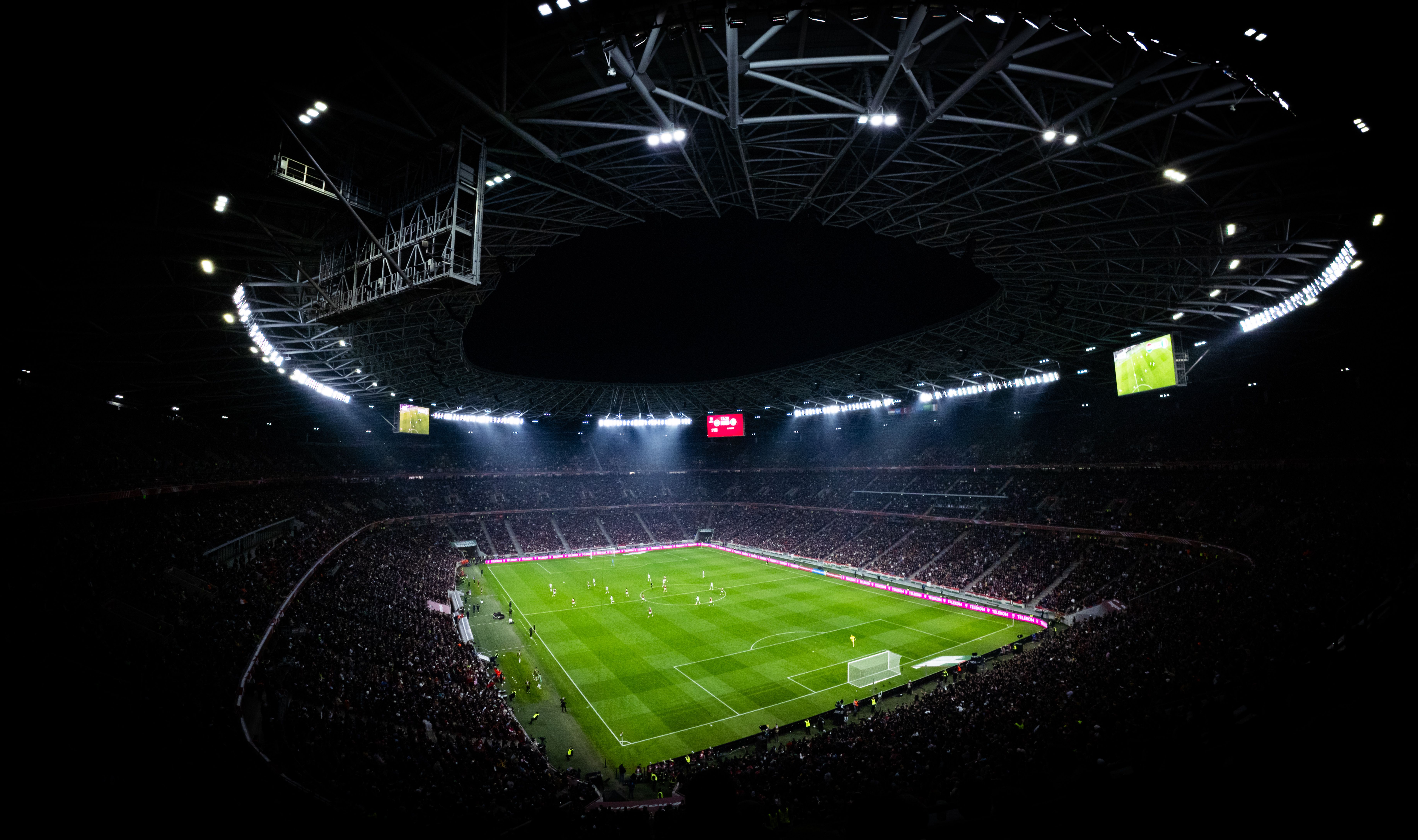
Morocco's 2030 World Cup stadium program cannot be accurately described with a single word.
It is not simply "completed," "under construction" or "planned."
In Rabat and Tangier, large modern stadiums are already operating and have been tested during major international competition. In Marrakech, Fez and Agadir, stadiums that successfully served African football are expected to undergo additional work for 2030. In Benslimane Province, the 115,000-seat Grand Stade Hassan II remains a vast construction site.
All six venues appear in the official Morocco–Portugal–Spain bid documentation. But they have different capacities, development schedules and remaining requirements. Understanding those differences is essential.
A stadium can be open and capable of hosting major matches while still awaiting its intended World Cup configuration. It can meet continental requirements without every tournament-specific modification being complete. It can appear in an official bid without FIFA having assigned its exact matches.
That is why MoroccoMondial2030 is maintaining a living stadium tracker: to document what is operating, what is changing and what remains unconfirmed.
Morocco's Six-Stadium Tracker
Last verified: July 31, 2026| Stadium | Current capacity | Proposed 2030 | July 2026 status |
|---|---|---|---|
| Grand Stade Hassan II | Not operating | 115,000 gross | Under construction |
| Prince Moulay Abdellah, Rabat | 68,095 | 68,700 | Operating; limited adjustments planned |
| Grand Stade de Tanger | 72,644 | 75,600 | Operating; further expansion planned |
| Grand Stade de Marrakech | 40,500 | 45,860 | Operating; major second phase planned |
| Complexe Sportif de Fès | 35,000 | 55,800 | Operating; major structural phase planned |
| Grand Stade d'Agadir | 43,500 | 46,000 | Operating; additional modernization planned |
Capacities are based on current SONARGES information and official 2030 planning. Current capacity and proposed tournament capacity are not interchangeable.
Operating Is Not the Same as Finished
"Operating" does not necessarily mean "finished for 2030." Marrakech, Fez and Agadir successfully hosted major matches but still have later World Cup renovation phases planned. This tracker distinguishes between current operational capability and intended 2030 configuration.
What "Ready for 2030" Actually Means
The word "ready" is frequently used without definition. A venue may be ready to host domestic football but not an international tournament. It may be ready for continental competition while still requiring changes to hospitality, media, accessibility, security or spectator circulation.
To prevent those distinctions from disappearing, this tracker uses five readiness levels.
Grand Stade Hassan II — Building the Centrepiece
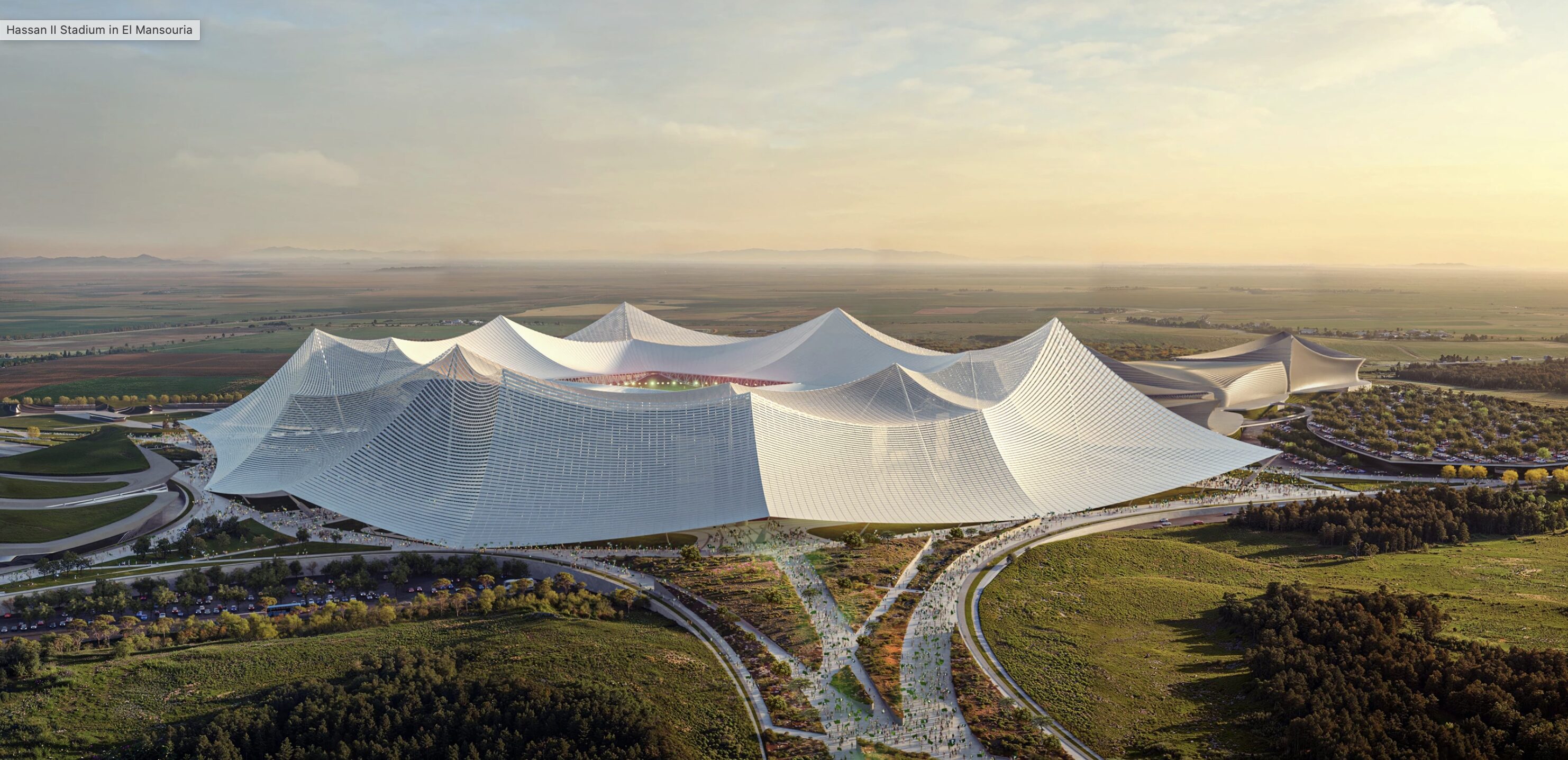
⚠ Rendering — not a photograph. Grand Stade Hassan II exterior design by Oualalou + Choi and Populous. The venue is under construction in El Mansouria, Benslimane Province. Stadium is not yet operational.
Grand Stade Hassan II is the only completely new principal Moroccan stadium in the six-venue joint-bid list. Designed by Oualalou + Choi in collaboration with Populous, the stadium is planned beneath a monumental canopy inspired by the Moroccan moussem and its traditional gathering tents.
The venue is intended to become part of the wider Morocco Sport City complex, with supporting sports, hospitality and public facilities planned around it. During a May 2026 site visit, project official Yassir Soussi told Reuters that the stadium was approximately 30% complete, with around 40% of its tribunes constructed. The same update identified the end of 2027 as the working completion target. The original joint-bid documentation had scheduled completion during 2028. Both dates should be understood as construction targets — not guarantees.
Morocco is proposing the stadium as a potential venue for the 2030 final. FIFA has not selected the final venue. Read the full independent examination: Grand Stade Hassan II: Inside Morocco's 115,000-Seat Vision for 2030.
What remains
- Main construction, roof and exterior enclosure
- Internal systems, hospitality and media areas
- Pitch and technology installation
- Transport connections to central Casablanca, airport and Rabat
- Safety certification and full-capacity test events
- Confirmation of FIFA match allocations
Prince Moulay Abdellah Stadium — Rabat's Advanced Position
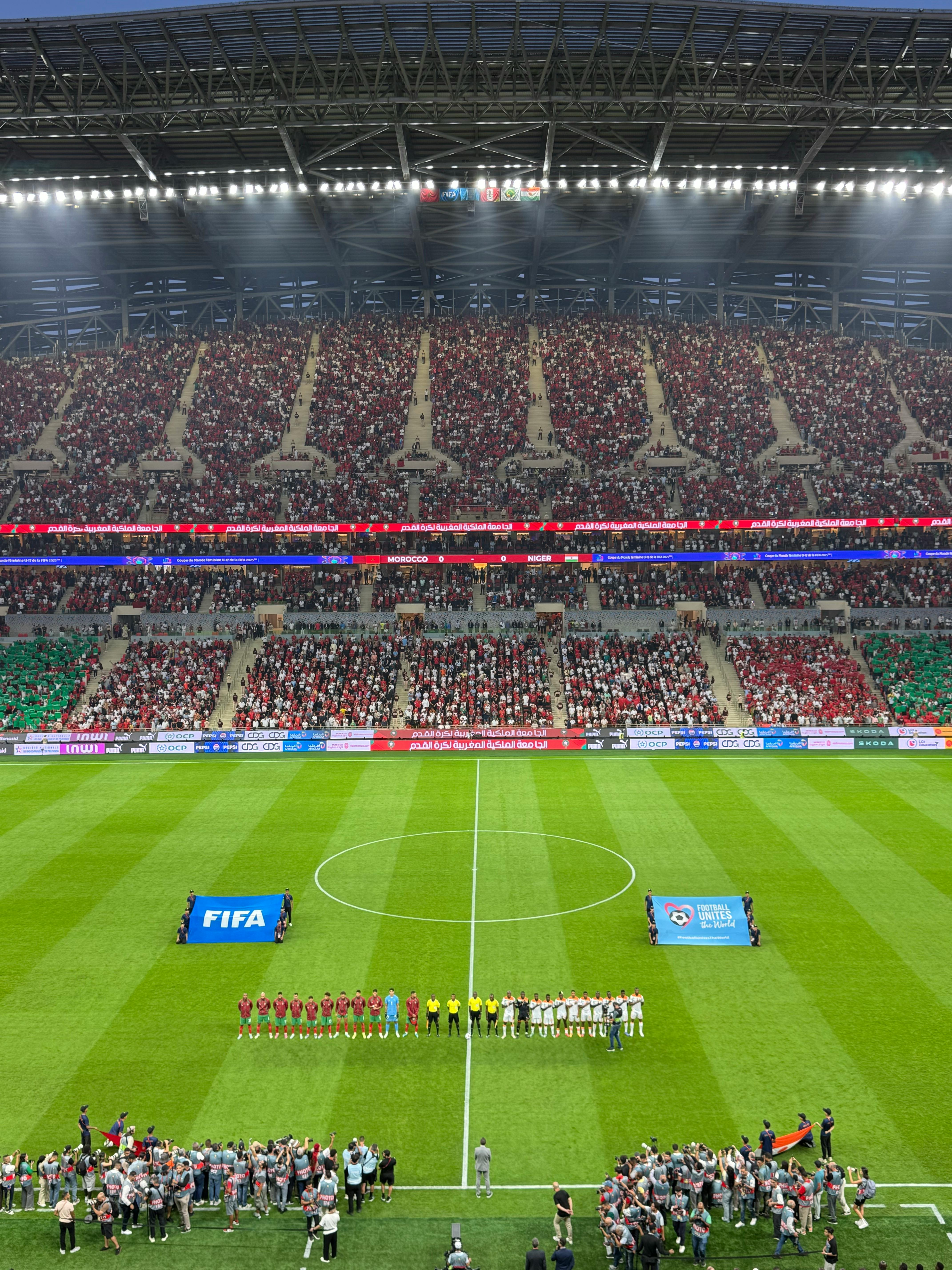
Prince Moulay Abdellah Stadium, Rabat, hosting Morocco vs Niger — an international fixture with FIFA and FRMF branding clearly visible. The stadium operates at 68,095 seats and is close to its proposed 2030 capacity of 68,700. Plan your visit to Rabat →
Rabat's principal stadium occupies one of the strongest positions in Morocco's preparations. The current venue is already operating and has demonstrated its ability to stage high-profile international football. Its present capacity of 68,095 is close to the figure planned for 2030, indicating that its remaining work is more limited than the transformations facing Fez, Marrakech or Agadir.
SONARGES identifies hybrid natural turf, FIFA-standard lighting, extensive VIP and VVIP areas, hospitality lounges, modern changing rooms, press facilities, supporting training infrastructure and dedicated operational and security spaces. The stadium forms part of a wider sports complex approximately seven kilometres from central Rabat.
Its Level 4 status does not mean that every tournament requirement has been formally completed. Capacity adjustments, technology, media facilities, tournament overlays and operational testing may still be required. But Rabat has already crossed the most important threshold: it is an operating major-event stadium close to its proposed 2030 capacity.
What remains
- Limited increase toward the proposed 68,700 capacity
- Any FIFA-specific technical and media adjustments
- Continued operational testing at full capacity
- Final match allocation confirmation
Grand Stade de Tanger — Tested and Still Expanding
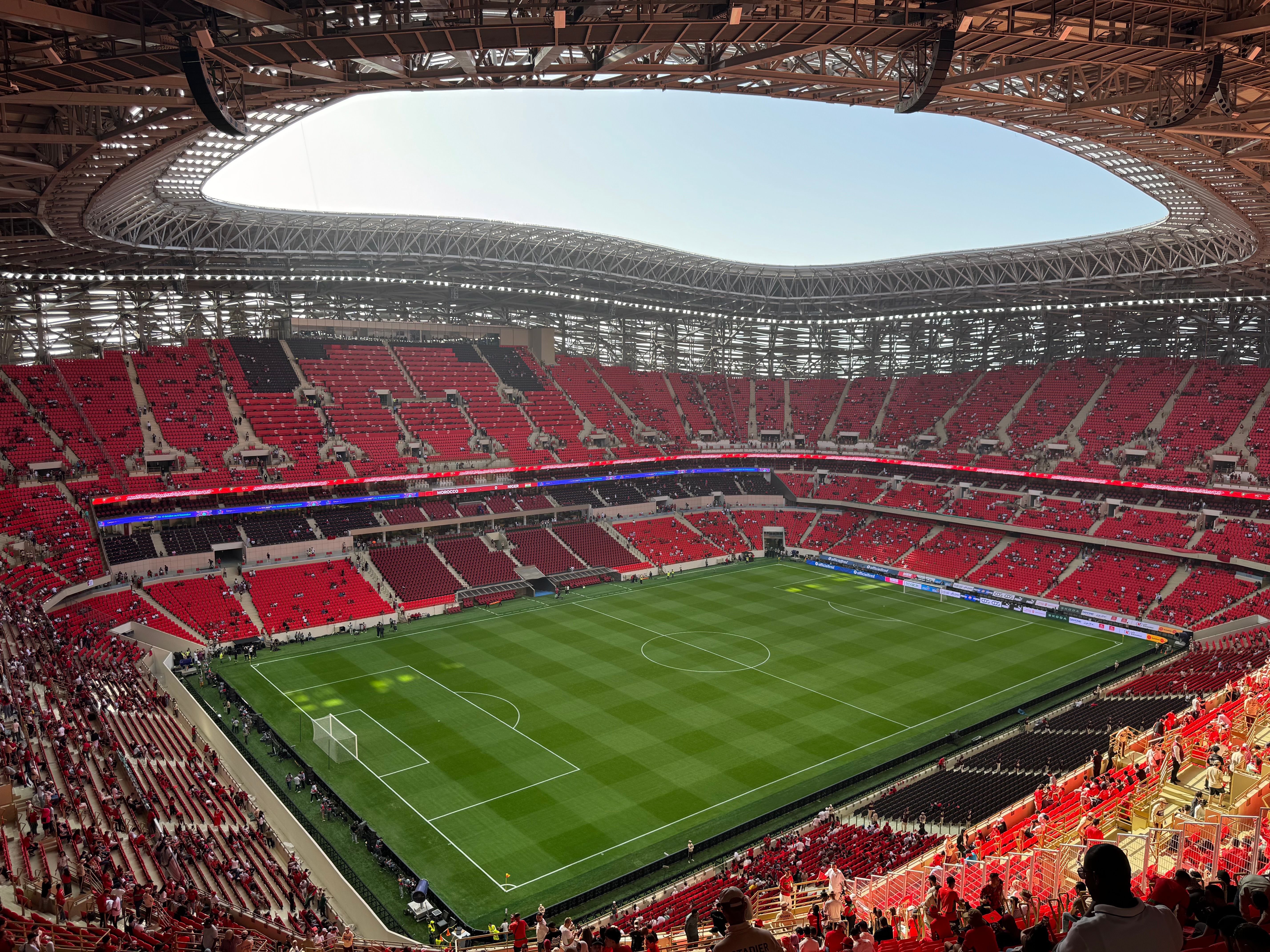
Grand Stade de Tanger interior — the stadium's distinctive irregular oval roof opening is visible overhead. The venue operates at 72,644 seats and is proposed to reach 75,600 by 2030. Plan your visit to Tangier →
Tangier combines stadium readiness with some of Morocco's strongest intercity connectivity. The Grand Stade de Tanger is operating with more than 72,000 seats and is planned to increase toward 75,600 by 2030. SONARGES identifies hybrid natural pitch, FIFA-standard lighting, 142 VIP and VVIP boxes, 103 food-and-beverage locations, four modern changing rooms, training grounds and integrated parking and commercial facilities.
The stadium sits approximately ten minutes from central Tangier under ordinary traffic conditions and is positioned near the airport and railway network. Tangier's Al Boraq connection gives it a significant advantage: supporters can reach the city by high-speed train from Rabat, Kenitra and Casablanca, although match-day movement from the station to the stadium still requires local planning.
The remaining capacity increase is comparatively modest. The more important work will involve final tournament configuration, crowd management, local transport and any technical changes required by FIFA.
What remains
- Expansion toward 75,600 seats
- Tournament-specific technical and hospitality work
- Match-day local transport planning and testing
- Final FIFA match allocation
Grand Stade de Marrakech — A Second Transformation Ahead
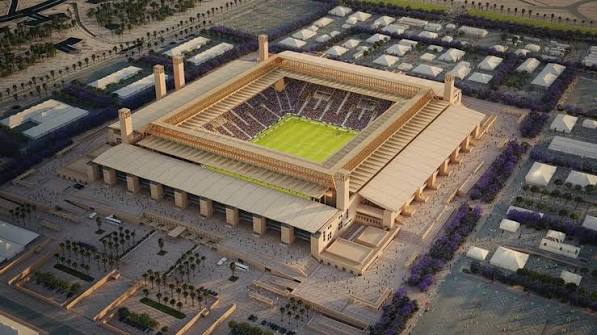
⚠ Rendering — not a photograph. Architectural visualisation of the Grand Stade de Marrakech. The stadium is currently operating at approximately 40,500 seats; the second renovation phase intended to bring it toward 45,860 seats for 2030 had not yet begun as of July 2026. Plan your visit to Marrakech →
The Grand Stade de Marrakech is already an experienced international venue — it hosted FIFA Club World Cup matches in 2013 and 2014 and operated during Morocco's recent continental tournament preparations. But the stadium's path to 2030 was designed in two phases. The first phase focused on continental requirements and operational improvements. The second phase, planned after AFCON, is intended to bring the stadium toward its proposed World Cup configuration.
SONARGES identifies the planned second phase as including complete stadium roofing, modernisation of the stands, increased seating capacity toward 45,860 and wider conversion to FIFA requirements. The current stadium still contains an eight-lane athletics track. Future designs and confirmed construction contracts will determine how the spectator bowl and track relationship evolves.
Marrakech's tourism capacity is an advantage, but the stadium sits near the northern entrance to the city rather than within the central medina and hotel districts. Match-day access must account for the pressure already placed on the city's roads. For travel planning, see the Marrakech city guide.
What remains
- Second renovation phase including complete roofing
- Stand modernisation and capacity increase toward 45,860
- Resolution of the athletics track and spectator bowl relationship
- World Cup operational testing and transport planning
- Final FIFA match allocation
Complexe Sportif de Fès — The Largest Existing-Stadium Conversion
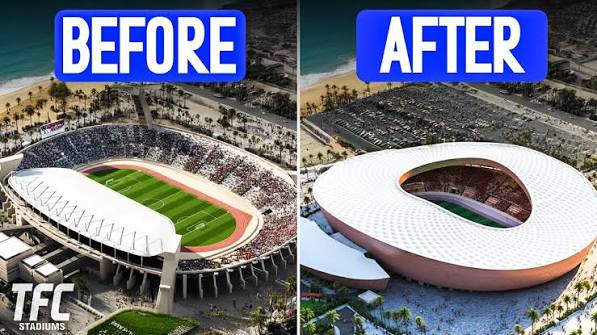
⚠ Architectural illustration — not an editorial photograph. Comparison graphic showing the Complexe Sportif de Fès (current configuration, left) alongside a proposed expansion concept (right). The stadium currently holds 35,000 seats; the proposed 55,800-seat configuration has not been built. Plan your visit to Fez →
Fez faces the most substantial proposed conversion among Morocco's five existing principal venues. The gap between its current 35,000-seat capacity and its proposed 55,800-seat configuration is approximately 20,800 seats. SONARGES describes a two-phase modernisation programme. The first phase addressed internal infrastructure, changing rooms and stands for continental competition.
The second phase is intended to include removal of the athletics track, construction of a complete roof, major capacity expansion and conversion toward FIFA World Cup requirements. Removing the track would allow future stands to move closer to the pitch, potentially changing the stadium's atmosphere and architectural form more dramatically than a conventional renovation.
The stadium sits south of Fez's Ville Nouvelle, with access through the N8, the southern bypass and connections toward the A2 motorway. Ordinary travel estimates place it around 20 minutes from central Fez and the airport, but match-day conditions will require dedicated management. Fez should not be described as holding 55,800 spectators today. That remains its planned 2030 capacity. For city context, see the Fez city guide.
What remains
- Major second-phase construction including removal of the athletics track
- Complete roofing and expansion by approximately 20,800 seats
- Access improvements and crowd-flow redesign
- Test events in the transformed configuration
- Final FIFA match allocation
Grand Stade d'Agadir — From Stade Adrar to 2030
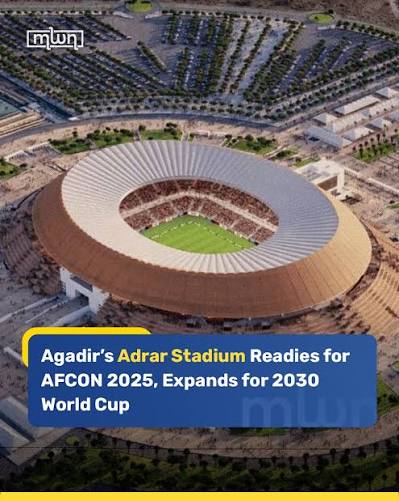
⚠ Rendering — not a photograph. Aerial visualisation of the Grand Stade d'Agadir (Stade Adrar). The stadium is currently operating at approximately 43,500 seats; the proposed increase to 46,000 seats for 2030 has not been completed as of July 2026. Plan your visit to Agadir →
The Grand Stade d'Agadir, commonly called Stade Adrar, opened in 2013 and occupies a 32-hectare sports complex. Its current infrastructure includes natural grass, an eight-lane athletics track, four training fields, FIFA-standard lighting, modern changing facilities and integrated VIP, hospitality, ticketing and access-control systems.
Its present capacity of approximately 43,500 is planned to rise to 46,000 by 2030. Agadir's numerical capacity gap is smaller than Fez's, but the full scope and timing of its later World Cup work must still be tracked through official project announcements.
The stadium sits outside central Agadir. SONARGES gives ordinary travel estimates of approximately 15 minutes from the city centre and 30 minutes from Al Massira Airport. Those are orientation figures — not guarantees for tournament traffic. Agadir's established resort accommodation and airport connections provide a strong visitor base. Its challenge will be integrating the stadium with the wider city and moving supporters reliably during peak demand. See the Agadir city guide for travel planning.
What remains
- Additional modernisation and capacity increase toward 46,000
- Confirmation of the scope and timing of remaining structural work
- Tournament transport planning and integration with Al Massira Airport
- Operational testing at World Cup configuration
- Final FIFA match allocation
Six Stadiums — but One Hosting System
The venues cannot be evaluated only as individual buildings. During the World Cup, they must function as parts of a national system involving airports, intercity rail, local buses and taxis, pedestrian routes, hotels, training sites, hospitals, emergency services, security, telecommunications, ticketing and accreditation. For Morocco's wider infrastructure programme, see Morocco's 2030 Transformation.
Rabat and Tangier benefit from established Al Boraq connections. Marrakech and Fez are connected to the conventional railway network, while the high-speed extension toward Marrakech remains under construction. Agadir currently depends more heavily on aviation and road transport. The Grand Stade Hassan II presents the most demanding single movement challenge because of its capacity and location outside central Casablanca.
A stadium cannot be declared operationally ready merely because its seats, roof and pitch are complete. Supporters must be able to reach it, enter safely, find their seats, obtain services and leave without dangerous congestion. Transport and crowd movement should therefore be treated as part of stadium readiness — not as separate city issues.
Match Allocations Are Not Final
The six Moroccan stadiums appear in the official joint-bid documentation, but that does not mean every match has been finally allocated. Morocco is expected to host matches across multiple tournament rounds. The bid documentation describes the capabilities and desired roles of individual venues. FIFA, however, retains responsibility for final match allocation.
Most importantly, FIFA has not selected the 2030 final venue. Grand Stade Hassan II is Morocco's proposed final venue and a significant candidate. Spain also presents major stadiums in Madrid and Barcelona. Until FIFA announces its decision, MoroccoMondial2030 will distinguish proposed roles from confirmed allocations.
Proposed Is Not Confirmed
The six stadiums appear in the official joint-bid documentation, but FIFA has not finalized every match allocation. Proposed capacities and expected rounds must not be presented as final tournament decisions. No venue in this tracker has received final FIFA confirmation of its specific match programme as of July 2026.
FIFA Is Studying a Possible Expansion to 64 Teams
FIFA is studying the possible impact of expanding the 2030 tournament from 48 to 64 teams. No format change has been approved. A larger tournament could affect match numbers, venue use, team facilities, accommodation and transportation.
This tracker will continue using the confirmed 48-team framework unless FIFA formally adopts a different format. A study is not a decision.
What Morocco Has Already Proved
Morocco has already demonstrated that it can stage major football events in modern stadiums. The more difficult test now concerns consistency across six venues with six different development paths.
Rabat and Tangier must complete their remaining adjustments without disrupting their operational strengths. Marrakech and Agadir must convert successful existing venues into their intended World Cup forms. Fez must execute the largest capacity transformation among the operating stadiums. Grand Stade Hassan II must progress from construction site to fully tested national stadium.
No single spectacular venue can compensate for weaknesses elsewhere. International tournament hosting depends on the complete network. For an assessment of Morocco's broader preparations, see the World Cup 2026 Lessons article.
How This Tracker Will Be Updated
MoroccoMondial2030 will revise the tracker when authoritative evidence confirms construction milestones, new contracts, completed roofs or stands, revised capacities, reopening dates, major test events, railway or local transport connections, FIFA venue approvals, final match allocations or changes to the tournament format.
Each update will include a date and source. Earlier statuses will not be silently rewritten in a way that erases the project's history.
The Real Deadline
The six stadiums do not need to reach the same architectural form. They serve different cities, clubs, capacities and local conditions. They do need to reach the same operational standard.
Every venue must be safe, accessible, connected, tested and capable of functioning under international pressure.
The Proof Will Not Be Found in Photographs
Morocco's stadium challenge is no longer proving that it can host major football. It is completing six different development programmes, connecting them to their cities and demonstrating that every venue can operate safely under World Cup pressure. The countdown to 2030 will produce impressive photographs: new roofs, expanded stands, illuminated façades and rising construction. But the final proof will be found when six stadiums, in six different Moroccan cities, operate as one reliable national hosting system.
All Confirmed Developments — Independently Verified
This tracker will evolve as construction advances, renovation phases begin and FIFA confirms tournament decisions. MoroccoMondial2030 reports only on officially confirmed information.
Explore the Morocco 2030 Gateway →Sources and Official References
This tracker draws on the official 2030 joint-bid book, FIFA documents, SONARGES project communications and Reuters reporting available through July 2026. Where projects remain in construction or planning phases, MoroccoMondial2030 applies the language used in official sources and does not present targets as confirmed outcomes. Deep links to individual SONARGES venue pages are provided where verified; the SONARGES website maintains dedicated infrastructure pages for each stadium at sonarges.ma/infrastructures/.
- Official Morocco–Portugal–Spain 2030 bid book — venue specifications and capacity figures
- FIFA — 2030 World Cup tournament documents and bid evaluation
- FIFA — Hosts appointed for the 2030 World Cup (December 2024)
- SONARGES — Grand Stade Hassan II and Morocco Sport City
- SONARGES — Prince Moulay Abdellah Stadium, Rabat
- SONARGES — Grand Stade de Tanger
- SONARGES — Grand Stade de Marrakech
- SONARGES — Complexe Sportif de Fès
- SONARGES — Grand Stade d'Agadir (Stade Adrar)
- Reuters — Morocco aims to complete Hassan II stadium by end of 2027, official says (May 2026)
- Moroccan government — Stadium project monitoring committee proceedings