Few nations can tell their story through four capitals. Morocco can.
Across more than twelve centuries, power moved from city to city — not because the previous capital had failed, but because every new dynasty dreamed of building its own vision of what Morocco should be. Today, those four imperial cities remain among the greatest historical treasures in Africa. Together, they tell the story of a kingdom shaped by scholars, sultans, merchants, architects and explorers.
To visit them is not simply to travel across Morocco.
It is to travel across time.
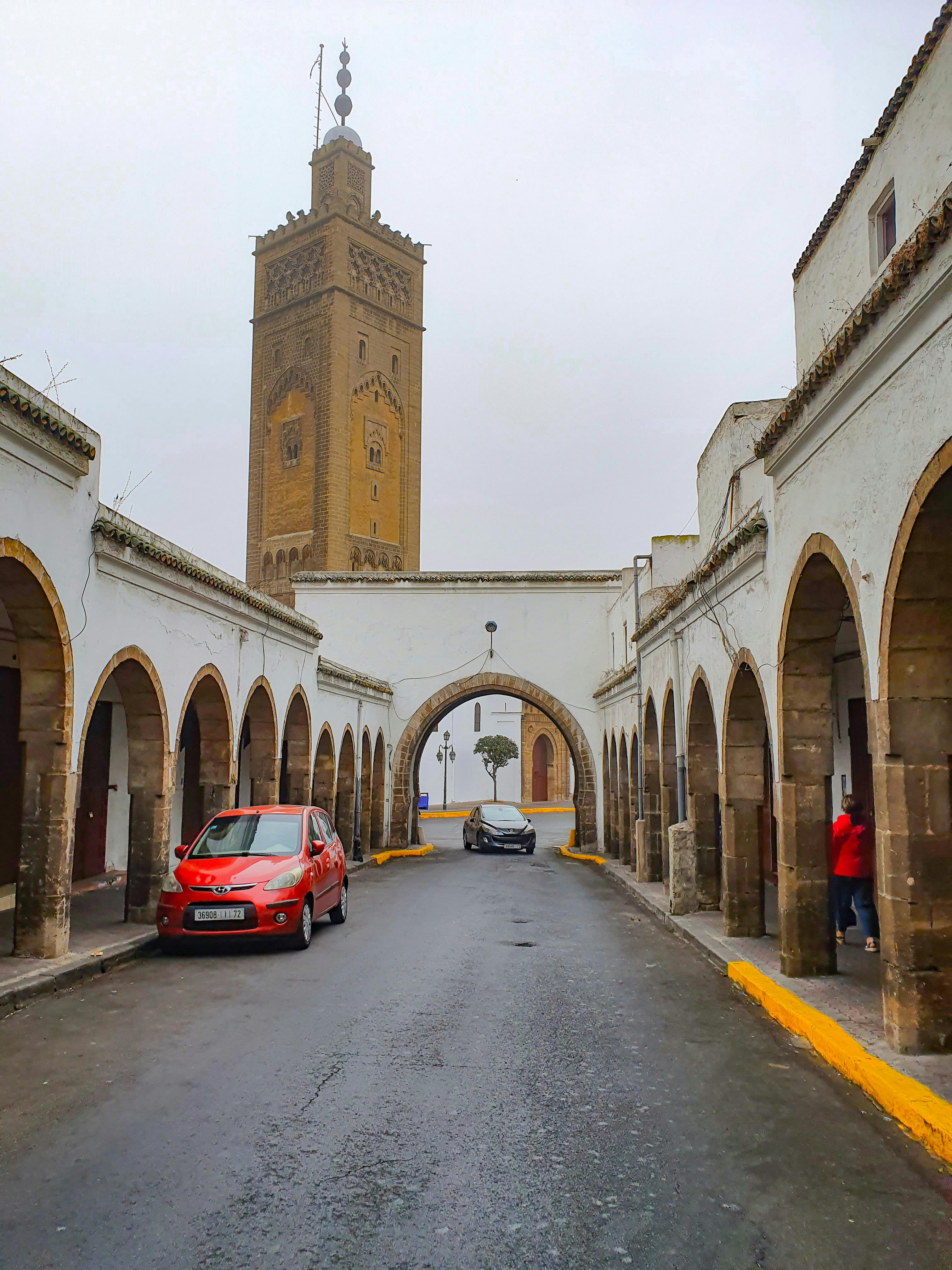
Unlike many great nations, Morocco was never built around a single capital. It was built around four. Across the sweep of the medieval and early modern period, political power shifted between cities as different dynasties rose to rule the kingdom — each one choosing the city that best reflected its ambitions, its strategic priorities, and its vision for what Morocco should become. The result is something that travellers rarely encounter elsewhere: four ancient cities, each carrying the concentrated weight of a different era, a different culture, a different architectural imagination, yet each undeniably part of the same continuous story.
Fez, founded in the late eighth century, became the intellectual and spiritual heart of a civilisation at its most expansive and self-confident. Marrakech, established two centuries later by Berber warriors from the Saharan edges of the continent, grew into an imperial capital connecting the desert south with the Mediterranean north. Meknes, chosen by the iron-willed Sultan Moulay Ismail in the seventeenth century, was transformed into a monument to absolute royal authority, its walls and gates designed to rival the greatest capitals of the Islamic world. And Rabat — ancient in origin, modern in identity — became the capital that Morocco chose for the age it now inhabits: a city of diplomacy, culture, ocean light and constitutional government.
To visit only one of these cities is to read a single chapter of a much larger story. To travel between them is to watch Morocco build itself, dynasty by dynasty, across more than a millennium — and to arrive, finally, at the extraordinary country that exists today.
| Century | Capital | Dynasty | Defining Legacy |
|---|---|---|---|
| 8th – 15th | Fez | Idrisid, Marinid | Scholarship, Al-Qarawiyyin, the great madrasas |
| 11th – 17th | Marrakech | Almoravid, Almohad, Saadian | Empire from Sahara to Andalusia, Koutoubia, Jemaa el-Fnaa |
| 17th – 18th | Meknes | Alaouite — Moulay Ismail | Morocco's grandest imperial vision — Bab Mansour, royal granaries |
| 20th – Present | Rabat | Modern Alaouite Kingdom | Constitutional capital, diplomacy, Atlantic light |
"Each imperial capital became far more than a seat of government. It became a civilisation in stone — a chapter in one of the world's great national stories."
— MoroccoPassport Editorial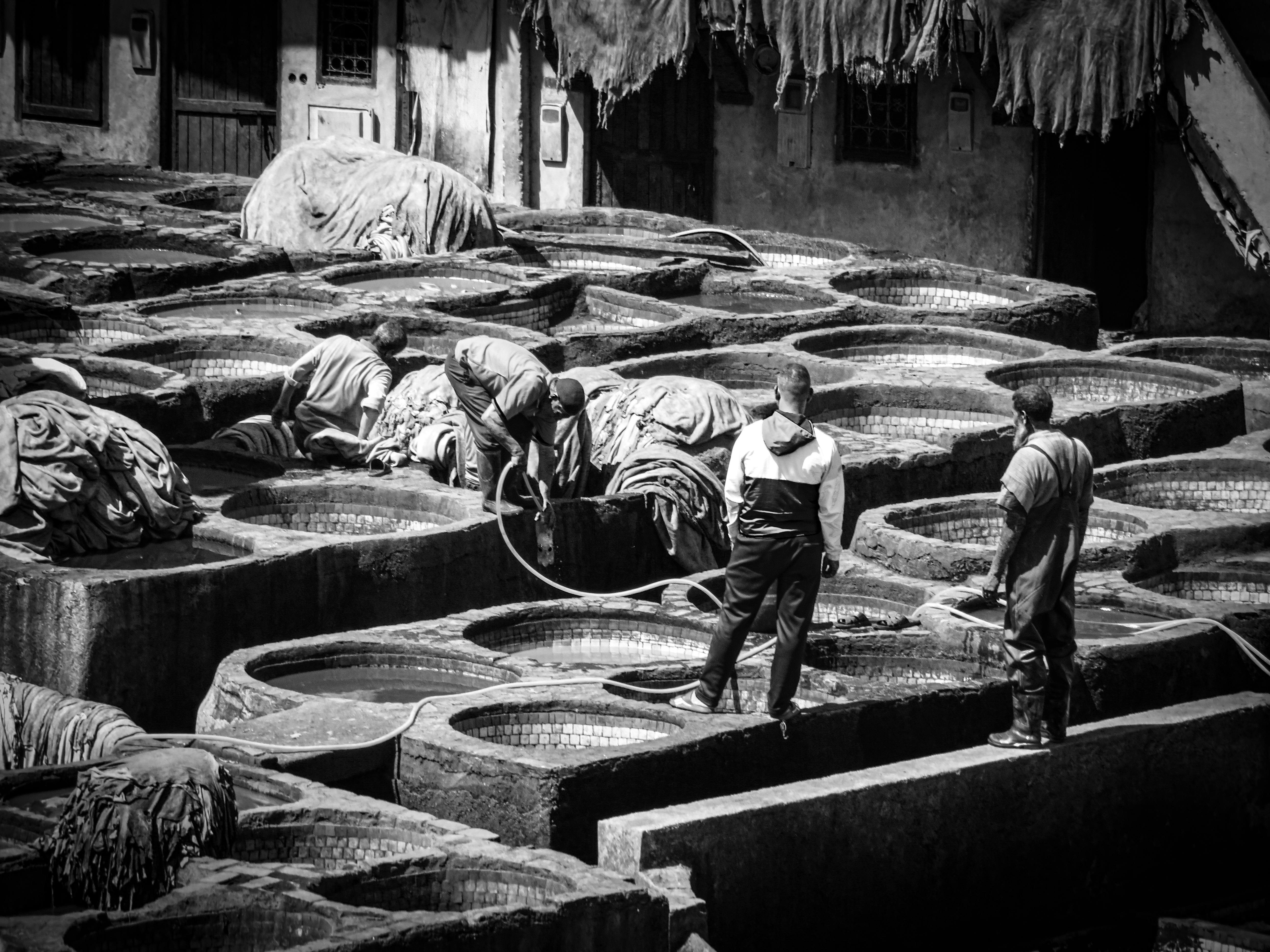
When Idris I, the founder of Morocco's first ruling dynasty, chose a site on the Oued Fez river in 789 CE and began to build, he was doing more than establishing a city. He was making a statement about what Morocco would be: a kingdom of learning, of religious devotion, of commerce and scholarship and the refinement of urban life. Fez would spend the next twelve centuries fulfilling that promise more completely than perhaps any other city in the Islamic world.
Walking through Fez today is to enter one of the most disorienting and transporting urban experiences anywhere on the planet. The medina — Fez el-Bali — contains approximately 9,400 lanes and alleys, many barely wide enough for two people to pass each other. There are no cars. Goods move by donkey as they have for centuries. The calls of artisans, the smell of cedar shavings, the sound of a Quranic school drifting over a rooftop, the sudden opening of a courtyard behind a plain wooden door — all of this accumulates into an experience that overwhelms the senses and defies any straightforward attempt at description. Fez does not reveal itself through description. It reveals itself through walking.
At the heart of the medina stands the mosque and university complex of Al-Qarawiyyin, founded in 859 CE by Fatima al-Fihri — a Tunisian woman whose family had emigrated to Fez from Kairouan — and widely recognised as the world's oldest continuously operating university. For centuries, Al-Qarawiyyin drew scholars from across North Africa, the Middle East and Andalusia, making Fez a city where the intellectual currents of the medieval Islamic world converged. Ibn Khaldun studied here. Ibn Battuta set out from here on his extraordinary journeys. The Fes el-Bali that visitors walk today is, in its essential structure, a medieval university town — a city built around the transmission of knowledge.
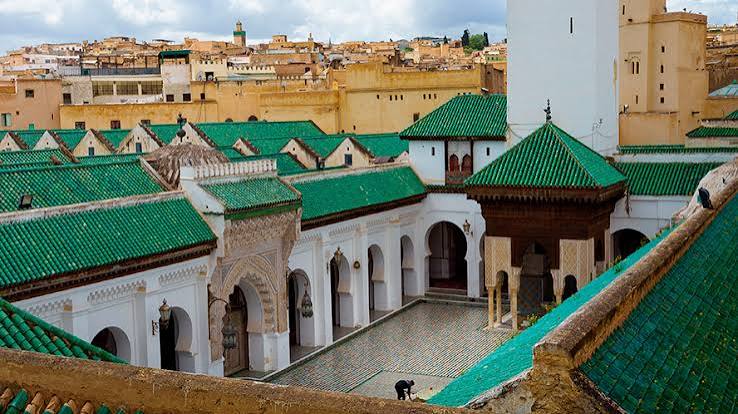
The Marinid dynasty, which ruled Morocco from the 13th to the 15th centuries, made Fez their capital and left its most spectacular architectural legacy in the madrasas — Quranic schools whose carved cedar, intricate zellige tilework and sculpted plaster are among the finest examples of Islamic ornamental art ever produced. The Bou Inania Madrasa, completed in 1357, remains the most magnificent of them: a building of such elaboration and precision that it stops even jaded travellers in their tracks. It was the Marinids who transformed Fez from a great city into an architectural masterpiece, layer by accumulated layer.
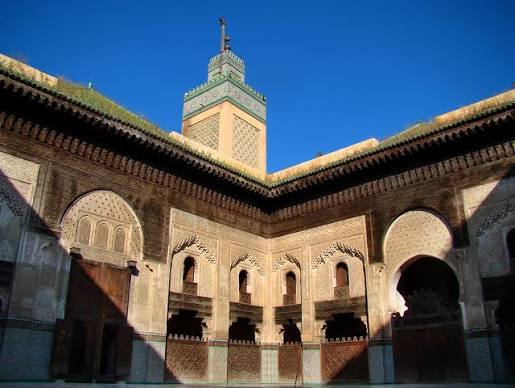
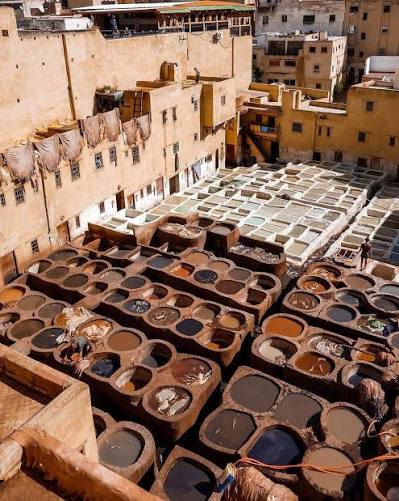
To visit Fez today is to encounter a city that is simultaneously tourist destination, living neighbourhood, working craft district and active centre of Islamic scholarship. The tanneries still produce leather by methods that have changed little in six centuries. The artisan workshops still produce brass lanterns, hand-knotted carpets and hand-painted pottery by methods passed down through apprenticeship. The mosques still function as centres of community life. The tension between these uses — between the weight of the past and the pressures of the present — gives Fez an energy unlike any other city in Morocco: one that is occasionally overwhelming, sometimes frustrating, and ultimately unlike anything else in the world.
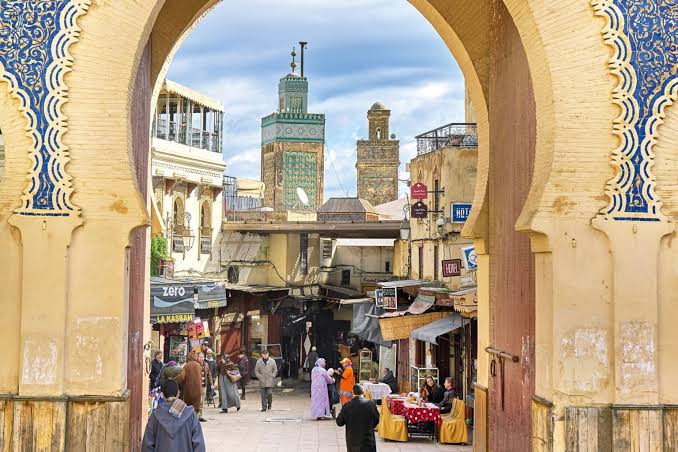
Fez became Morocco's intellectual capital partly because of geography and partly because of ambition. Positioned between the Atlantic plains and the Mediterranean coast, it served as the natural meeting point for trade routes crossing North Africa. The scholars and merchants who followed those routes brought ideas as well as goods — and Fez, under the Marinid sultans who built its greatest madrasas, became the city where those ideas were debated, refined and transmitted to the wider Islamic world.
- Fez el-Bali medina (UNESCO)
- Al-Qarawiyyin Mosque & University
- Bou Inania Madrasa
- Chouara Tanneries
- Bab Bou Jeloud (Blue Gate)
- The historic Mellah
- Medersa El Attarine
- Borj Nord — view over the medina
Allow at least three full days for Fez — two is not enough to feel the rhythm of the medina rather than simply to tick off its sights. Enter through Bab Bou Jeloud in the morning when the lanes are quiet. Hire a licensed guide for at least one half-day: the medina is genuinely disorienting, and a good guide will take you to workshops, rooftops and courtyards that are invisible to the unescorted visitor. Save the tanneries for mid-morning when the leather is being dyed.
The view from the Merenid Tombs above the city at dusk is one of the most extraordinary panoramas in Morocco.
If Fez represents Morocco at its most scholarly and introspective, Marrakech represents it at its most physically bold. Founded in 1062 by Yusuf ibn Tashfin — leader of the Almoravid movement that would go on to conquer Morocco, extend its rule across the Maghreb and even cross the strait to govern Al-Andalus — Marrakech was, from its beginning, a city of ambition.
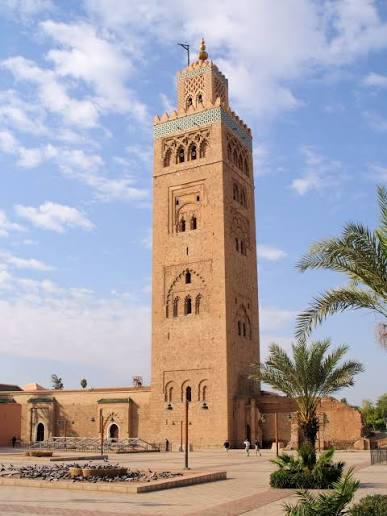
The Almoravids built the first great mosque of Marrakech and gave the city its most distinctive feature: the red-ochre pisé walls made from the local earth that would earn it the nickname al-Hamra — the Red City. Their successors, the Almohads, pushed Marrakech to its architectural peak, commissioning the Koutoubia Mosque whose minaret — completed around 1195 — became the template for three of the great towers of the medieval Islamic west: the Giralda of Seville, the Hassan Tower of Rabat, and the minaret of the Kasbah Mosque in Marrakech itself. These three towers, scattered across Spain and Morocco, were conceived as a unified architectural statement about Almohad power and the coherence of the empire it ruled.
The Saadian dynasty, which ruled Morocco in the 16th and early 17th centuries, made Marrakech their capital and left two of its most extraordinary monuments. The Bahia Palace — built for a Grand Vizier rather than a sultan, which makes its extraordinary decorative complexity an expression of aspiration rather than entitlement — offers the most complete surviving example of traditional Moroccan palatial architecture in the country. The Saadian Tombs, sealed for centuries after the dynasty's fall and rediscovered only in 1917, contain a royal mausoleum whose interior — carved stucco, painted cedar, Italian Carrara marble — reveals the Saadians' appetite for beauty and their easy commerce with the wider Mediterranean world.
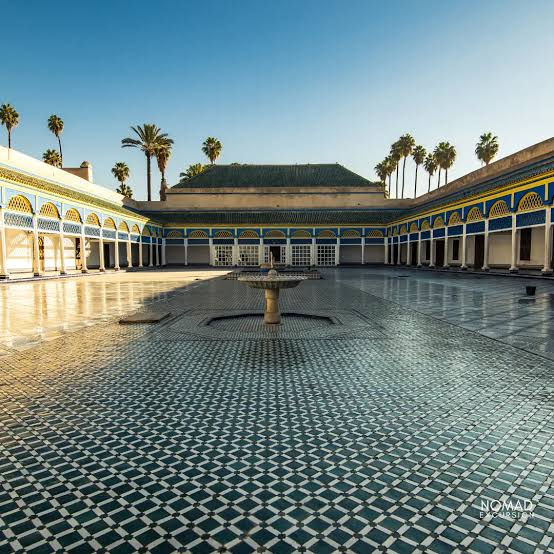
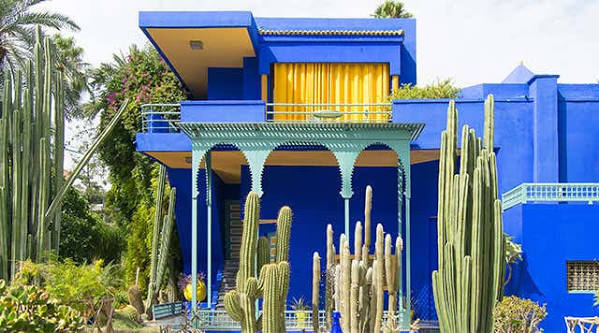
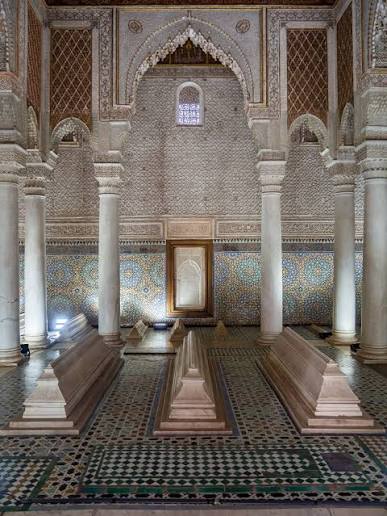
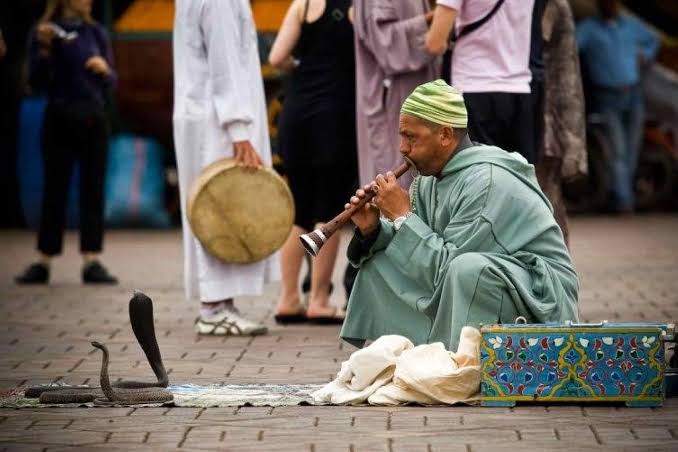
Even today, Marrakech operates at a different pitch from the other imperial cities. Where Fez draws inward and demands contemplation, Marrakech pushes outward, generating noise and colour and the constant sensation of being in a place where the ordinary rules of urban life do not apply. The souks — the most maze-like and commercially intense in Morocco — pack more sensory information per square metre than almost anywhere else on earth. Jemaa el-Fnaa, the great public square that UNESCO inscribed not as a building but as a living performance tradition, transforms every evening into an outdoor theatre of food vendors, musicians, storytellers and acrobats that has been running, in some form, for the best part of a thousand years.
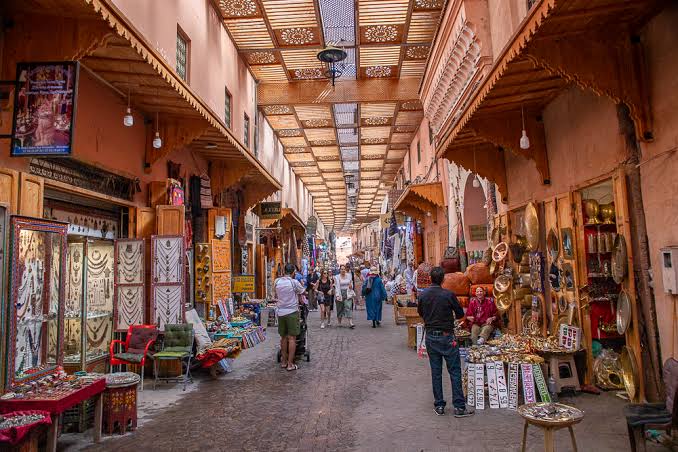
Marrakech earned the name "the Red City" not from its history but from its geology. The local earth used to build the medina walls, pisé (compressed earth), contains a high proportion of iron oxide that gives it its distinctive terracotta-red colour. The effect is most dramatic at sunset, when the walls appear to glow from within — and municipal regulations still require that new buildings in and around the historic centre be painted in the same shade of reddish ochre, ensuring that the city maintains its remarkable visual coherence.
- Jemaa el-Fnaa (UNESCO Intangible Heritage)
- Koutoubia Mosque & Minaret
- Bahia Palace
- Saadian Tombs
- Majorelle Garden & Berber Museum
- The Marrakech Mellah
- Medina souks
- El Badi Palace ruins
Marrakech rewards early mornings and late evenings. The medina at 7am, before the tourist flow begins, is a genuinely different experience from the medina at 11am. The Bahia Palace and Saadian Tombs are both more impressive before the crowds arrive. Jemaa el-Fnaa reaches its peak from about 8pm onwards — arrive at sunset for the transition from daytime market to nocturnal spectacle.
The Majorelle Garden is best visited on weekday mornings. Photography enthusiasts should look for the rooftop cafés around the souks for elevated views — and the entrance to the Bahia Palace courtyard offers one of the great architectural photographs in Morocco.
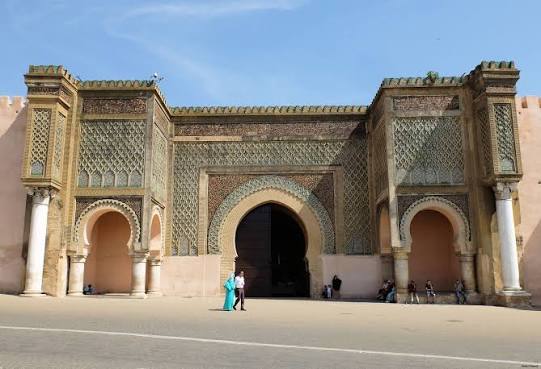
Among Morocco's four imperial cities, Meknes is the most underestimated — and perhaps the most surprising. Where Fez overwhelms with complexity and Marrakech overwhelms with energy, Meknes speaks in a different register: one of grandeur, space and the particular kind of spectacle that belongs to a ruler with nothing to prove and an army sufficient to build whatever he imagined.
That ruler was Moulay Ismail ibn Sharif, who chose Meknes as his capital in 1672 and proceeded to spend the next fifty-five years of his reign turning it into one of the most ambitious construction projects in the history of the Islamic world. Ismail — who ruled until 1727, outlasting Louis XIV and establishing one of the longest reigns in Moroccan history — was determined to build a capital that would rival Versailles, Istanbul and the great court cities of the Islamic east. He deployed an army of workers, labourers, slaves, prisoners of war and local craftsmen on a scale unprecedented in Morocco, and the result was a city of monumental walls, ceremonial gates, vast granaries capable of supplying the kingdom for years, and royal stables large enough to house twelve thousand horses.
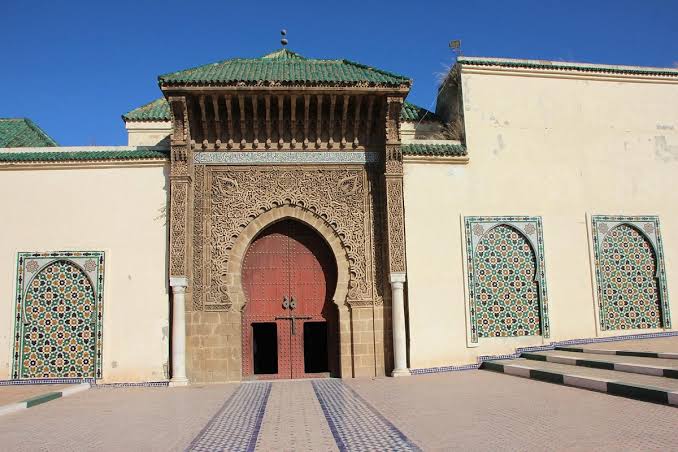
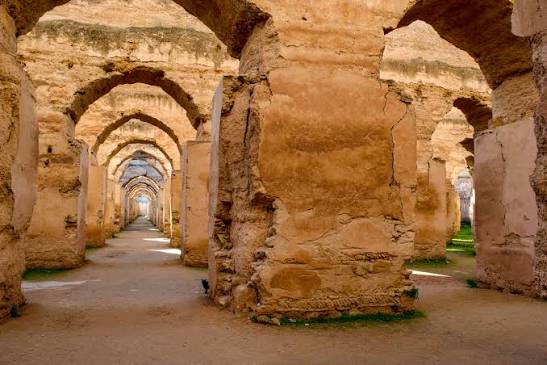
Bab Mansour — the triumphal gate completed in 1732 — is the defining image of Meknes and, by most measures, the most imposing gateway in Morocco. Its scale alone is exceptional: a horseshoe arch whose proportions suggest military invulnerability rather than domestic welcome. But what makes it extraordinary is the decoration, which covers every surface in a composition of zellige tilework, carved stucco and Kufic inscription that transforms a military structure into a statement of aesthetic ambition. The columns flanking the arch were taken directly from the Roman ruins at Volubilis, 30 kilometres away — a deliberate act of architectural appropriation that announced Moulay Ismail's claim to a legacy older than any Islamic dynasty.
That gesture toward Volubilis is characteristic of Meknes's particular depth as an imperial city. Because behind the Alaouite monuments lies a much older history: the Roman city of Volubilis, one of the best-preserved Roman sites in Africa, whose triumphal arch, capitol, forum and mosaic-floored villas speak of a Mediterranean civilisation that flourished here for three centuries before Morocco's Islamic story had even begun.
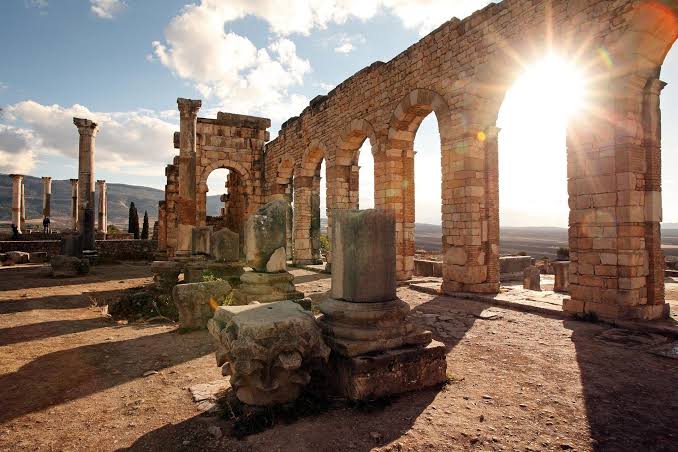
To visit Meknes is to encounter an imperial city that speaks in a lower voice than its better-known siblings but rewards patience with a generosity they cannot match: the space to walk without being jostled, the quieter medina where the craft traditions persist without the performance aspect that Fez's more visitor-saturated souk sometimes requires, and the sense of being in a place that has not yet been consumed by its own reputation. Meknes is Morocco's most rewarding half-discovered city — which is remarkable, given that it was once the grandest capital in the Islamic west.
Moulay Ismail's court at Meknes received diplomatic delegations from across Europe and the Islamic world, including an embassy from Louis XIV of France. While the two kings never met, they exchanged letters, gifts and, reportedly, a proposal involving a French princess. The relationship between Meknes and Versailles — both royal construction projects of the same era, both expressions of absolute monarchical ambition — is one of the more unexpected parallels in 17th-century political history.
- Bab Mansour
- Mausoleum of Moulay Ismail
- Heri es-Souani (Royal Granaries)
- Royal Stables
- Medina & Souk
- Volubilis (30km away)
- Moulay Idriss Zerhoun
- Meknes Museum (Dar Jamai Palace)
Meknes is best explored over two days, including a half-day trip to Volubilis and the sacred town of Moulay Idriss Zerhoun. The Royal Granaries (Heri es-Souani) are among the most architecturally extraordinary spaces in Morocco — vast vaulted chambers that still produce a powerful effect of scale and cool silence. Visit them alongside Bab Mansour in the morning. Save the Mausoleum for mid-morning when the light falls best into the anteroom.
Meknes's position between Fez and Rabat on the train line makes it a natural stopping point on the imperial circuit — and a place where the tourist crowds thin dramatically, giving you a more contemplative encounter with the monuments.
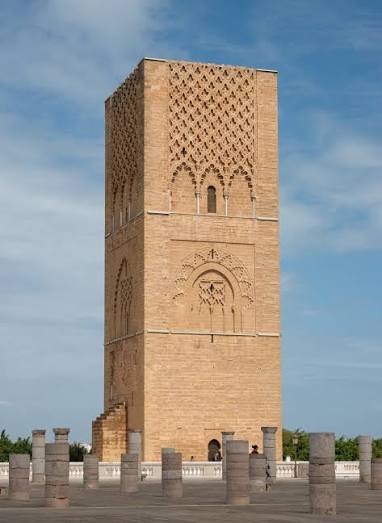
Rabat is the quietest of Morocco's four imperial cities, and perhaps the most unexpected. Where Fez disorients, Marrakech dazzles and Meknes imposes, Rabat invites — with wide avenues, an Atlantic seafront, a medina that can be walked in an afternoon and monuments whose power comes from their setting as much as from their scale. It is a city that has found, without apparent effort, the balance between history and livability that most capitals spend decades failing to achieve.
The city's imperial history begins with the Almohads, who in the 12th century chose the Atlantic coast as the staging post for their campaigns across the strait into Andalusia. The great fortified camp they built at the mouth of the Bou Regreg river became, in time, a city — and the Hassan Tower, begun around 1195 under Caliph Yaqub al-Mansur, was intended to be its crowning monument: the tallest minaret in the Islamic world, crowning one of its largest mosques. The Caliph died in 1199, construction stopped, and the tower has remained at roughly half its planned height ever since. The 300 columns that stand on the mosque's platform, marking the footprint of the nave that was never built, create one of the most hauntingly beautiful archaeological spaces in Morocco — a monument to ambition interrupted, more moving in its incompleteness than the finished version could ever have been.
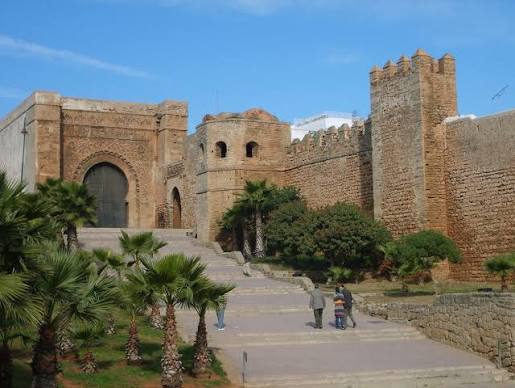
The Kasbah of the Udayas — the Almohad fortress whose blue-and-white streets overlook the Atlantic from the north bank of the Bou Regreg — is Rabat's most visually arresting space and, for many visitors, its most memorable. The original 12th-century ramparts and gateway (Bab Udayas, one of the finest Almohad decorative facades in existence) enclose a neighbourhood whose painted streets evoke the Andalusian communities that settled here after the fall of Granada in 1492 — the same communities that settled Tetouan, Fez, Chefchaouen and Salé and left their mark on Moroccan music, architecture, cuisine and urban culture. The Andalusian Garden within the Kasbah, with its orange trees and geometric flowerbeds, is one of the most peaceful spaces in any Moroccan city.
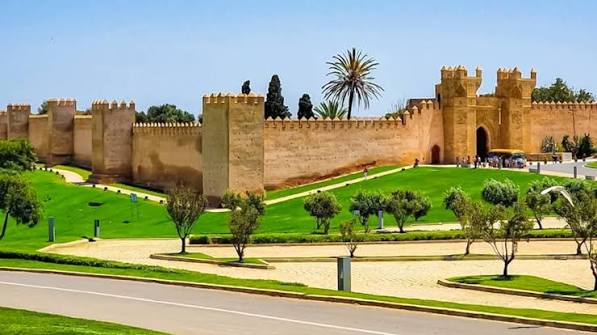
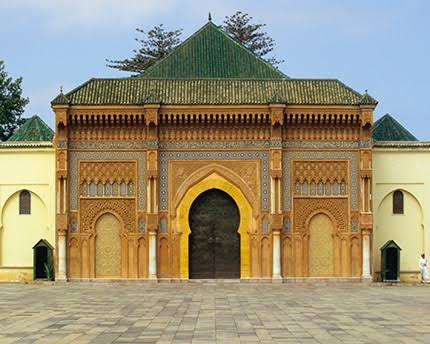
In 1912, when France established the Protectorate over Morocco, the French Resident-General Hubert Lyautey chose Rabat as his administrative capital — partly for its location on the Atlantic coast, partly for its moderate size, and partly because it allowed him to govern without the entanglements of an established imperial city like Fez. He built a new European city alongside the medina rather than replacing it, creating the model for colonial urban planning in Morocco that would be replicated in Casablanca, Fez and Marrakech. When independence came in 1956, Rabat was simply the capital — and it has remained so, gradually growing into the diplomatic, administrative and cultural heart of a Morocco that is simultaneously ancient and modern, traditional and internationally engaged.
In a single day in Rabat, a visitor can stand at the site of a Roman city (Chellah, 1st century CE), walk through a 12th-century Almohad fortress (Kasbah of the Udayas), photograph an unfinished medieval minaret (Hassan Tower), visit the mausoleum of a 20th-century king (Mohammed V), walk through a 17th-century medina, and have dinner on a contemporary boulevard designed by a French urban planner in 1912. No other imperial city in Morocco offers this compressed a chronology in so small and walkable a space.
- Hassan Tower & Mohammed V Mausoleum
- Kasbah of the Udayas
- Chellah Necropolis
- Rabat Medina & Mellah
- Royal Palace (exterior)
- Mohammed VI Museum of Modern Art
- Bou Regreg riverfront
- Salé (across the river)
Rabat is the most walkable of the four imperial cities. From the Hassan Tower it is a ten-minute walk to the Kasbah of the Udayas, and another fifteen to the medina. The Chellah is a 30-minute walk south along the city walls. Start at the Hassan Tower at opening time, walk to the Kasbah for mid-morning, have lunch in the medina, and spend the afternoon at the Chellah — the late afternoon light on the stonework is exceptional.
The Mohammed VI Museum of Modern Art (MMVI), on the Boulevard Mohammed VI, is one of the finest contemporary art institutions in North Africa and an essential visit for understanding Morocco's cultural ambitions today.
Four Cities, Four Personalities
Each imperial city offers a fundamentally different experience — different in character, different in pace, different in what it reveals about Morocco's identity. Together they are irreplaceable. Individually, each is the most important version of something that no other Moroccan city provides.
| City | Dynasty | Character | Best Known For |
|---|---|---|---|
| Fez | Idrisid, Marinid | Contemplative, scholarly, medieval | Al-Qarawiyyin, tanneries, madrasas, the oldest living medina |
| Marrakech | Almoravid, Almohad, Saadian | Energetic, sensory, cosmopolitan | Jemaa el-Fnaa, Koutoubia, souks, gardens, Red City walls |
| Meknes | Alaouite | Monumental, tranquil, underestimated | Bab Mansour, royal granaries, Volubilis, uncrowded beauty |
| Rabat | Almohad origin, modern Alaouite | Elegant, balanced, diplomatically modern | Hassan Tower, Kasbah of Udayas, Chellah, Atlantic light |
Planning Your Imperial Journey
The four imperial cities form a natural circuit, and Morocco's train network makes travel between three of them — Rabat, Meknes and Fez — genuinely comfortable. The recommended route runs from west to east and then south: Rabat first, for its oceanic calm and walkable scale; Meknes next, as the least visited and most surprising; Fez third, to experience the circuit's emotional and architectural peak; and Marrakech last, where the high-speed train from Casablanca connects the imperial north to the desert south.
Twelve centuries of imperial history is best absorbed slowly. Resist the temptation to compress the circuit into five days — it can be done, but it converts what should be a journey of genuine discovery into a sequence of quick impressions that do none of the cities justice. Allow the medina of Fez at least three days. Allow Marrakech its evenings. Give Meknes the unhurried morning that Bab Mansour deserves. Arrive in Rabat with no plan beyond walking toward the Atlantic.
Morocco's imperial cities remind us that history is never written in one place. It is built over generations, shaped by different rulers, enriched by diverse communities, and preserved by the people who continue to live among these remarkable streets and monuments today.
What strikes a visitor who travels the full circuit — who has spent a morning in the Chellah watching storks circle above Roman columns, an afternoon in the Bou Inania Madrasa watching light move across seven centuries of carved cedar, an evening in Jemaa el-Fnaa listening to a storyteller hold a crowd of two hundred in absolute silence, and a quiet hour before Bab Mansour in the early morning when the square is nearly empty — is not the difference between these cities. It is the continuity. The same appetite for beauty. The same instinct for monumentality. The same refusal to separate the sacred from the beautiful, the useful from the extraordinary, the human scale from the cosmological aspiration. These are four cities built by the same civilisation at different moments of its development, each one a different answer to the same question: what should a great kingdom look like?
To visit only one imperial city is to hear a single note of a composition that requires all four to make sense. Come back for the others. And when you have seen all four, you will find that Morocco has become, in your understanding, not merely a travel destination but a place with a past worth knowing — and a present that makes more sense for the knowing of it.
Continue Exploring
City guides, cultural heritage and travel planning for the imperial circuit.