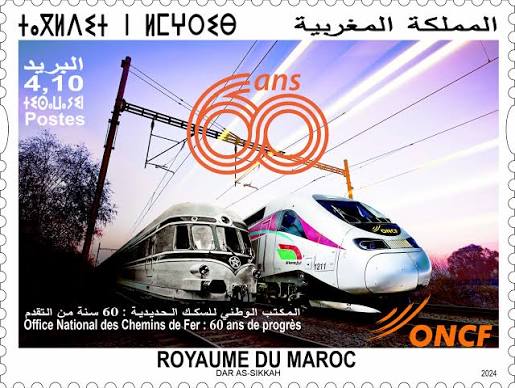
When Morocco was officially appointed to co-host the 2030 World Cup with Portugal and Spain, the decision represented more than the arrival of international football. It established a national deadline.
By 2030, Morocco must be prepared to receive large numbers of visitors, move them efficiently between cities, provide internationally competitive stadiums and accommodation, manage security and accessibility, and deliver a reliable experience under intense global scrutiny.
The most visible evidence will be found in the stadiums. But the deeper transformation is occurring in railway corridors, airports, urban transport systems, tourism services and the physical organization of Morocco's major cities.
The World Cup did not create all these ambitions. Morocco had already invested in high-speed rail, renewable energy, tourism, ports, roads, industrial development and international connectivity. What the tournament has done is accelerate certain projects, connect them to a common deadline and raise expectations for delivery.
That distinction matters. Morocco's 2030 transformation should not be judged by announcements alone. It must be judged by what is completed, what works, and what remains valuable after the final whistle.
A World Cup Built Across Three Continents
FIFA formally appointed Morocco, Portugal and Spain as the principal hosts of the 2030 tournament on December 11, 2024. Three centenary celebration matches are also planned for Argentina, Paraguay and Uruguay.
For Morocco, the appointment was historic. The Kingdom had pursued World Cup hosting ambitions over several decades, submitting unsuccessful bids for the 1994, 1998, 2006, 2010 and 2026 tournaments.
The 2030 edition will therefore represent both an international sporting event and the culmination of a long national ambition.
The joint bid identifies six Moroccan stadium locations: Casablanca, Rabat, Tangier, Marrakech, Fez and Agadir. However, the tournament's eventual Moroccan footprint will extend beyond those stadiums. Airports, railway stations, hotels, training facilities, public spaces and regional transport networks will all influence how the country is experienced.
Morocco 2030 Transformation Tracker
Updated July 2026 — classifications revised as projects advance| Kenitra–Marrakech high-speed rail | Under construction |
| 168-train acquisition program | Contracts awarded |
| Mohammed V Airport hub terminal | Initial construction phase launched |
| Wider airport expansion program | Funded program; implementation varies |
| Grand Stade Hassan II | Under construction |
| 2030 World Cup final in Casablanca | Not decided by FIFA |
| Six Moroccan stadiums in the joint bid | Included in official bid documentation |
| 26 million tourists by 2030 | National objective |
| Urban bus modernization | Program launched; rollout varies by city |
These classifications are important. A project can be officially approved without being completed. A construction target can change. A proposed capacity is not the same as an operating capacity. MoroccoMondial2030 will update these classifications as projects advance.
The World Cup as an Accelerator
It would be misleading to claim that Morocco's transportation and tourism investments exist only because of football.
The country's first high-speed railway, Al Boraq, began operating between Tangier and Casablanca in 2018. Morocco's tourism roadmap and airport expansion plans also respond to economic growth that extends beyond 2030.
The World Cup nevertheless changes the development equation in three important ways.
First, it creates a fixed international deadline. Major systems must be operational early enough to be tested before visitors arrive. Second, it connects projects that might otherwise have been treated separately — airports, high-speed rail, regional trains, stadium access and hotel capacity become parts of one national mobility and hospitality system. Third, the tournament brings scrutiny. Delays, weak accessibility, poor maintenance and unreliable transport will be visible to an international audience.
The opportunity is therefore substantial, but so is the pressure.
The World Cup Is Best Understood as an Accelerator
Many of these projects serve objectives Morocco already had in rail, aviation, tourism and urban development. What 2030 adds is a fixed deadline and an extraordinary level of international scrutiny.
Stadiums: The Most Visible Transformation
Stadiums will become the international symbols of Morocco's preparations.
The flagship project is the Grand Stade Hassan II near Benslimane, between Casablanca and Rabat. It is planned with approximately 115,000 seats, potentially placing it among the world's largest football stadiums. Its architectural concept draws inspiration from the traditional Moroccan moussem tent. The surrounding development is expected to include training grounds, landscaped areas and supporting sports facilities.
Construction is underway, with completion targeted before the tournament. But one essential fact must not be blurred by ambition: FIFA has not officially selected the venue for the 2030 World Cup final.
Morocco wants the Grand Stade Hassan II to be capable of hosting the tournament's most important matches. Madrid and Barcelona also possess major candidate stadiums. Until FIFA announces its decision, Casablanca must be described as a contender — not the confirmed location of the final.
The other Moroccan stadiums present a mixture of new construction, major redevelopment and additional planned work. Rabat and Tangier have already undergone significant stadium transformation. Further work affecting Fez, Marrakech and Agadir forms part of the longer preparation cycle.
The construction itself is only one part of readiness. Each stadium requires dependable transport, crowd management, accessibility, security, communications, emergency planning and a sustainable post-tournament use. A large stadium without an effective long-term operating plan can become a burden. A well-integrated stadium can become a continuing national asset.
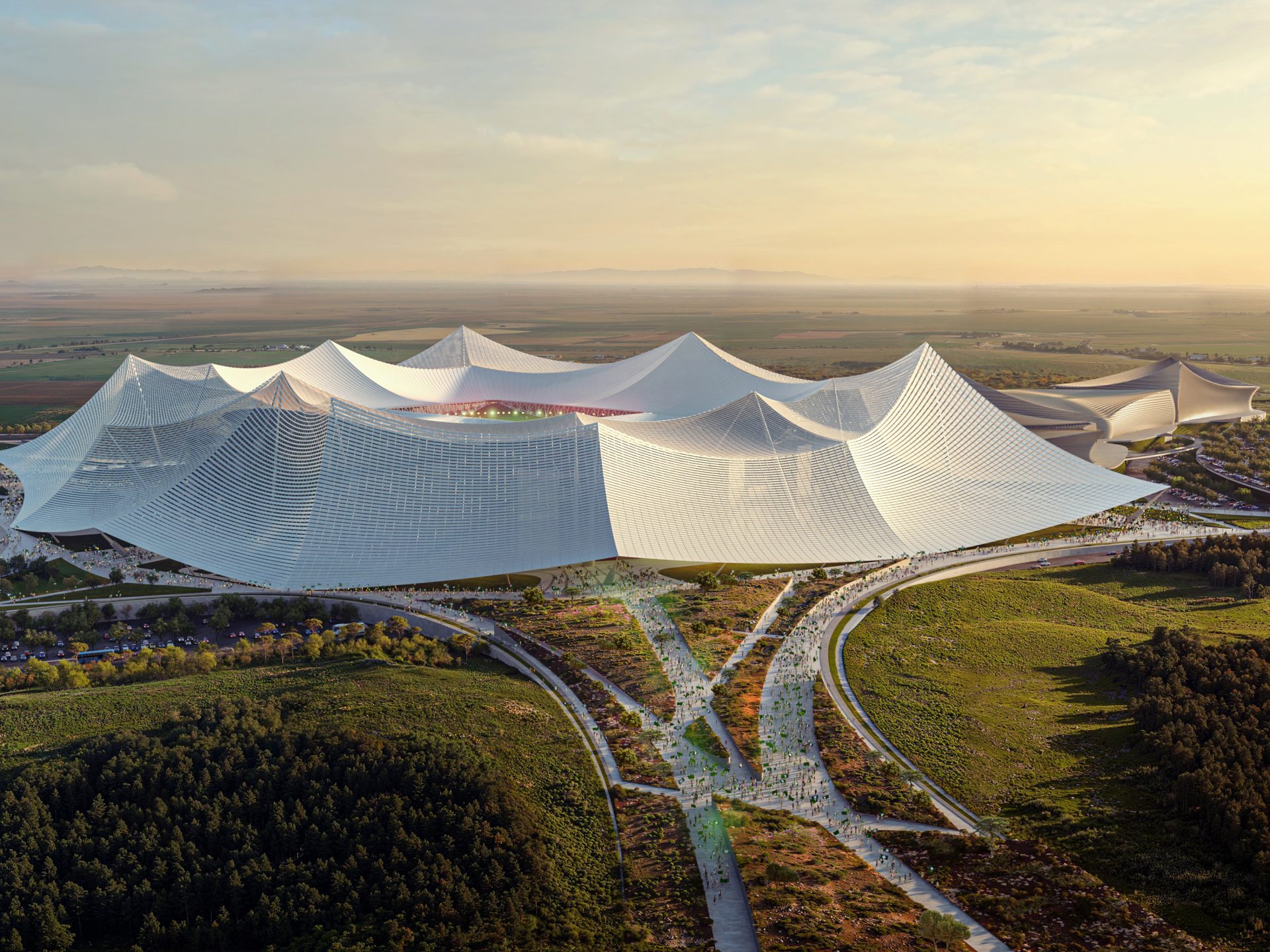
Grand Stade Hassan II — architectural rendering. Planned at approximately 115,000 seats near Benslimane, between Casablanca and Rabat. Construction is underway. Morocco wants the stadium to be capable of hosting the tournament's highest-profile matches. FIFA has not yet selected the 2030 final venue.
Rail: Creating a Faster Moroccan Corridor
The expansion of high-speed rail may become the most consequential long-term legacy of 2030.
Morocco's existing Al Boraq service already connects Tangier with Kenitra, Rabat and Casablanca. The Kenitra–Marrakech extension is intended to carry high-speed service farther south while strengthening the country's principal population and tourism corridor.
Officially launched in April 2025, the project extends the high-speed route by approximately 430 kilometres. ONCF says the completed line is intended to reduce the Tangier–Marrakech journey to around 2 hours 40 minutes.
The railway is also designed to improve access to important airports and stadiums. In Casablanca, the corridor between Mohammedia and Nouaceur is being expanded to six tracks: two for high-speed trains, two for regional and metropolitan services, and two for other conventional rail operations. That division could increase capacity while reducing conflicts between long-distance, regional and conventional trains.
The wider railway investment program through 2030 has been presented at approximately 96 billion dirhams. It includes the high-speed extension, regional rail development, station construction or rehabilitation and the acquisition of 168 trains. ONCF awarded contracts for 18 high-speed trains, 40 intercity trains, 60 rapid shuttle trains and 50 metropolitan rail units.
The greatest value may not be measured during the tournament. If the investment produces reliable regional services for Casablanca, Rabat and Marrakech, millions of ordinary journeys could be improved long after 2030.
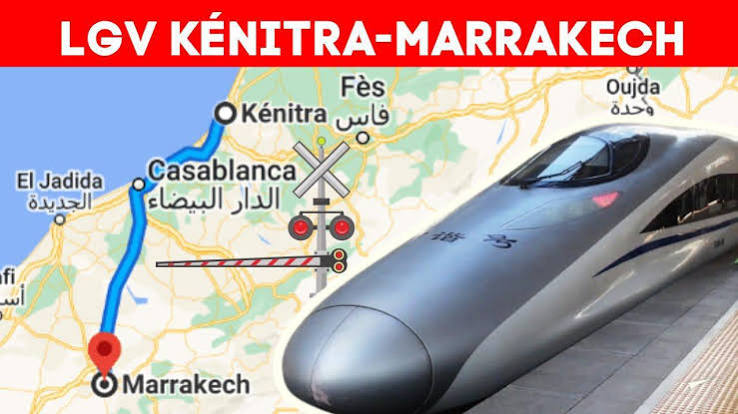
Kenitra–Marrakech high-speed rail. The 430-kilometre extension of Morocco's Al Boraq network is under active construction, with a target of reducing journey times along the country's principal corridor. Rail expansion is one of the most consequential long-term investments linked to Morocco's 2030 preparations.
Airports: Preparing for a Much Larger Gateway
Morocco's airports face a different challenge: rapid tourism growth combined with the demands of an exceptional global event.
In July 2025, the Moroccan government and the National Airports Office, ONDA, signed a 2025–2030 investment agreement valued at 38 billion dirhams. The agreement covers increased capacity at Marrakech, Agadir, Tangier and Fez, together with a new hub terminal and runway at Mohammed V International Airport in Casablanca. It also provides funding for modernization, maintenance and land acquisition.
The Casablanca project is the centrepiece. ONDA announced a new terminal designed to accommodate approximately 20 million additional passengers annually. Initial earthworks began in 2025, with the terminal targeted for completion before 2030. Its importance extends beyond the World Cup: Casablanca is Morocco's principal aviation gateway and the operating hub of Royal Air Maroc. A more efficient hub could strengthen connections between Europe, Africa, the Americas and the Middle East.
Morocco has stated an ambition to increase total national airport capacity toward 80 million passengers annually by 2030. That number should be understood correctly. It is a national objective based on future infrastructure and traffic growth — not today's operating capacity and not a guaranteed outcome.
The passenger experience will matter as much as terminal size. Immigration processing, baggage handling, signs, accessibility, ground transportation and transfers between domestic and international flights will determine whether expansion produces a genuinely better airport.
An Announced Budget Is Not a Completed Project
A target is not a result. MoroccoMondial2030 will update project classifications as contracts are awarded, construction advances and infrastructure enters service.
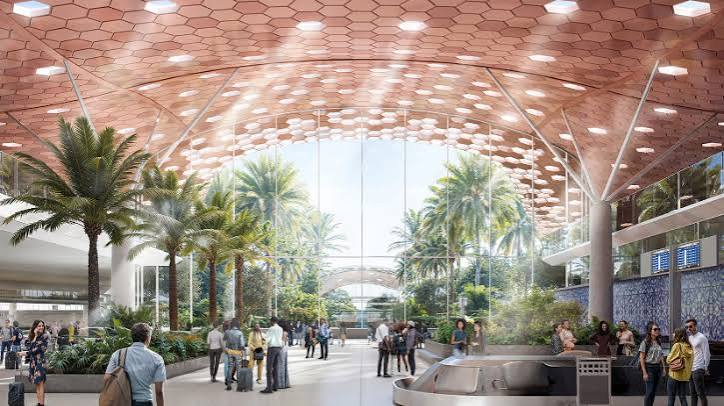
Mohammed V Airport — new hub terminal. Initial construction is underway on a new terminal designed to add approximately 20 million passengers of annual capacity at Morocco's principal international gateway. The project forms part of a 38-billion-dirham airport investment program covering five Moroccan airports through 2030.
Host Cities Are More Than Their Stadiums
The six Moroccan cities included in the joint bid have distinct identities and different infrastructure needs. Their preparation should not be measured by stadiums alone.
Casablanca
Casablanca will carry much of the national transportation burden. Its metropolitan area includes Morocco's primary airport, largest economic centre, major railway corridors and the country's flagship new stadium project near Benslimane. Its central challenge will be integration: connecting the airport, rail stations, accommodation zones, city centre and stadium efficiently.
Rabat
The capital has undergone major development in transport, public spaces, cultural institutions and sporting infrastructure. Its challenge is to combine the ceremonial role of a capital with the practical requirements of moving large crowds.
Tangier
Tangier already benefits from Al Boraq, Tanger Med and extensive urban development. The city demonstrates what sustained investment in international connectivity can accomplish. Its renovated stadium and northern location make it a potential bridge between Morocco and the Iberian Peninsula.
Marrakech
Marrakech possesses one of Morocco's strongest international tourism brands and a large hospitality base. Its challenge will be balancing major-event demand with pressure on roads, water, accommodation and the historic urban environment.
Fez
Fez offers a cultural identity that no newly constructed venue can reproduce. Better transport and visitor services could introduce more travelers to the city, but development must respect its historic fabric and avoid reducing it to a tournament stopover.
Agadir
Agadir combines resort tourism, a major Atlantic coastline and access to southern Morocco. Airport expansion and stronger urban transport could reinforce its position well beyond the tournament.
The six cities should not be remade into copies of one another. Morocco's advantage lies precisely in their differences.
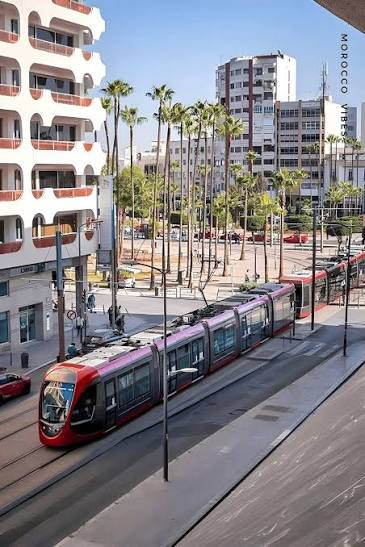
Casablanca urban mobility. Public transport integration is as critical as stadium construction. Moving supporters efficiently between airports, railway stations, hotels and venues will determine much of the visitor experience — and the lasting benefit to Casablanca residents after the tournament.
Urban Mobility: The First and Last Kilometre
High-speed trains can move supporters between major cities. They cannot, by themselves, complete the journey from a station to a hotel or stadium. That is why buses, taxis, trams, pedestrian access, road management and accessible transport are fundamental.
Morocco announced an 11-billion-dirham urban bus program covering 2025–2029. It involves 37 delegated transport authorities and the planned acquisition of 3,746 buses.
The program is national rather than exclusively World Cup-related. That strengthens its potential legacy.
Visitors will judge a city partly by how easily they can understand and use its transportation. Clear maps, multilingual information, integrated ticketing and dependable schedules are inexpensive compared with a stadium, but they can determine whether the overall experience succeeds.
The same applies to residents. If public transportation is improved only around event zones, the benefit will be limited. If networks become more reliable across entire metropolitan areas, 2030 could accelerate meaningful daily improvements. The 2026 World Cup offered instructive lessons on this point: inadequate transport links around several American host venues generated some of the tournament's sharpest criticism, despite otherwise excellent match-day experiences.
Tourism: From Visitor Numbers to Visitor Experience
Morocco reported a record 17.4 million tourist arrivals in 2024, surpassing its previous annual record and reaching the tourism roadmap's 2026 objective ahead of schedule. The country's larger goal is to reach 26 million arrivals by 2030.
The World Cup will provide extraordinary visibility, but visibility creates expectations. Visitors will compare Morocco not only with Spain and Portugal, but with other major international destinations.
Hotel capacity is only one part of the challenge. Morocco must also consider service consistency, staff training, online booking reliability, multilingual communication, transparent prices, accessible accommodation, short-term rental standards, cleanliness and public facilities, protection of historic neighbourhoods, and transportation between tourism areas and stadiums.
In 2026, the Ministry of Tourism announced mystery inspections covering approximately 2,500 classified accommodation establishments. The revised approach evaluates service quality as well as physical infrastructure. This is an important shift. A country cannot build a premium visitor economy through construction alone.
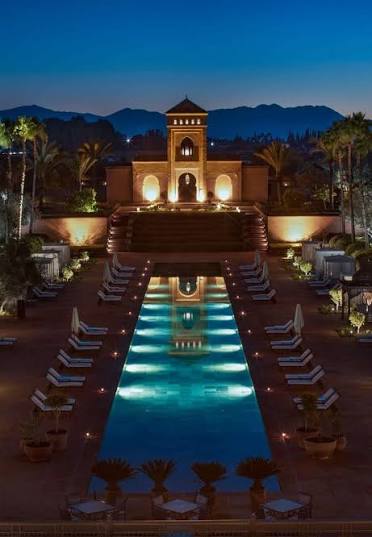
Marrakech hospitality. Strong international tourism brands exist across Morocco's host cities. Service quality, staff training and accessible booking will determine whether record visitor numbers translate into lasting reputations — and whether Moroccan businesses capture the full benefit of the tournament.
Employment and Moroccan Businesses
Major infrastructure programs can create demand for construction, engineering, architecture, transportation, technology, security, catering, cleaning, hospitality and event management. The tournament could also give Moroccan businesses experience that remains commercially valuable afterward.
But employment figures attached to major projects should be treated cautiously. Proposed or projected jobs are not the same as permanent employment.
The deeper opportunity lies in skills: technical construction expertise, railway and airport operations, hospitality management, accessibility services, digital systems, sports-event production, crowd and security management, and multilingual customer service.
Small and medium-sized businesses must also have practical access to the opportunity. If contracts and commercial benefits remain concentrated among a limited number of large organizations, the national economic effect will be narrower. Local restaurants, guides, transport providers, artisans and independent accommodation operators should be part of the visitor economy — not merely observers of it.
The Cost Question Cannot Be Ignored
World Cups invite excitement, but they also require financial discipline. Morocco's railway, aviation, road, tourism and urban programs are not all tournament-exclusive expenses. Many are long-term national investments that would serve economic objectives with or without football. That does not remove the need for scrutiny.
The responsible questions include: Are contracts transparent and competitive? Are projects being delivered within realistic budgets? Who will pay for maintenance after 2030? Will stadiums have viable post-tournament uses? Are surrounding communities benefiting? Could deadlines encourage rushed or unnecessarily expensive decisions? Are essential public services protected while event-related spending rises?
These questions are not arguments against development. They are necessary if development is to produce durable public value. Infrastructure should not be judged only by the photograph taken at its inauguration. It should be judged by its condition, usefulness and cost years later.
Sustainability and Pressure on Resources
The joint 2030 tournament promotes a message of connection between continents and cultures. Its physical footprint, however, will be considerable.
Morocco must manage construction materials, energy use, waste, water demand and transportation emissions. These issues are especially sensitive in cities affected by water stress and rapid tourism growth.
Rail expansion can support lower-carbon intercity movement compared with dependence on cars and domestic flights. But the total environmental result will depend on construction practices, stadium operations, urban planning and the large volume of international travel associated with the competition.
Claims of sustainability should therefore be supported by measurable outcomes — not slogans. Projects should be evaluated through questions such as: Will venues use renewable energy? How will water be managed? Can temporary structures reduce unnecessary permanent construction? Are stadiums accessible by public transportation? Will new neighbourhood development reduce or increase car dependence? What happens to waste after matches and fan events? A credible legacy requires published commitments and transparent measurement.
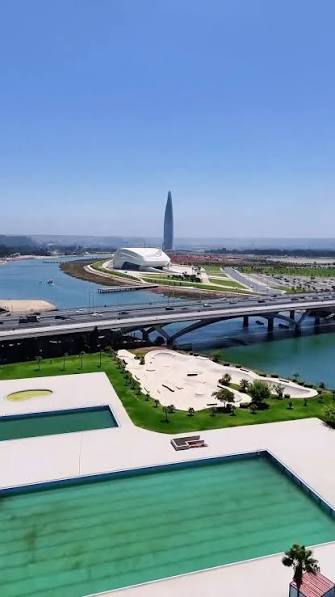
Rabat — Morocco's capital host city. The city has undergone significant investment in transport, public spaces and sporting infrastructure. Morocco's six host cities each carry distinct identities and must be developed in ways that preserve that distinctiveness long after 2030.
What Success Would Really Mean
The easiest version of success is a well-organized tournament lasting several weeks. The more ambitious version is a Morocco that functions better because the tournament happened.
That would mean faster and more dependable intercity travel; improved metropolitan rail and bus services; airports capable of handling growth without sacrificing passenger experience; stadiums with sustainable long-term uses; stronger tourism service standards; new professional skills; commercial opportunities reaching local businesses; better accessibility; and infrastructure that remains properly maintained.
The Most Important Measure Will Not Be the Tournament
The most important measure of success will not be how Morocco looks during the tournament. It will be whether the new systems remain useful, affordable and well maintained for Moroccans afterward.
2030 Is a Milestone, Not the Destination
Morocco's transformation is real. Construction is visible, major contracts have been awarded, and important national programs are moving forward.
But the story remains unfinished. Between now and 2030, some projects will advance on schedule. Others may be modified, delayed or reprioritized. New proposals will be announced, and ambitious claims will need to be tested against evidence.
The World Cup offers Morocco something larger than global attention. It offers an opportunity to accelerate infrastructure, strengthen institutions and establish a new standard for how the country welcomes visitors and serves its own population.
The final judgment should not depend on whether Morocco produces the most spectacular stadium or receives the most flattering international coverage. It should depend on whether the deadline of 2030 leaves behind a more connected, capable and accessible Kingdom.
The tournament will eventually end. The transformation must continue.
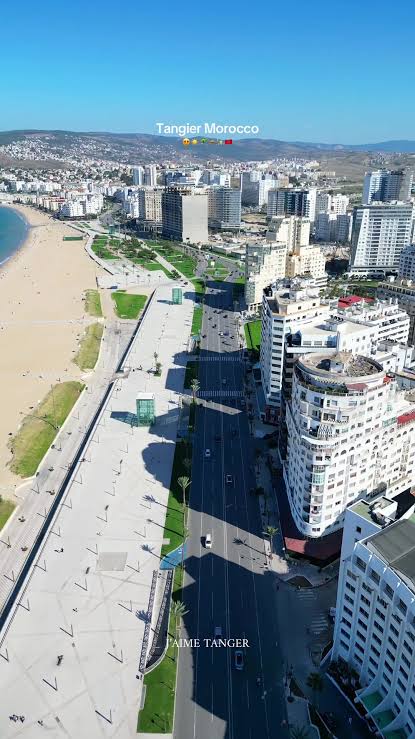
Tangier — Morocco's northern gateway. Already transformed by Al Boraq, Tanger Med port and sustained urban investment, Tangier illustrates what is possible when infrastructure and geography work together. The city's 2030 role extends beyond football, connecting Morocco to Europe at one of the world's most significant crossings.
Morocco's Preparations Will Continue Evolving
As construction advances, transport systems expand and final tournament decisions are made, MoroccoMondial2030 will track every verified development with host-city guides and independent analysis.
Explore the Morocco 2030 Gateway →Sources and Official References
This analysis draws on official documents, government announcements and ONCF/ONDA communications released through July 2026. Where projects remain in planning or early construction phases, MoroccoMondial2030 applies the language used in official communications and does not present targets as confirmed outcomes.
- FIFA — 2030 tournament documents and bid evaluation
- FIFA — Hosts appointed for the 2030 World Cup
- ONCF — Kenitra–Marrakech high-speed rail construction
- ONCF — Contracts for 168 new trains
- Moroccan government — 96-billion-dirham railway investment program
- Moroccan government — 2025–2030 airport investment agreement
- Moroccan government — Mohammed V Airport terminal construction
- ONDA — Mohammed V Airport hub terminal
- Moroccan government — Stadium project monitoring
- Moroccan government — National urban bus program
- Moroccan government — 2024 tourism results
- Moroccan government — Accommodation quality inspections