Three thousand years of history, a language older than the Roman alphabet, dynasties that built Morocco's greatest cities, and a living culture that still shapes how the country looks, sounds and moves. This is the story of the Amazigh — and it has never stopped being told.
There is a moment, travelling through Morocco's High Atlas Mountains, when the landscape seems to speak a language older than any city, older than any dynasty, older than the names now printed on the map. It speaks in the geometry of stone houses that appear to grow from the hillside itself, in the weave of a carpet whose patterns encode generations of memory, in a script carved into rock faces that predates the Roman alphabet by centuries. This is Amazigh country. It was Amazigh country long before Morocco existed as a concept, and it remains so today.
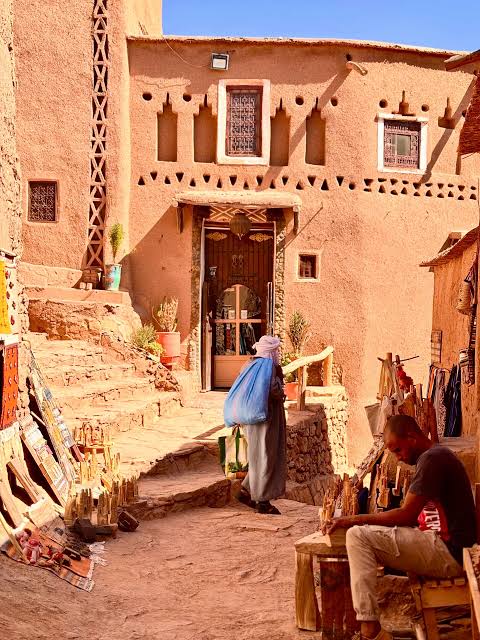
The Amazigh are the Indigenous people of North Africa — the human beings who were walking this land, building communities, developing languages and cultivating the earth long before the arrival of Phoenician traders, Roman legions, Arab armies or French administrators. They did not simply witness the great movements of history that swept across this part of the world. In many cases, they shaped them.
Understanding their story is not merely an exercise in historical curiosity. It is the key that unlocks Morocco itself — the reason its architecture looks the way it does, the reason its music carries the rhythms it carries, the reason the names of its mountains and rivers sound the way they do. To travel in Morocco without understanding the Amazigh is to read a book while skipping every other chapter.
"The Amazigh did not simply witness the great movements of history that swept across North Africa. In many cases, they shaped them."
— MoroccoPassport EditorialWho Are the Amazigh?
The word Amazigh — plural Imazighen — is most commonly understood to mean free people or noble people in the Tamazight language. For centuries, the outside world used a different name: Berber, derived from the Greek and Roman word barbaros, applied to any people who did not speak Greek or Latin. Today, the term Amazigh is widely preferred — it is the name the people use for themselves, and it reflects an identity rooted in their own history, not in how others have categorised them.
The Amazigh inhabit a vast geography. For thousands of years, their communities have spread across what is now Morocco, Algeria, Tunisia, Libya, parts of Egypt, and deep into the Sahara — including Mali, Niger and Mauritania. Their historical territory stretches from the Atlantic coast in the west to the Egyptian oases in the east, from the Mediterranean shore in the north to the sub-Saharan edge of the Sahara in the south.
Between 40 and 60 per cent of Moroccans identify with Amazigh heritage to varying degrees. Morocco is home to one of the largest Amazigh populations anywhere in North Africa — and the only country in the region to have granted official constitutional status to the Amazigh language.
Morocco is home to one of the largest concentrations of Amazigh people anywhere in the region. Three distinct dialect communities exist within the country: Tashelhit speakers in the south and the Souss valley, Central Atlas Tamazight speakers in the Middle Atlas and High Atlas, and Tarifit speakers in the Rif Mountains of the north. Each community has its own regional identity, musical traditions, weaving patterns and social customs, while sharing a common linguistic and cultural heritage that stretches back thousands of years.
It would be a mistake to treat the Amazigh as a single, uniform community. Like any people with thousands of years of history across a vast territory, they are diverse — in dialect, in tradition, in the specific details of how they live. What they share is something deeper: a common linguistic ancestry, a common relationship to the North African land, and a common thread of continuity that runs unbroken from the ancient world to the present day.
A History Spanning Millennia
Archaeological evidence places human communities in what is now Morocco from the Palaeolithic period — hundreds of thousands of years ago. But the recognisable ancestors of today's Amazigh communities begin to appear in the historical and archaeological record several thousand years before the Common Era. Rock engravings in the High Atlas and the Saharan south, burial mounds on the Atlantic plain, and stone megalithic structures across northern Morocco all point to the existence of sophisticated, organised societies long before any written record was made of them.
By the time the first Phoenician traders arrived on Morocco's Atlantic and Mediterranean coasts — around the 12th century BCE — they encountered established communities with their own social hierarchies, agricultural traditions and trade networks. The Phoenicians did not arrive in empty territory. They arrived in a land that was already fully inhabited, already shaped by thousands of years of human presence.
As Mediterranean civilisations expanded, the Amazigh engaged with them on their own terms — sometimes as trading partners, sometimes as military adversaries, often as both simultaneously. The Carthaginian civilisation that dominated the western Mediterranean from its base in present-day Tunisia was deeply intertwined with Amazigh communities. Amazigh cavalry were among the most feared soldiers in the ancient world, and Carthaginian armies that crossed into Europe relied heavily on Amazigh fighters.
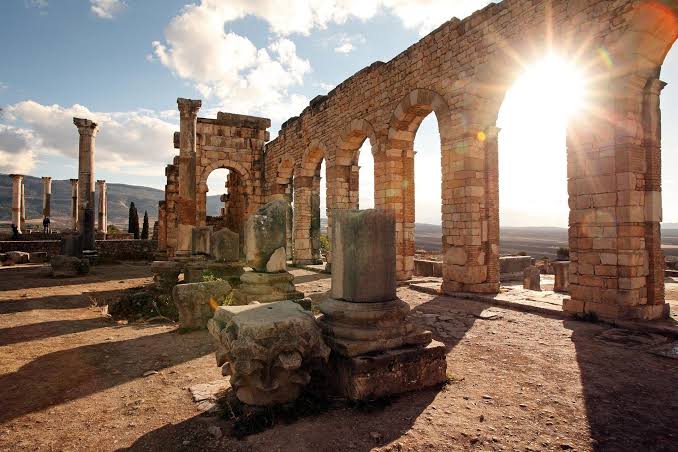
When Carthage fell to Rome in 146 BCE, the Amazigh kingdoms that had aligned with the Carthaginians did not simply collapse. They adapted, negotiated and, in several cases, flourished. The most celebrated Amazigh ruler of the Roman period was King Juba II, whose kingdom of Mauretania became one of the most cultivated client kingdoms in the Roman world. Juba II spoke Greek and Latin, corresponded with scholars across the Mediterranean, collected art, wrote extensively on history, geography and natural science, and governed a territory that encompassed present-day Morocco and western Algeria. The ruins of Volubilis, still visible today near Meknes, are among the most tangible monuments to this extraordinary period of Amazigh engagement with the wider ancient world.
The arrival of Islam in the 7th century CE marked a profound transformation across North Africa. Amazigh communities engaged with this transformation as they had engaged with every great historical force before it — not as passive subjects but as active participants. The Islamisation of the Amazigh was neither instantaneous nor uniform. It took generations, and it produced a distinctly Amazigh interpretation of Islamic practice that continues to characterise religion in Morocco's rural and mountain communities to this day.
Builders of Morocco's Greatest Dynasties
Perhaps the most consequential and least understood dimension of Amazigh history is this: several of the dynasties that built Morocco's most celebrated monuments — the cities, the mosques, the madrasas, the universities — emerged directly from Amazigh communities. The assumption that Morocco's imperial heritage is primarily Arab in origin does not survive even a cursory examination of the historical record.
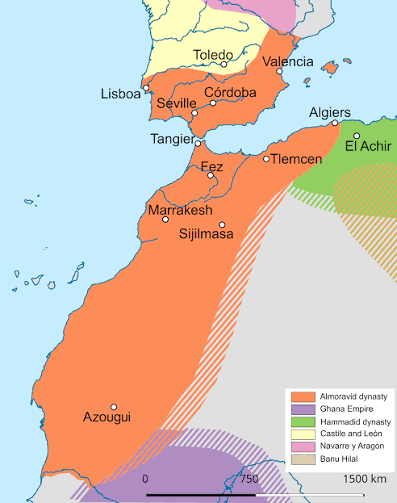
The three dynasties that most profoundly shaped medieval Morocco — the Almoravids, the Almohads and the Marinids — all emerged from distinct Amazigh communities separated by geography, language and tribal tradition. Between them, they governed Morocco for nearly five centuries, built its greatest cities, founded its most important educational institutions and extended its political reach across the Sahara, across the Atlas Mountains and deep into Andalusian Spain.
Almoravid Dynasty
Emerging from the Sanhaja Amazigh confederation of the western Sahara, the Almoravids founded Marrakech in 1062 and built an empire stretching from sub-Saharan West Africa to the Spanish plateau. They crossed into Iberia in 1086 at the request of Muslim rulers threatened by the Christian Reconquista, and for a generation held together the largest empire in the western Islamic world.
Almohad Dynasty
Rising from the Masmuda Amazigh of the High Atlas, the Almohads built the Koutoubia Mosque in Marrakech, the Hassan Tower in Rabat and the Giralda in Seville — three of the most recognisable monuments of medieval Islamic architecture. At their height, they governed one of the largest empires in the world, encompassing Morocco, western Algeria, parts of Tunisia, and the Islamic south of the Iberian Peninsula.
Marinid Dynasty
The Marinids, of Zenata Amazigh origin, made Fes the intellectual capital of the western Islamic world. Their madrasas — the Bou Inania, the Attarine, the Cherratine — are among the finest examples of Islamic architecture ever built in Morocco. They restored and expanded the Qarawiyyin university, transformed Fes el-Bali into a centre of scholarship, and presided over a period of cultural production whose monuments still define the city today.
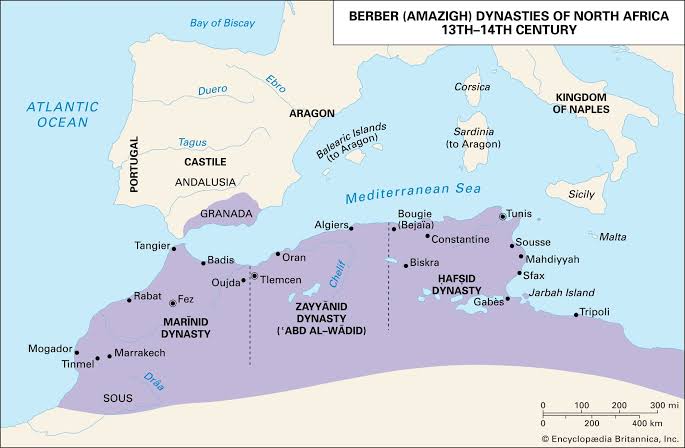
Many of Morocco's UNESCO World Heritage Sites owe their origins — or their most significant developments — to Amazigh-led dynasties. The medina of Fes, the monuments of Marrakech, the ancient city of Volubilis, the historic centre of Rabat — all carry the imprint of Amazigh vision, Amazigh governance and Amazigh creative ambition. This is not a footnote to Moroccan history. It is one of its central chapters.
Language, Script and the Weight of Continuity
Morocco's 2011 Constitution made history when it granted official status to the Amazigh language — Tamazight — alongside Arabic. It was the first time in Morocco's modern history that the state had formally acknowledged what had always been true: that the country's linguistic identity is not singular but layered, and that one of those layers is older than the Arab conquest, older than Islam in North Africa, older than the great medieval cities.
Within Morocco, Tamazight is spoken in three principal regional varieties. Tashelhit — also called Tachelhit or Soussiya — is spoken across the south, the Souss valley, the Anti-Atlas and parts of the Drâa region, and is the most widely spoken variety in the country. Central Atlas Tamazight is spoken throughout the Middle Atlas and parts of the High Atlas. Tarifit is the language of the Rif Mountains in the north, spoken in communities around Al Hoceima, Nador and Berkane. Each variety differs meaningfully in vocabulary and pronunciation, but all share a common grammatical structure and a common origin in the ancient Berber language family that has been spoken in North Africa since before recorded history.
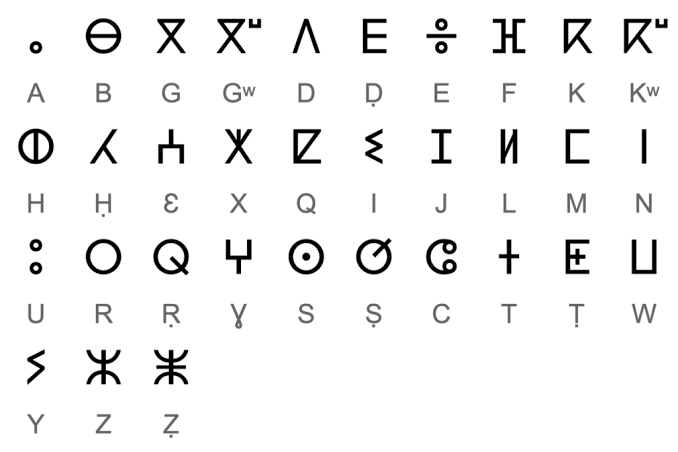
One of the most visually striking symbols of Amazigh identity is the Tifinagh alphabet — the writing system used to record Tamazight. Tifinagh is estimated to be more than three thousand years old, making it one of the oldest continuously used scripts in the world. A standardised modern form, Neo-Tifinagh, was officially adopted in Morocco in 2003 and can now be seen on road signs, school textbooks, government buildings and cultural institutions across the country.
For many Amazigh Moroccans, Tifinagh carries a significance that goes beyond the practical. When you see the script on a road sign in the Atlas Mountains — alongside Arabic and French — you are seeing a statement of historical continuity, a reminder that this land has been named and described in this language since an era that predates most of the world's writing systems. It is not decoration. It is memory made visible.
The Tifinagh script has been found on inscriptions across North Africa and the Sahara dated to more than 3,000 years ago — making it older than the Latin alphabet, the Arabic script, and most other writing systems still in active use anywhere in the world today.
The Living Traditions
History is one dimension of Amazigh heritage. The other — equally important, and far more immediately visible to the traveller — is the living culture that continues to express itself in the way things are made, celebrated, worn, spoken and shared across Amazigh communities today. These are not museum traditions preserved under glass. They are practices embedded in everyday life.
The Art of Carpet Weaving
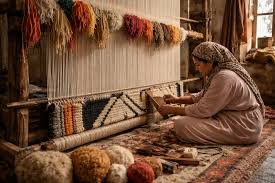
Of all the art forms produced by Amazigh communities, the handwoven carpet is perhaps the most immediately recognisable and the most deeply encoded with cultural meaning. Each region of Morocco has developed its own palette of colours, its own vocabulary of geometric motifs, and its own weaving techniques — differences specific enough that experienced collectors can identify the geographical origin of a carpet by sight alone.
The geometric patterns that characterise Amazigh carpets are not decoration in the conventional sense. Many of the motifs that appear on Atlas Mountain carpets carry specific meanings — representing fertility, protection from harm, family lineage, or the passage of seasons. They form a visual language developed over centuries, legible to those who share the cultural context but opaque to outsiders. When a woman weaves a carpet, she is not merely producing a textile. She is making a statement about who she is, where she comes from, and what she values. This knowledge is passed from mother to daughter, generation by generation, without interruption.
Silver, Amber and the Language of Adornment
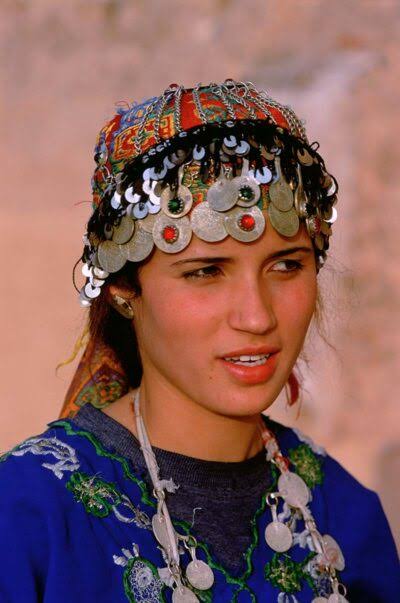
Traditional Amazigh jewelry is immediately recognisable: bold in scale, rich in silver, decorated with coloured enamel, amber, coral and semi-precious stones. The aesthetic is not accidental. Each element of a piece of Amazigh jewelry carried social information: the fibula clasps that fastened a woman's robe, the heavy necklaces layered across her chest, the bracelets that covered her forearms — all communicated her family's standing, her community of origin, her personal history.
Historically, a woman's jewelry was not merely ornamental. In communities where formal documentation was absent, jewelry served as a form of portable identity and wealth, passed through female lineages as an inheritance that could be read by anyone who knew the visual grammar of the tradition. The finest pieces — worked by specialist silversmiths who combined metalworking, enamelling and stone-setting in a single object — represented hundreds of hours of skilled labour and were valued accordingly.
Today, Amazigh jewelry continues to be produced by skilled artisans, particularly in the Souss, the Anti-Atlas, the High Atlas and the Drâa valley. The finest contemporary pieces remain works of considerable cultural depth, and serious collectors travel specifically to these regions to find examples of the tradition at its highest level.
Music, Celebration and the Ahwach Tradition
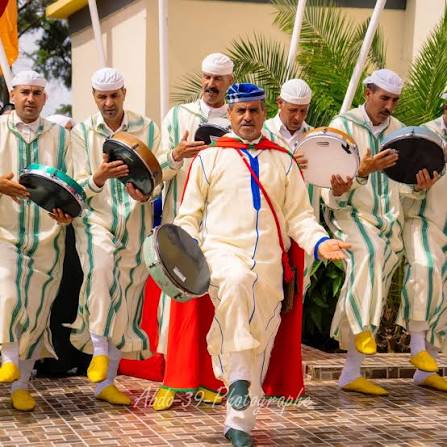
Music in Amazigh culture is not a form of entertainment in the modern commercial sense. It is a social practice — deeply embedded in the rhythms of community life, present at harvests and weddings and seasonal festivals, used to mark every major transition in the life of an individual and a village. It is participatory by nature: the distinction between performer and audience is often absent.
.jpeg)
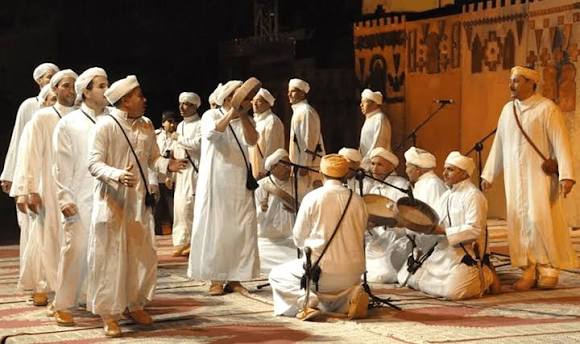
The ahwach tradition — collective singing and dancing performed at community gatherings — is one of the most powerful expressions of Amazigh musical culture in the south and the Atlas. Participants form large circles or lines, moving in synchrony as voices and percussion build in intensity. It is collective, rhythmic and rooted in the specific social fabric of the communities that practice it. No two regional versions of ahwach are identical: the steps, the melodies, the instruments and the occasions on which it is performed all vary from village to village and valley to valley.
Traditional Amazigh instruments include the bendir (a large frame drum struck with the fingers), the ribab (a single-stringed bowed instrument with a haunting, resonant tone), and the lotar (a lute-like instrument associated particularly with the south, whose deep rhythmic patterns underpin much of the musical tradition of the Souss valley). In the north, the Rif tradition produces a distinct musical style, with different instruments and melodic structures that reflect the region's particular cultural history.
If you want to encounter living Amazigh music rather than a staged performance, the key is timing and geography. The festivals held in the High Atlas and the Souss during the summer months — particularly those tied to the agricultural calendar — offer genuine opportunities to witness ahwach and other musical traditions as they have always been practiced: outdoors, at night, in the presence of the entire community. The Amazigh New Year (Yennayer, 13 January) is another occasion when celebrations in mountain villages offer real cultural depth.
Hiring a guide from within the community — rather than from a city agency — ensures that the experience is grounded in local knowledge and that the benefit reaches the people whose traditions you are witnessing.
Hospitality as a Moral Principle
Among the values most central to Amazigh social life, hospitality occupies a position that goes well beyond social convention. A stranger who arrives at an Amazigh household — expected or not — will be received with tea, bread, olive oil and whatever the house can offer. This is not merely a custom. It is an expression of a moral worldview in which generosity to others, and the reciprocal obligations that flow from it, constitute the foundation of communal life.
Morocco's broader reputation as one of the world's most welcoming countries owes something significant to this tradition, which has spread through the country's cultural fabric over centuries of Amazigh influence on Moroccan social norms. Wherever you travel in Morocco — in the cities, in the mountains, in the desert south — the warmth with which strangers are received has roots that extend deeper than any individual city or dynasty.
Architecture Built for Centuries
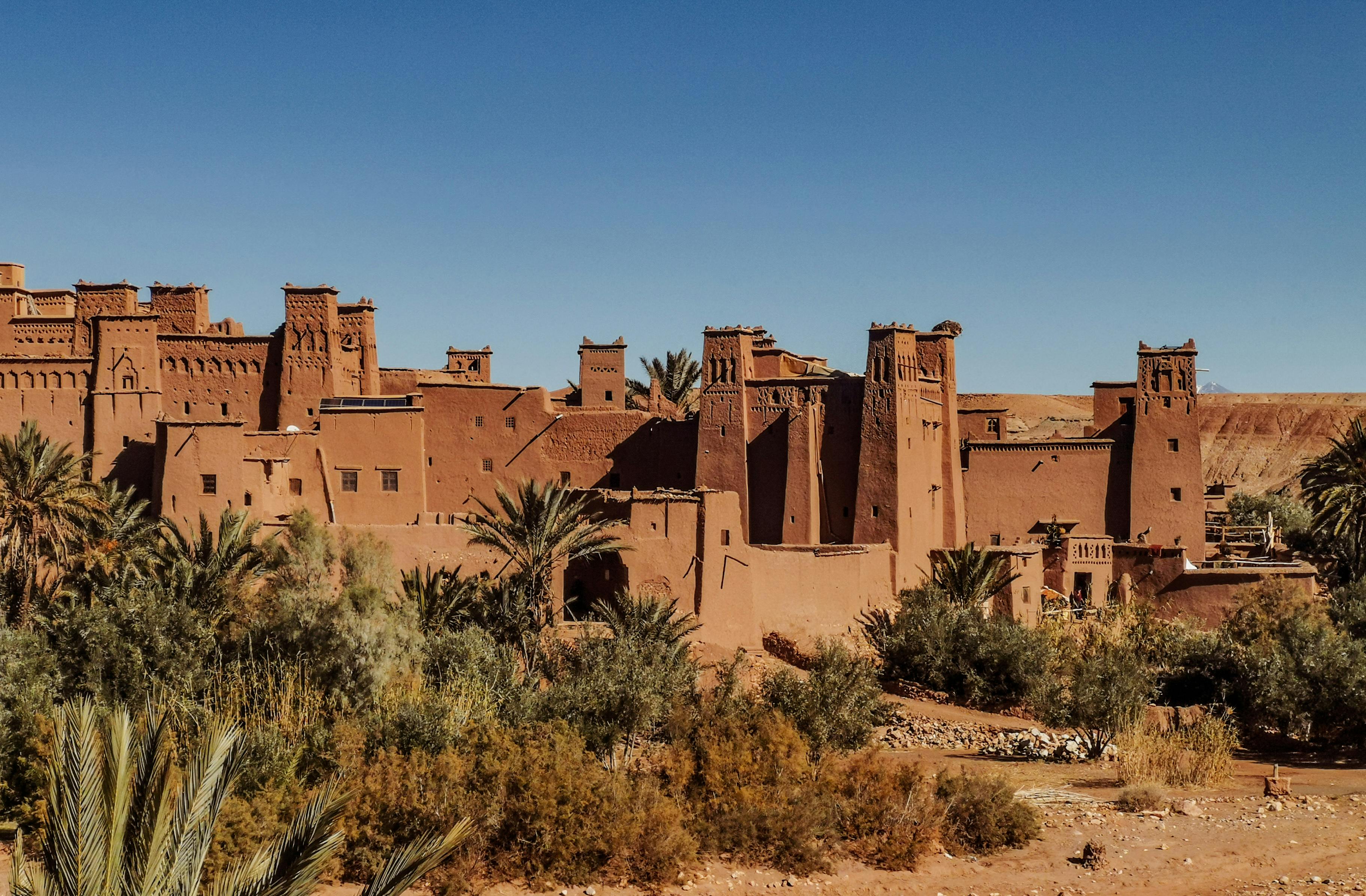
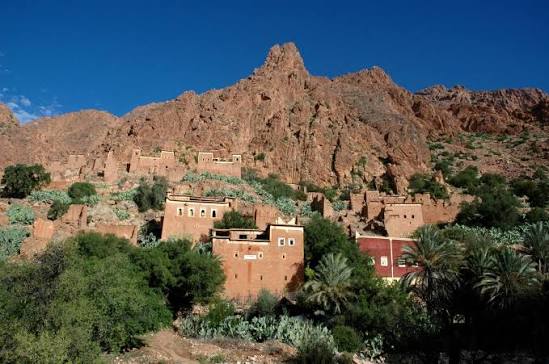
Traditional Amazigh architecture is an exercise in the deepest kind of intelligence — the kind that emerges from centuries of paying close attention to a specific place. Stone homes in the High Atlas are built to absorb the heat of the day and release it slowly through the cold mountain nights. The earthen kasbahs and fortified ksour of the south — constructed from local clay, straw and stone — seem to grow from the landscape rather than being imposed upon it. They are the colour of the earth beneath them because they are made from it.
The architectural principles at work in Amazigh buildings are sophisticated ones: orientation for passive solar heating, central courtyards that regulate airflow, thick walls that buffer against temperature extremes, and the use of local materials that require no transportation and no industrial processing. Architects and urban planners in the twenty-first century have rediscovered many of these principles under the banner of sustainable design. In Amazigh communities, they have simply been standard practice for a very long time.
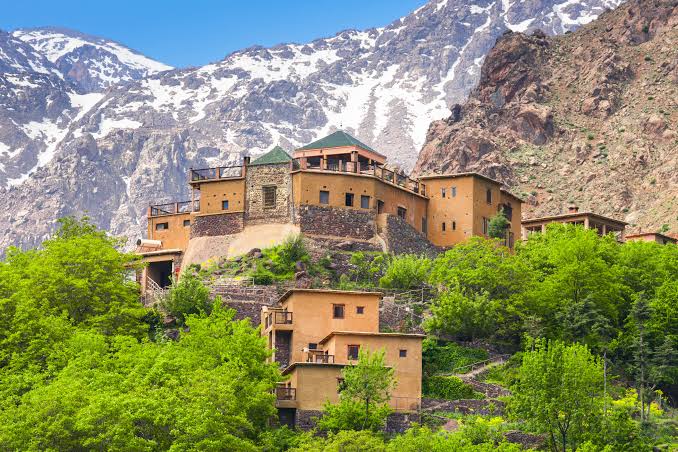
The village of Aït Benhaddou — a UNESCO World Heritage Site situated on a hillside above the Ounila River near Ouarzazate — is the most visited example of this tradition. But equally compelling examples exist throughout the Drâa and Dadès valleys, in the Tafilalt and the Todra, in dozens of lived-in working villages where the architecture has changed in its essentials very little across the centuries. The difference between Aït Benhaddou and these less-visited places is that in the latter, people still live as their grandparents and great-grandparents lived, in buildings whose form has been tested by time.
- Many of the most authentic Amazigh villages in the High Atlas and the south require a 4x4 or high-clearance vehicle to reach. Roads beyond the paved routes deteriorate significantly, particularly after October when winter snow or autumn rain can make tracks impassable. Plan accordingly.
- Not all "Amazigh experiences" marketed from major cities reflect the living culture they claim to represent. The organised performances in medina hotels are staged for tourists. Genuine encounters happen in villages, at weekly souks and at community celebrations — and they are not on a fixed schedule.
- Photography requires judgment and courtesy. In many Amazigh communities, photographing women or elders without their explicit consent is considered disrespectful. The fact that other tourists do it openly does not make it appropriate. Ask, and accept refusals gracefully.
- The Amazigh New Year — Yennayer — falls on 13 January. If your travels bring you to Morocco at that time, particularly in the Atlas Mountains or the Souss, the celebrations offer a genuine and unmediated window into living cultural tradition.
Amazigh Morocco Today
The story of the Amazigh is not a story of the past. It is unfolding now, in classrooms where Tamazight is taught for the first time, in courtrooms where Amazigh names are recognised on official documents, in music studios where Amazigh artists are finding international audiences, and in the political conversations of a Morocco that is working out, in real time, what it means to be a diverse, layered, historically complex society.
Morocco's 2011 Constitution represented a watershed moment. The formal recognition of Tamazight as a co-official national language with Arabic was not merely symbolic — it committed the state to a programme of inclusion that had profound practical implications. Tamazight began to be introduced into primary education. A dedicated national broadcasting service, Tamazight TV, was established. Signage in Amazigh-speaking regions began to appear in all three official scripts — Arabic, Latin and Tifinagh. Civic organisations, cultural associations and literary journals proliferated.
Morocco has a dedicated national Amazigh television channel — Tamazight TV — which broadcasts news, cultural programmes and entertainment in all three major varieties of Moroccan Tamazight: Tashelhit, Central Atlas Tamazight and Tarifit. It reaches an estimated audience of several million viewers across the country and the Moroccan diaspora.
Many young Moroccans today embrace Amazigh identity as a central part of who they are, while participating fully in modern urban and digital life. A software engineer in Casablanca who speaks Tashelhit at home, follows Amazigh music online, and spends summers in her family's Atlas village does not experience this as a contradiction. It is simply the full texture of a life lived in a complex country. The perceived tension between ancient identity and modern society is, for many Amazigh Moroccans, not a tension at all.
Amazigh writers, filmmakers, visual artists and musicians are gaining national and international visibility, bringing perspectives rooted in Amazigh experience to conversations about identity, memory, modernity and what it means to be Moroccan in the twenty-first century. Their work is not nostalgic. It is engaged, contemporary, and often pointed. It asks Morocco — and the world — to recognise the full depth of what has been here all along.
Where to Experience Amazigh Morocco
Amazigh culture rewards travellers who are willing to move beyond the familiar tourist circuit. The regions where Amazigh traditions remain most vivid are also, in many cases, Morocco's most visually spectacular — which means the journey is worthwhile on multiple levels simultaneously.
High Atlas Mountains
The heartland of Central Atlas Tamazight culture. Villages in the Toubkal region, the Aït Benhaddou valley and the area around Imlil offer genuine immersion in Amazigh mountain life. The less-visited valleys — Ourika, Aït Bougmez, the Mgoun massif — reward longer exploration.
Tafraoute and the Anti-Atlas
The cultural heart of Chleuh Amazigh tradition, set among dramatic pink granite peaks. The villages of the Ameln Valley, the ancient painted rocks of Jean Vérame, the almond orchards that bloom in February — and the finest concentration of traditional silverwork jewellers in southern Morocco.
The Souss Valley
The agricultural plain south of Agadir is the Tashelhit-speaking world, where women's argan cooperatives, weekly souks and a strong tradition of weaving and silverwork offer sustained engagement with living Amazigh culture. The argan cooperatives are among Morocco's most celebrated examples of community enterprise.
Azrou and the Middle Atlas
The cedar forests and mountain towns of the Middle Atlas — Azrou, Ifrane, Khenifra — form the heartland of Central Atlas Tamazight. The weekly Thursday market at Azrou draws communities from across the plateau. The cedar forests that surround the town are home to Barbary macaques, one of only two wild primate species in Africa north of the Sahara.
Tinghir and the Todra Gorge
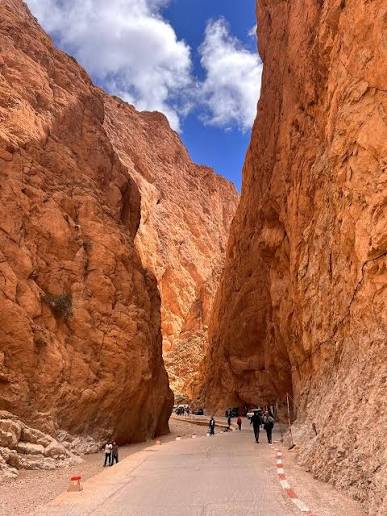
The palm-lined oasis valley around Tinghir and the spectacular vertical walls of the Todra Gorge sit at the edge of the Sahara. Ancient khettara underground irrigation systems, maintained by Amazigh communities for more than a thousand years, have made agriculture possible in an otherwise arid landscape. The gorge itself is a world-class climbing destination.
The Rif Mountains
Northern Morocco's Rif range is home to the Tarifit-speaking Amazigh, whose traditions differ meaningfully from those of the Atlas and the south. Chefchaouen, the celebrated blue city, sits at the western edge of Rif Amazigh territory. The less-visited eastern Rif — around Al Hoceima and the Bou Ahmed valley — offers deeper engagement with a distinct regional culture.
Morocco's identity has never been the product of a single civilisation or a single strand of history. It has been shaped across three millennia by Amazigh communities, Arab intellectual traditions, Jewish cultural contributions, Andalusian artistic influences, Saharan trade networks and sub-Saharan African connections. What makes Morocco distinctive — what gives it its particular depth and complexity — is not the dominance of any one of these strands, but the specific way they have been woven together across time.
Understanding Amazigh history is not a matter of excavating a separate, parallel story. It is a matter of reading Morocco's primary story more fully. The Almoravids who founded Marrakech were Amazigh. The Almohads who built the Koutoubia were Amazigh. The Marinids who made Fes into a world centre of learning were Amazigh. The carpet patterns in Morocco's finest souks encode Amazigh visual language. The hospitality for which Moroccan culture is celebrated worldwide draws from Amazigh social values that predate the country's existence as a political entity.
When someone asks what Morocco is, the honest and complete answer must include the Amazigh — not as background colour, but as a central protagonist in one of the world's great civilisational stories. That is the standard we are holding ourselves to with the Roots of Morocco collection: not to simplify, not to romanticise, but to tell the full story with the care and depth it deserves.
Continue Exploring
More from the Roots of Morocco collection — and the destinations where history comes alive.