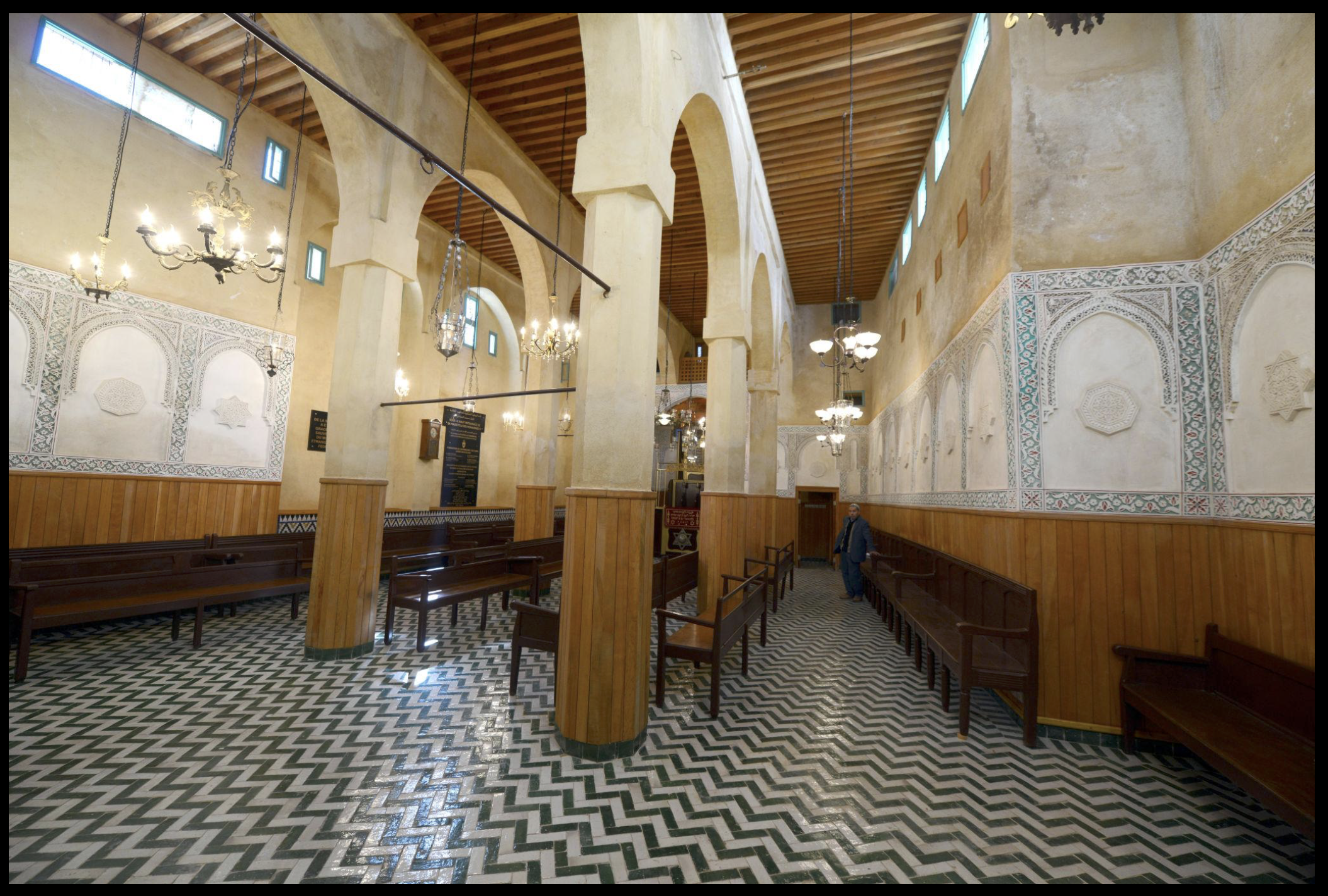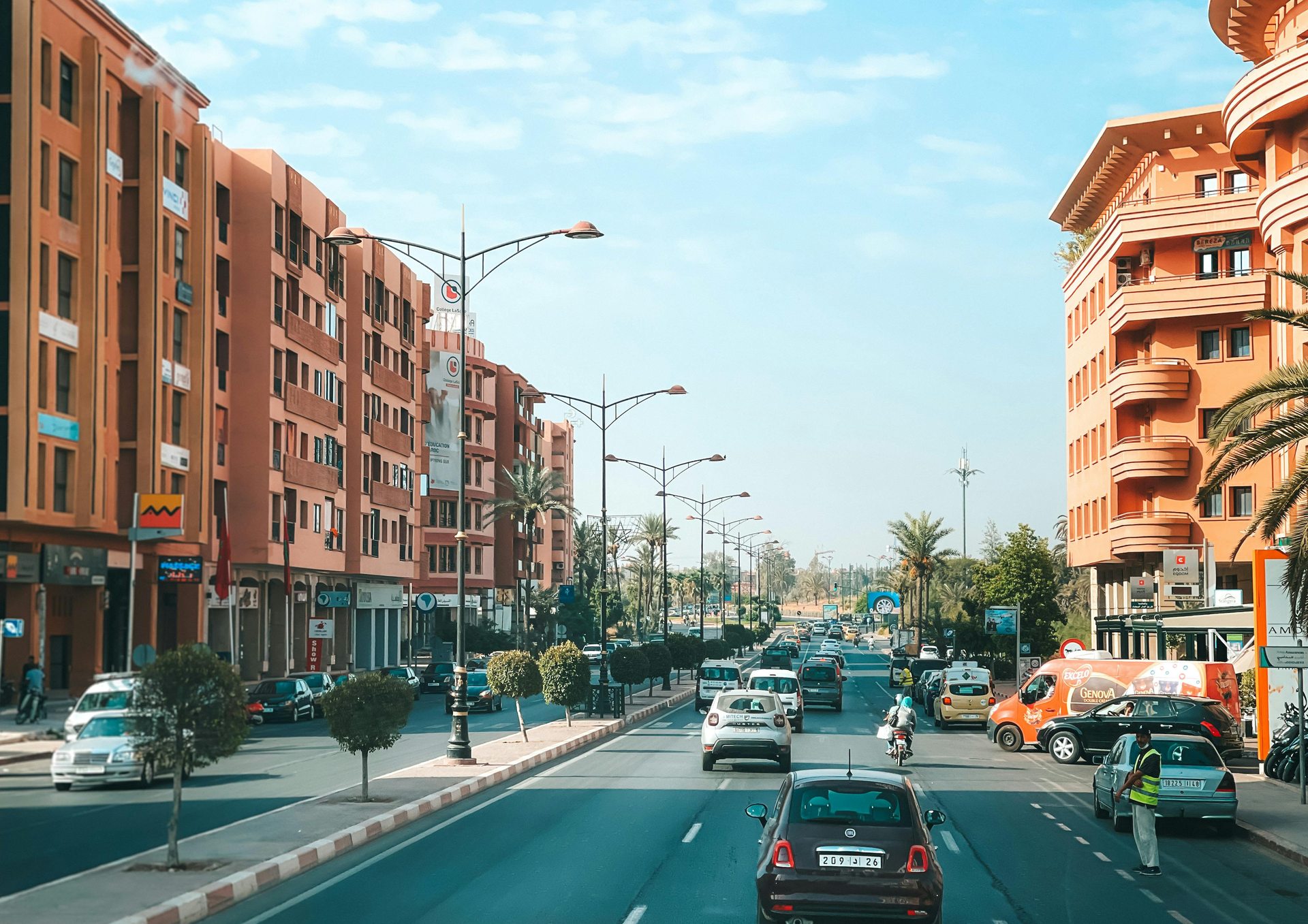
Few cities arrive with as much mythology as Marrakech. The "Red City" — named for its blush-toned pisé walls — has drawn travellers, traders, and storytellers for nearly a thousand years. Today it balances its Berber and Arab heritage against a cosmopolitan energy: world-class restaurants beside centuries-old fondouks, rooftop infinity pools overlooking the medieval Koutoubia mosque.
Whether you have three days or three weeks, Marrakech rewards the curious. This guide covers the medina, souks, palaces, gardens, neighbourhoods, day trips, food, and everything in between — so you can spend less time planning and more time lost in the labyrinth.
The Medina — Heart of the Red City
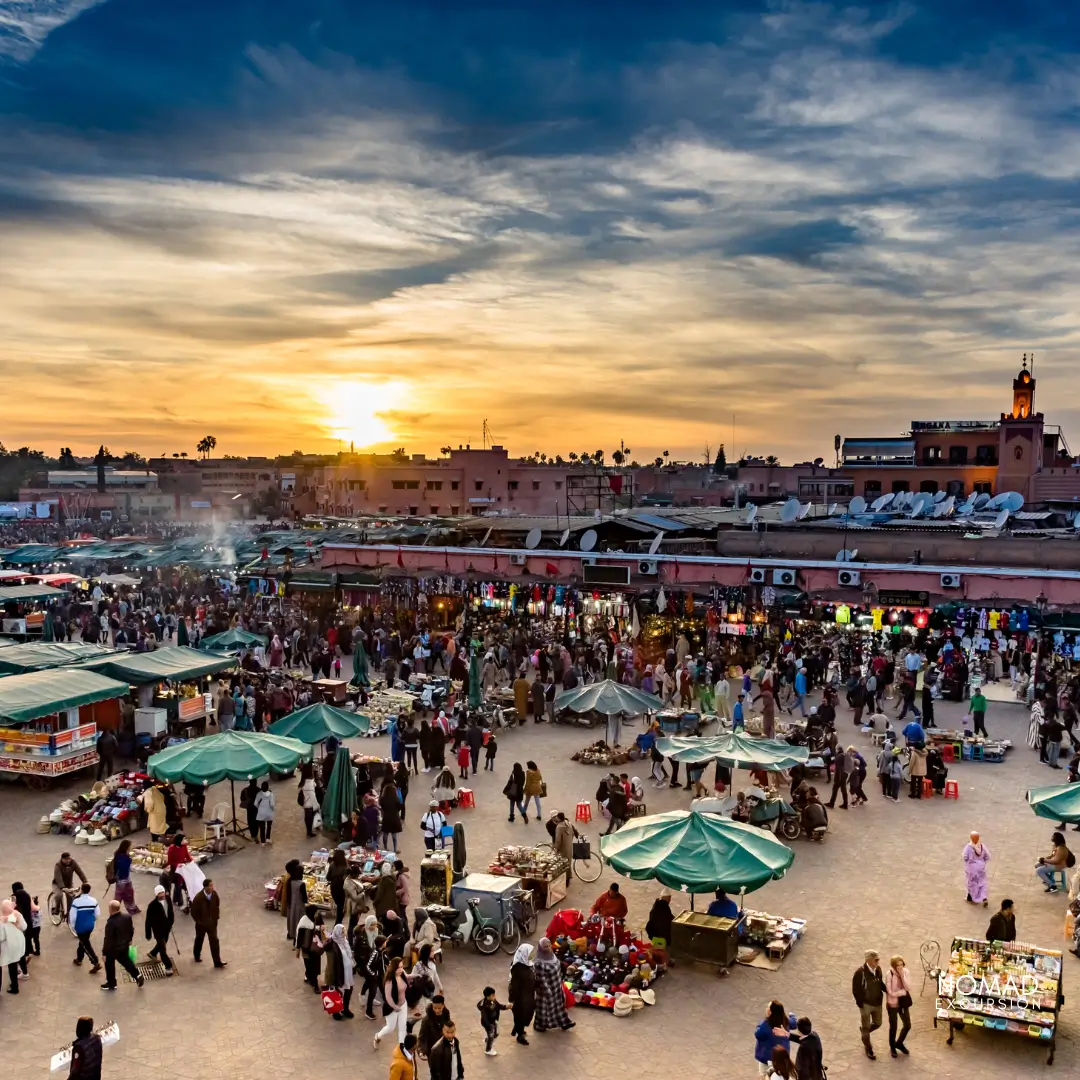
Marrakech's UNESCO-listed medina is one of the best-preserved in North Africa. The walled old city divides roughly into three zones: the souks and northern medina around the Ben Youssef Mosque; the central axis from Jemaa el-Fna down to the Koutoubia; and the southern medina with its grand palaces and Jewish mellah.
The medina's street logic is deliberately disorienting — it was designed to confuse invaders, and it still confuses visitors today. Give yourself permission to get lost. Every dead end reveals a carved cedar doorway or a hidden courtyard draped in bougainvillea. Carry a downloaded offline map (Maps.me or Google Maps offline) for peace of mind, but look up, not down, when you're walking.
Medina Orientation Tips
- Jemaa el-Fna is your anchor — the square is always findable and every guide can locate it.
- Derb means dead-end alley (private residential). Rue or Zankat means through-road.
- The souks sit north of the square; the palaces are south.
- Morning is quieter, golden-lit, and better for photography — arrive before 9am.
The Souks — Morocco's Greatest Bazaar
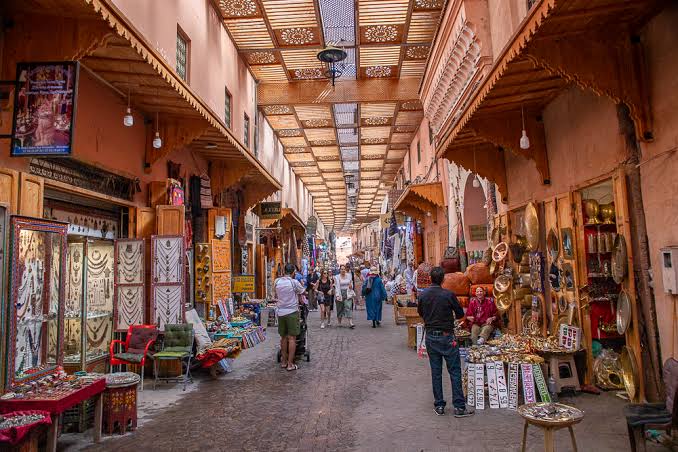
Marrakech's souks are not a single market but a dozen specialist trades woven into an organic whole. Each craft has its own quarter, its own smells, its own rhythm. Leather dyers shout across rooftops; blacksmiths tap out tagine lids; carpet sellers pour mint tea before any price is mentioned.
The Six Souk Quarters
Each trade has its own quarter in the medina's northern half. A half-day exploration covers them all.
The Chouara Tanneries of Marrakech
Marrakech has its own tanneries — smaller and less photographed than Fes's famous Chouara, which makes for a more intimate experience. The best viewing terraces are in the Bab Debbagh neighbourhood on the medina's eastern edge. Go in the morning when the colours are sharpest and the light falls directly into the pits. Leather-shop owners will offer free access to their terrace; this is normal practice — a small purchase of a leather item is a fair exchange for the view.
Palaces, Mosques & Monuments
Bahia Palace
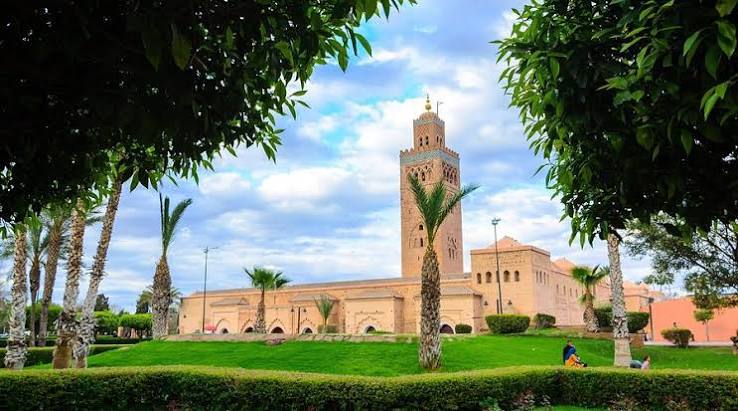
Built in the late 19th century for a Grand Vizier's favourite wife, Bahia Palace (meaning "brilliance") is the most visitor-friendly of Marrakech's great residences. Over 150 rooms and 8 hectares of gardens unfold across a series of increasingly elaborate courtyards. The painted cedar ceilings in the main reception room are breathtaking — geometric zellige tilework floors transitioning into intricately carved plaster walls rising to ceilings of hand-painted wood. Arrive early to beat the tour groups.
El Badi Palace
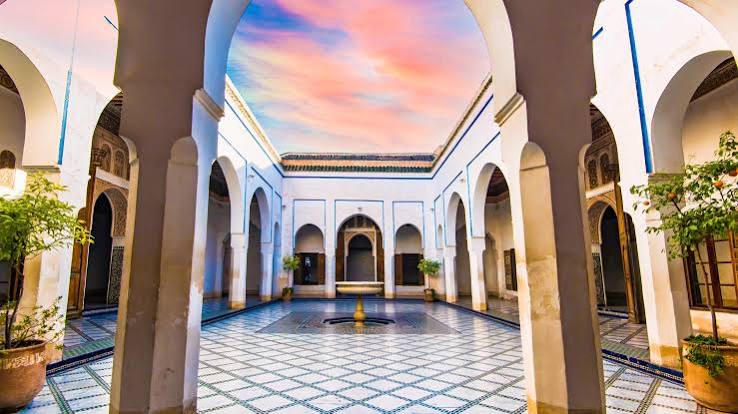
Where Bahia shows off its perfection, El Badi Palace impresses through ruin. Built in the 1590s by Sultan Ahmed al-Mansour to celebrate his victory over the Portuguese, it was stripped bare a century later by the Alaouite Sultan Moulay Ismail, who carted its marble columns and gold all the way to Meknes to build his own capital. What remains is a vast ochre skeleton — 360 rooms reduced to bare walls above reflecting pools — and it's hauntingly beautiful. Nesting storks add to the atmosphere.
Koutoubia Mosque
The 70-metre minaret of the Koutoubia is the most recognisable landmark in Marrakech and the spiritual centre of the city. Non-Muslims may not enter, but the mosque gardens are open and offer some of the best views of the tower. The minaret inspired both the Giralda in Seville and the Hassan Tower in Rabat — all three built by the Almohad dynasty in the 12th century.
Ben Youssef Madrasa
Morocco's largest medieval Quranic school can be visited year-round. The central courtyard — marble fountain, green-tiled lower walls, ornate carved plasterwork above, painted cedar screens at the top — is one of the most photographed spaces in the entire country, and deservedly so. Arrive before 10am or after 4pm to find the light at its most atmospheric and the crowds thinner.
Saadian Tombs
Hidden behind the Kasbah Mosque and sealed for centuries by order of the 17th-century Sultan, the Saadian Tombs were rediscovered only in 1917 by French aerial surveyors. The mausoleum of Sultan Ahmad al-Mansour is encrusted with some of the finest muqarnas, cedar carving, and Italian marble in all of Morocco. The site is compact but extraordinary — join the queue early as entry is timed.
Gardens of Marrakech
Majorelle Garden & Yves Saint Laurent Museum
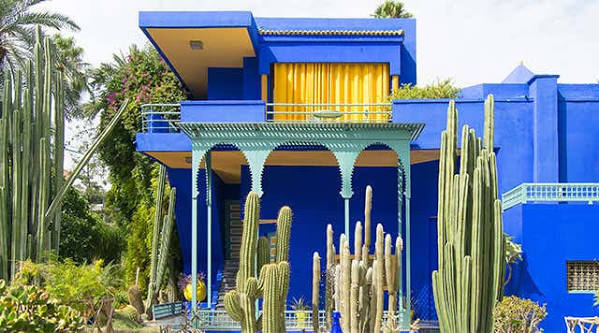
Painter Jacques Majorelle created this botanical garden in the 1920s and 1930s; Yves Saint Laurent and Pierre Bergé rescued it from development in 1980. The signature cobalt blue of the studio building — now known as "Majorelle Blue" — against the vivid greens of bamboo, palms, and cactus makes for a genuinely beautiful space. The adjacent Musée Yves Saint Laurent is housed in a striking terracotta-brick building and explores the designer's lifelong love affair with Morocco. Pre-book tickets online; queues without a reservation can be two hours or more in high season.
Menara Gardens
A few kilometres west of the medina, the Menara is Marrakech at its most serene. An olive grove dating back to the 12th century surrounds a large reflecting pool with a 16th-century pavilion at its edge. At dusk, when the Atlas Mountains turn pink behind the pool, it becomes one of Morocco's most romantic vistas. Entry is free and the gardens are rarely crowded — ideal as a quiet counterpoint to medina intensity.
Le Jardin Secret
Less known than Majorelle but centrally located in the medina, Le Jardin Secret is a restored 19th-century riad garden open to visitors. The divided Islamic and exotic gardens around a central water feature offer a rare taste of traditional Moroccan garden design within walking distance of the souks.
Neighbourhoods
The Medina
The original walled city — souks, riads, palaces, and the great Jemaa el-Fna square. The most atmospheric place to stay but the hardest to navigate. Pack light; no cars penetrate the deepest derbs.
Hivernage
The colonial-era "winter quarter" built by the French southwest of the medina. Tree-lined boulevards, luxury hotels, and upscale restaurants. Quieter and more predictable than the medina — good if you want comfort over authenticity.
Guéliz
Marrakech's modern European-influenced district, built under the French Protectorate. Home to the city's best contemporary galleries, international restaurants, and chic cafés. A necessary counterpoint to medina saturation — good for a long lunch or an evening stroll.
La Palmeraie
The palm grove northeast of the city — 13,000 palms originally planted by the Almoravid dynasty. Today interspersed with luxury villas, golf courses around Marrakech, and resort hotels. Worth visiting for quad biking or a camel ride, less interesting for culture.
Day Trips from Marrakech
Marrakech's position at the foot of the High Atlas makes it an exceptional base for excursions. Within three hours you can be in dramatically different landscapes.
Ourika Valley
Berber villages, waterfalls, and Atlas panoramas. Hire a grand taxi or join a day tour. Market day in Tnine Ourika (Mondays) is exceptional.
Toubkal / Imlil
Base village for North Africa's highest peak (4,167m). Even non-climbers enjoy the mountain air and Berber home-cooking. Mule treks available.
Ouzoud Falls
Morocco's most spectacular waterfall (110m). A rainbow-arced cascade in a gorge of olive trees, with wild Barbary macaques on the trail.
Essaouira
The windswept Atlantic medina — blue boats, white walls, fresh grilled sardines. A complete change of mood and colour palette. See our Essaouira guide.
Aït Benhaddou
The greatest fortified ksar in Morocco, a UNESCO World Heritage Site and the backdrop to dozens of films from Gladiator to Game of Thrones.
Tizi n'Tichka Pass
The 2,260m High Atlas pass en route to Ouarzazate — dramatic switchbacks, snow-capped peaks, and roadside Berber villages.
Food & Drink in Marrakech
Marrakech has one of Morocco's richest food cultures — a synthesis of Berber, Arab-Andalusian, and Sub-Saharan influences that shows in every dish. Don't eat dinner early: Moroccans eat late, and the best food stalls at Jemaa el-Fna come alive after 8pm.
What to Eat
- Pastilla — Marrakech's signature celebratory dish: flaky warqa pastry stuffed with slow-cooked pigeon (or chicken), almonds, egg, and cinnamon. Sweet-savoury and uniquely Moroccan.
- Tangia — The dish Marrakchi men take to the hammam: lamb or beef with preserved lemons and spices, slow-cooked overnight in the hammam furnace. Look for it at local lunch spots (it vanishes by 2pm).
- Couscous — Traditionally served on Fridays; seek out the steamed-to-order version at family-run restaurants rather than hotel versions.
- Mechoui — Whole roasted lamb from the mechoui pits just inside Bab Doukkala gate. Sold by the kilo, eaten with cumin and salt. Arrive by noon.
- Harira — The thick tomato-lentil-chickpea soup served at sunset, particularly during Ramadan. Sold for a few dirhams a bowl at stalls throughout the medina.
Where to Eat
Jemaa el-Fna food stalls (evenings): the spectacular open-air circus of grilled meats, snails, fresh orange juice, and Moroccan pancakes (msemen). Prices are higher than surrounding medina restaurants, but the atmosphere is unmatched.
Café des Épices (Rahba Kedima): rooftop café with views over the spice market — excellent for lunch, strong coffee, and watching the square below.
Nomad (Derb Aajane): contemporary Moroccan cuisine in a rooftop setting that updates traditional dishes without losing their soul. Ideal for a mid-budget dinner.
Le Jardin (Sidi Abdelaziz): a beautiful courtyard restaurant within a restored riad, popular for lunch. Mediterranean-Moroccan menu with excellent salads and tagines.
Where to Stay in Marrakech
Marrakech has one of the world's great concentrations of boutique riad hotels — traditional townhouses built around interior courtyards. Staying in a riad in the medina is the quintessential Marrakech experience; the trade-off is that the lanes are narrow, driving to the door is often impossible, and peace and quiet depend heavily on your neighbours. For those who prefer a quieter experience, Guéliz and Hivernage offer more conventional hotel comfort.
Marrakech Accommodation Guide
- Budget (under 500 MAD/night): Hostel riads in the medina — great common areas, shared courtyards; lighter on privacy.
- Mid-range (500–1,500 MAD): Boutique riads with 4–10 rooms, rooftop terraces, often excellent breakfasts included.
- Luxury (1,500 MAD+): Grand riads with pools, spas, and personal service; or the palatial La Mamounia for the full old-school Marrakech experience.
- Resort (from 3,000 MAD): Palmeraie golf resorts and the Four Seasons for families wanting space and a pool.
For curated riad picks across every budget, see our dedicated Best Riads in Marrakech guide.
🏨 Search Hotels in Marrakech
Compare riads, boutique hotels and luxury resorts in Marrakech — free cancellation on most properties.
Search Marrakech Hotels on Booking.com → We may earn a small commission at no extra cost to you.Getting To & Around Marrakech
By Air
Marrakech Menara Airport (RAK) is 6km southwest of the medina and receives direct flights from across Europe, the Gulf, and other Moroccan cities. A taxi to the medina costs around 100–120 MAD (fixed rate; always agree before getting in). The N°19 bus runs frequently for 30 MAD and takes around 30 minutes to Jemaa el-Fna.
By Train
ONCF trains connect Marrakech to Casablanca (3 hrs, from 160 MAD), Rabat (4.5 hrs), and Fes (7 hrs, with transfer). The train station is a 15-minute walk or short taxi ride northwest of the medina. The Al Boraq high-speed train does not yet serve Marrakech, though an extension is planned.
By Road
The N9 motorway links Marrakech to Casablanca (240km, ~2.5 hrs). The same road south continues over the Tizi n'Tichka Pass to Ouarzazate (204km, ~3.5 hrs). CTM and Supratours run comfortable long-distance bus services from the bus station (Bab Doukkala area).
Getting Around the City
Within the medina, you walk — there is no other option in the deepest lanes. Petit taxis (small orange metered cabs) connect the medina to Guéliz and Hivernage efficiently. Ride apps Careem and inDrive are available in Marrakech. Horse-drawn caleches are a slower, more scenic option for Hivernage/Jemaa el-Fna runs.
🎟️ Book Marrakech Tours & Experiences
Book medina walking tours, hammam experiences, cooking classes and day trips to the Sahara.
Compare Marrakech Experiences on Viator → We may earn a small commission at no extra cost to you.Connectivity — eSIM Tip
Stay connected in Marrakech's medina — WiFi drops in the deep lanes. We recommend picking up a Morocco eSIM before you travel to avoid airport SIM queues and roaming charges. Get your Morocco eSIM via Airalo →
Best Time to Visit Marrakech
| Season | Months | Weather | Crowds |
|---|---|---|---|
| Spring Peak | March–May | 20–26°C. Wildflowers in the Atlas. Perfect walking weather. | High — book ahead |
| Summer Hot | June–August | 35–42°C. Intense heat midday. Evenings cooler and lively. | Lower — better deals |
| Autumn Peak | Sept–November | 22–30°C. Ideal weather, post-summer clarity. Olive harvest begins. | High — best overall season |
| Winter Mild | December–Feb | 14–19°C. Crisp and sunny days; cold nights. Snow on Atlas visible from the city. | Medium — festive period busy |
For a full breakdown of weather, crowds and pricing across the whole country — including when to combine Marrakech with the Sahara or Atlas — see our complete guide to the best time to visit Morocco.